Skip to content
 4-Burner 40,000-BTU Gas Grill with Foldable Shelves Review: Is It Worth It?
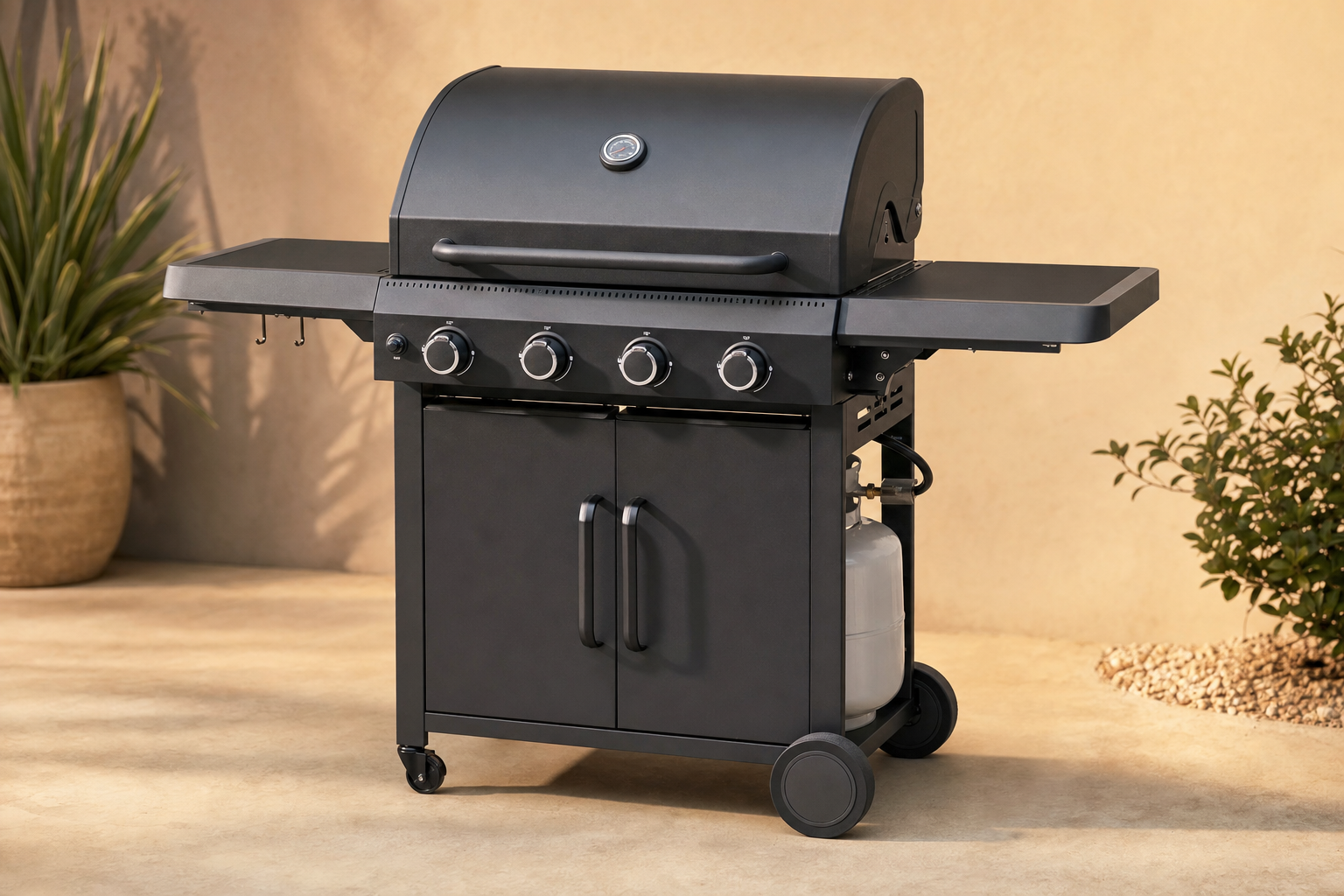
Most gas grill listings lean on a handful of numbers — burner count, BTU total, cooking area — and leave you to figure out whether those numbers actually translate to dinner on the table for six people on a Tuesday night. This RESEARCH-BASED REVIEW does the translation work for you. We break down what a 4-burner, 40,000-BTU layout realistically delivers for family-sized outdoor cooking, what the foldable shelves genuinely change about day-to-day use, and where the listing leaves questions unanswered that matter before you buy.
The product in question is the 4-Burner 40,000-BTU Gas Grill with Foldable Shelves (ASIN B0GRR4YGQK). The model name is not listed by the seller, and brand transparency is limited — a detail we return to in the value section.
The Product Shortlist may earn a commission from qualifying purchases. This does not affect our verdict.
Quick Answer
Verdict: Conditionally Worth It — for families who need a capable 4-burner propane grill with a compact storage footprint and are comfortable with limited brand documentation. Not the right pick if you need verified build quality, a named warranty, or plan to leave it outdoors year-round without a cover.
Confidence: B. The listing provides enough specification data to evaluate the grill class honestly, but the absence of a named brand, model number, and independent testing data means some conclusions rely on category-level analysis rather than product-specific evidence. Where that gap exists, we say so.
Best For
- Families of 4–6 cooking 3–5 times per week on a propane grill
- Patios or decks where storage space is limited and folded shelf width matters
- Cooks who want zone control — low heat on one side, high on the other — without stepping up to a larger cart grill
- Buyers prioritising cooking capacity over brand prestige at this price tier
Avoid If
- You want a named brand with documented warranty support and replacement parts
- You cook large cuts that need sustained indirect heat for 2+ hours regularly
- The grill will live outdoors uncovered in a wet or coastal climate
- You need a flat-top griddle surface — this is a grate grill, not a griddle
What 40,000 BTU Actually Means for Family Cooking
BTU (British Thermal Unit) measures heat energy output per hour across all burners combined. A 40,000-BTU total across four burners averages 10,000 BTU per burner — a reasonable figure for a family-class gas grill. For context, most grills in this size class run between 8,000 and 12,000 BTU per burner, so this sits in the middle of the range.
What matters more than the raw number is the ratio of BTU to cooking area. If the primary cooking surface is in the 400–500 square inch range (the listing does not confirm the exact primary cooking area), 40,000 BTU is sufficient to preheat the grill to searing temperature in roughly 10–15 minutes and maintain consistent heat across the grate during a full cook. If the cooking area is significantly larger than 500 square inches, 40,000 BTU may struggle to hold temperature when the lid is open and the grill is fully loaded.
For weeknight family meals — burgers, chicken thighs, sausages, vegetables — 40,000 BTU across four burners is adequate. For frequent high-heat searing of thick steaks or large briskets, you would want to confirm the BTU-to-area ratio before committing.
Cooking Area and Burner Layout
Four burners arranged in parallel rows give you genuine zone cooking: you can run two burners on high for direct searing and two on low or off for indirect finishing. This is the most practical configuration for mixed-protein family meals where chicken needs longer, lower heat while burgers cook fast over high flame.
The exact primary cooking area in square inches is not confirmed in the available listing data. Buyers should verify this before purchase, particularly if cooking for more than six people regularly. A 4-burner grill in this class typically accommodates 20–24 standard burger patties at once, but that estimate depends on confirmed grate dimensions.
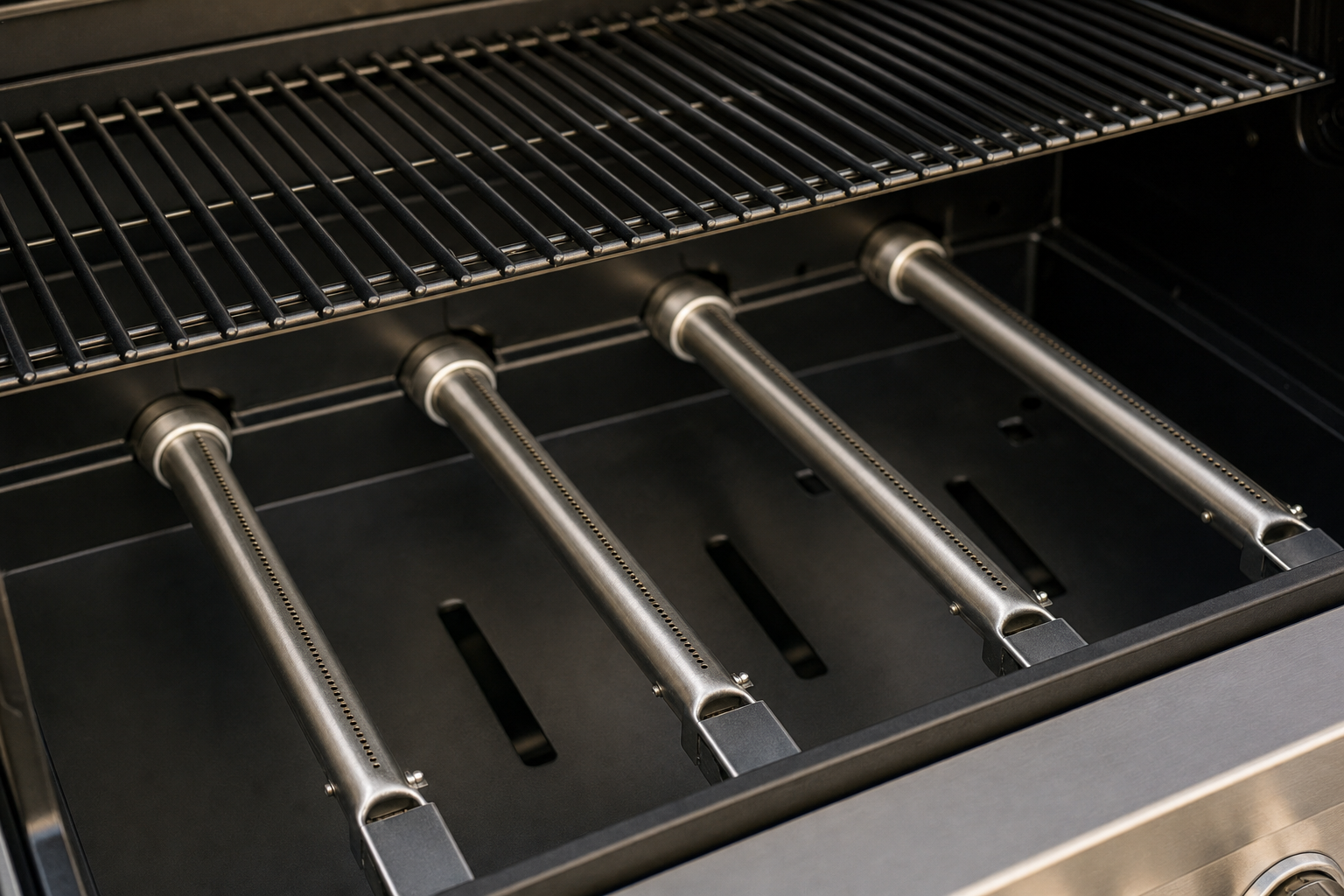
Grate material is also not specified in the listing. Cast iron grates retain heat better and produce stronger sear marks but require more maintenance to prevent rust. Stainless steel or porcelain-coated steel grates are lower maintenance but transfer heat differently. This is a meaningful gap in the listing for buyers who care about searing performance.
Foldable Shelves: Useful or Gimmick?
Foldable side shelves are one of the more practical features a mid-size grill can offer, and they are underappreciated in most reviews. Here is what they actually change:
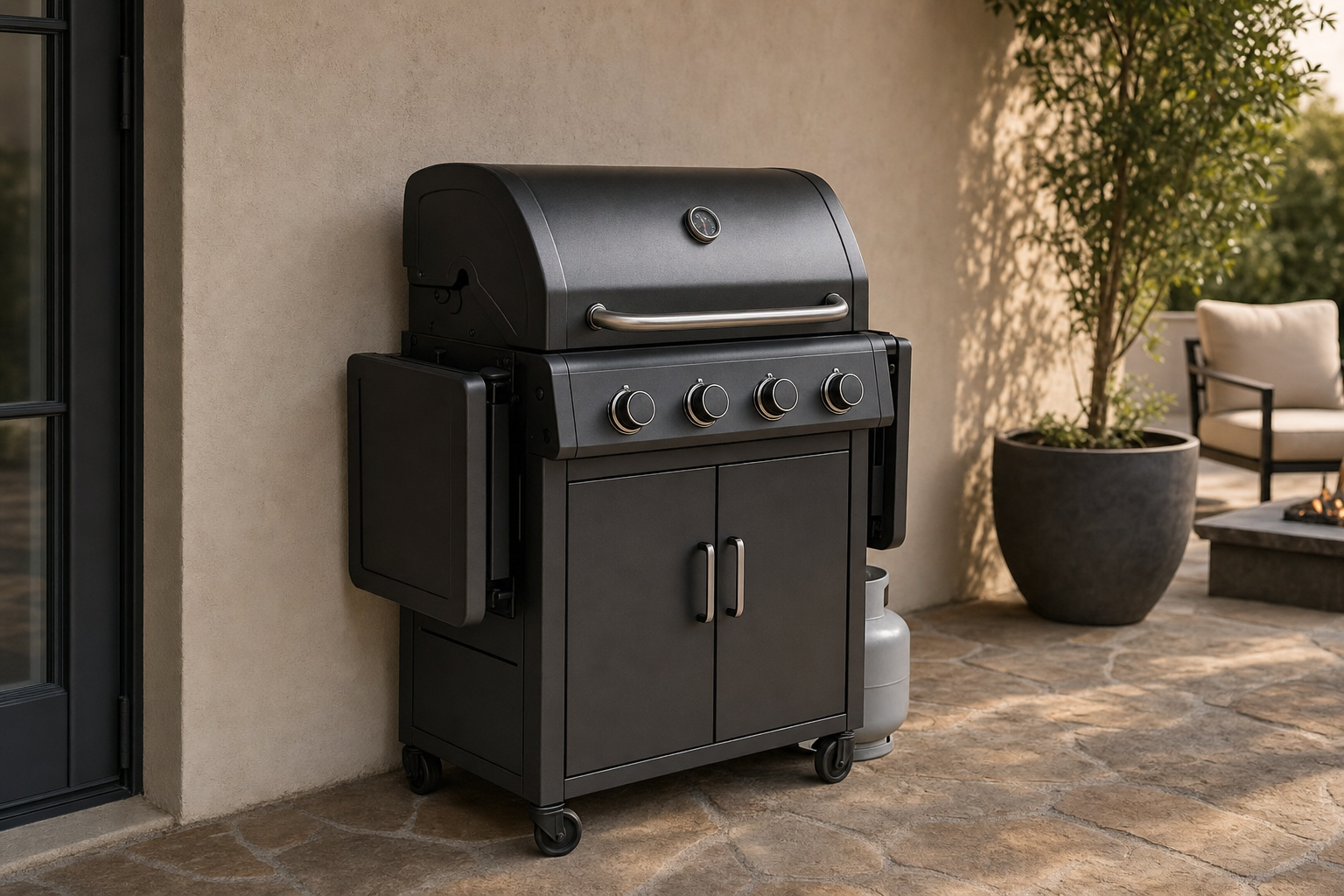
- Storage footprint: With both shelves folded, the grill’s width drops significantly, making it easier to store against a wall, in a shed, or on a narrow balcony. For urban patios and smaller decks, this is a real advantage.
- Prep surface when cooking: Unfolded, the shelves give you a place to rest a plate, tongs, a marinade brush, or a resting rack — things that otherwise end up on a side table or the ground. For family-volume cooking, having that surface adjacent to the grill matters.
- Durability concern: Folding shelf hinges are a known wear point on lower-cost grills. The listing does not specify hinge material or load rating. Buyers should check whether the shelves feel solid when unfolded and avoid placing heavy cast iron or large cutting boards on them without confirming the rated load.
On balance, foldable shelves are a genuine practical feature rather than a marketing addition — provided the hinges hold up over time.
Construction and Build Quality
The listing does not name a manufacturer or provide material specifications for the lid, cart, or firebox. This is a meaningful transparency gap. In the mid-price gas grill market, lid thickness, cart gauge steel, and firebox coating directly affect how long the grill lasts outdoors and how well it holds heat in cooler weather.
Without confirmed material specs, the honest editorial position is this: grills at this price point and specification class vary considerably in build quality depending on the actual manufacturer. Some are adequately built for 3–5 years of regular use with a cover; others show rust and hinge failure within two seasons. The absence of a named brand and model number makes it harder to track down owner feedback or replacement parts if something fails.
If the listing has since been updated with brand or model information, verify it independently before purchasing.
Assembly and Setup Friction
Four-burner gas grills in this class typically arrive in flat-pack form and require 60–120 minutes of assembly for one person, or 45–75 minutes for two. The process generally involves attaching the cart legs, mounting the cookbox, connecting the burner tubes, attaching the control panel, and fitting the grates and shelves. Specific assembly time for this unit is not confirmed in the listing.
Practical advice regardless of model: read the full instruction sheet before starting, keep a rubber mallet handy for stubborn panel clips, and test the ignition and all four burners before the first cook to confirm gas connections are secure. Propane connection safety should follow the guidance from your local gas safety authority — in the US, the National Fire Protection Association (NFPA) publishes relevant guidance on outdoor gas appliance use.
Cleaning and Grease Management
This is the area most grill reviews skip, and it is where long-term ownership friction accumulates. Key questions for this grill that the listing does not answer:
- Does the grease management system use a removable tray or a fixed channel?
- How accessible is the firebox interior for periodic deep cleaning?
- Are the grates dishwasher-safe or hand-wash only?
A removable grease tray is significantly easier to maintain than a fixed drip channel. For family-volume cooking — multiple sessions per week — grease buildup is a fire risk if not managed. Buyers should confirm the grease system design before purchase and plan for a full grate and firebox clean every 8–10 cooking sessions.
Price and Value
Current pricing is not confirmed here, because prices change. Check price on Amazon before drawing comparisons.
At the specification level — 4 burners, 40,000 BTU, foldable shelves — this grill competes in a crowded mid-market segment. Named brands at similar specs from established manufacturers typically carry documented warranties, accessible replacement parts, and a track record of owner feedback. The value case for this grill depends on whether its price is meaningfully lower than those alternatives. If the price gap is small, the named-brand option is the more defensible purchase for most buyers. If the price gap is substantial, the tradeoff in brand transparency may be acceptable for buyers who are comfortable with that risk.
Realistic Alternatives to Consider
| Option | Key Difference | Better If |
|---|---|---|
| Named-brand 4-burner grill (Weber, Char-Broil, Nexgrill) | Documented warranty, replacement parts, owner community | You want long-term support and accountability |
| 3-burner grill in same price range | Smaller footprint, lower BTU, less zone flexibility | Cooking for 2–4 people, smaller patio |
| Flat-top griddle (propane) | Solid cooking surface, no grates, different heat profile | You cook eggs, smash burgers, stir-fry outdoors regularly |
| This grill (B0GRR4YGQK) | 4-burner zone control, foldable shelves, compact storage | Family volume cooking, space-limited patio, price-sensitive |
Frequently Asked Questions
Is a 4-burner 40,000-BTU gas grill enough for a family?
For most families of 4–6 cooking standard proteins — burgers, chicken, sausages, vegetables — yes. Four burners give you zone control, and 40,000 BTU is sufficient to preheat quickly and maintain cooking temperature under normal load. If you regularly cook for 8 or more people or do long low-and-slow cooks, you may want a larger cooking area.
What does 40,000 BTU mean on a gas grill?
It is the total heat energy output across all burners per hour. Divided across four burners, that is 10,000 BTU each — a mid-range figure for this grill class. What matters more is how that output relates to the cooking area. A large cooking surface with 40,000 BTU may heat unevenly under full load; a smaller surface will reach and hold searing temperature more reliably.
Are foldable side shelves actually useful on a gas grill?
Yes, in two specific ways: they reduce the grill’s storage footprint when folded, which matters on smaller patios and decks, and they provide adjacent prep and resting surface when open. The main risk is hinge durability on lower-cost models — avoid placing heavy items on them until you have confirmed they are solid.
How much food can a 4-burner grill cook at once?
This depends on the confirmed primary cooking area, which is not specified in the listing. A typical 4-burner grill in this class can handle 20–24 standard burger patties simultaneously, but verify the actual square inch measurement before assuming capacity.
Does this grill heat evenly across all burners?
Even heat distribution depends on burner tube design, lid fit, and firebox construction — none of which are specified in the listing. In general, four independently controlled burners allow you to compensate for hot spots by adjusting individual burner levels. Whether this specific unit has notable hot spots is not confirmed by available data.
Is this grill better for burgers and chicken or for searing steaks?
The 4-burner layout suits both, but the grate material (unconfirmed) affects searing performance. Cast iron grates hold heat better for steak searing; porcelain-coated steel is more forgiving for chicken and burgers. Confirm grate material before purchase if searing performance is a priority.
How hard is it to assemble a 4-burner gas grill?
Expect 60–120 minutes solo or 45–75 minutes with a second person for a grill in this class. Specific assembly time for this unit is not confirmed. Two people make the process significantly easier, particularly when aligning the cookbox to the cart frame.
Is the 4-Burner 40,000-BTU Gas Grill with Foldable Shelves worth it?
Conditionally, yes — if the price is meaningfully lower than named-brand alternatives at similar specs, and you are comfortable with limited brand documentation. The 4-burner layout and foldable shelves are genuinely useful for family outdoor cooking. The main risks are unverified build quality and the absence of a named warranty. Confirm current pricing, verify the cooking area and grate material, and compare against a named-brand option at a similar price before deciding.
Final Verdict
The 4-Burner 40,000-BTU Gas Grill with Foldable Shelves (ASIN B0GRR4YGQK) covers the functional basics for family outdoor cooking: four independently controlled burners for zone cooking, adequate heat output for standard proteins, and foldable shelves that genuinely help with both storage and prep. Those are real advantages, not marketing filler.
The honest limitations are also real. The listing lacks a named brand, confirmed model number, grate material, primary cooking area, and warranty documentation. These are not minor omissions — they affect how long the grill lasts, whether you can get replacement parts, and how much confidence you can place in the build quality. If a named-brand alternative is available at a similar price, it is the safer long-term purchase for most buyers.
If the price gap justifies the tradeoff and you are buying for a patio where compact storage matters, this grill is a reasonable choice for regular family cooking. Go in with realistic expectations about brand support, plan to use a grill cover, and verify the cooking area and grate material before ordering.
Check price on Amazon and compare it against named-brand alternatives at the same spec level before making your final call.