Skip to content
If you are considering the Coway Airmega AP-1512HH(W) Mighty Air Purifier, the main decision is pretty simple: are you buying for a bedroom or medium room and prioritizing proven particle filtration in a compact unit, or are you expecting newer smart-home features and extra-large coverage?
This is a RESEARCH-BASED REVIEW, so the goal here is to separate the likely fit from the marketing haze. The Coway Mighty remains relevant because its core idea is still practical: compact size, established design, and automatic air-quality response. The catch is that it is an older design, and that shows most clearly in the controls and feature set.
Quick Answer
Research summary
The Coway Airmega AP-1512HH(W) Mighty Air Purifier still makes sense for buyers who want a compact purifier for bedrooms and medium rooms, especially when the priority is particle filtration for dust, pollen, and smoke particles rather than app control.
Its strongest reason to buy is the combination of a mature compact design and automatic air-quality response. Its biggest reason to skip is equally clear: if you want Wi-Fi, app automation, or coverage aimed at very large rooms, this is probably not the right pick.
The Product Shortlist may earn a commission from qualifying purchases. This does not affect our verdict.
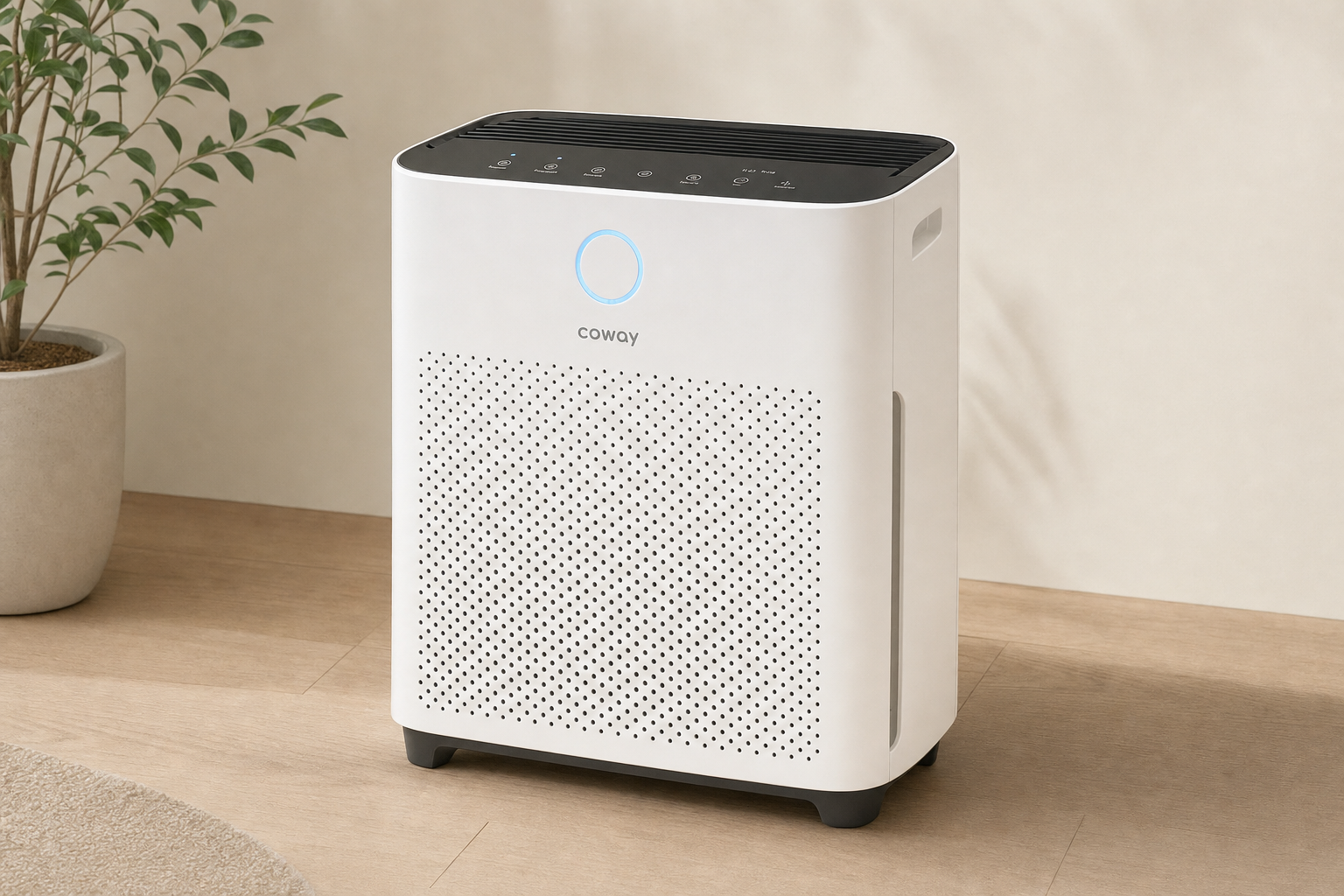
What this purifier is really for
The best way to understand the AP-1512HH(W) is as a bedroom and medium-room air purifier with a long-established design. It is not trying to be a smart-home centerpiece. It is trying to handle everyday airborne particles in a room size that matches its intended use.
That distinction matters, because many air purifier listings blur together several different buying needs:
- particle filtration for dust, pollen, and smoke particles
- odor reduction expectations
- large-room marketing claims
- smart features like app control and automations
For this Coway model, the clearest fit is the first category. If your goal is cleaner air in a sleeping space, home office, or other medium room, that is the use case where it appears most sensible.
Key strengths and trade-offs
Main strength: compact, proven design with automatic response
The most compelling reason this model still deserves consideration is not novelty. It is that the design is mature, compact, and built around automatic air-quality response rather than constant manual adjustment. For many buyers, that is enough. A purifier does not need to be flashy to be useful.
That also helps explain why the Coway Mighty keeps coming up in late-stage buying research: it appears to offer the kind of practical feature set that matters day to day without demanding a lot of attention.
Main weakness: older controls and no smart-home angle
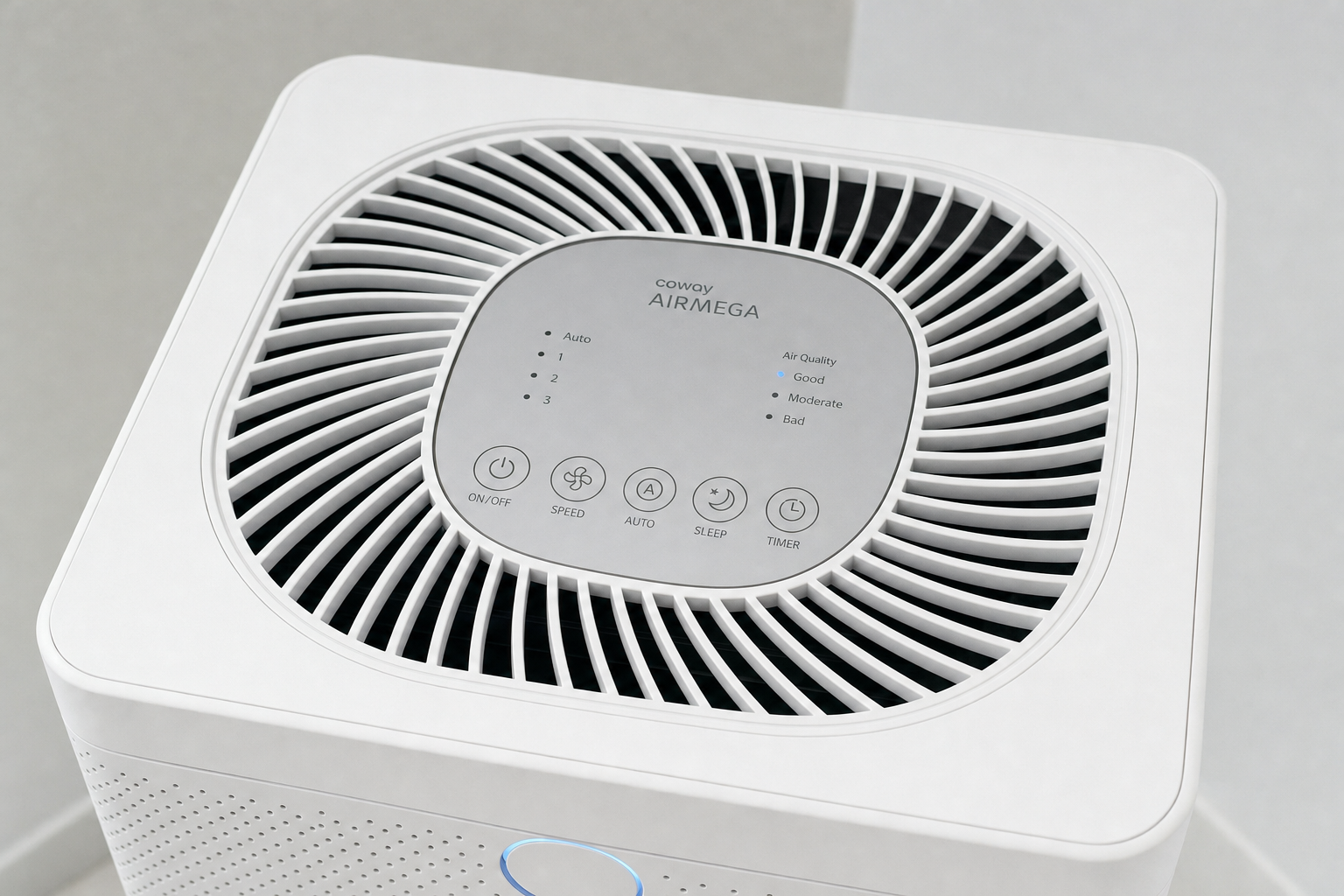
The biggest trade-off is the older control design. Based on the verified fit guidance for this review, buyers specifically looking for Wi-Fi or app automation should skip it. That is not a minor missing feature if you want remote scheduling, phone alerts, or smart-home routines.
In other words, the AP-1512HH(W) can still be a sensible air purifier, but it is not a modern connected appliance experience.
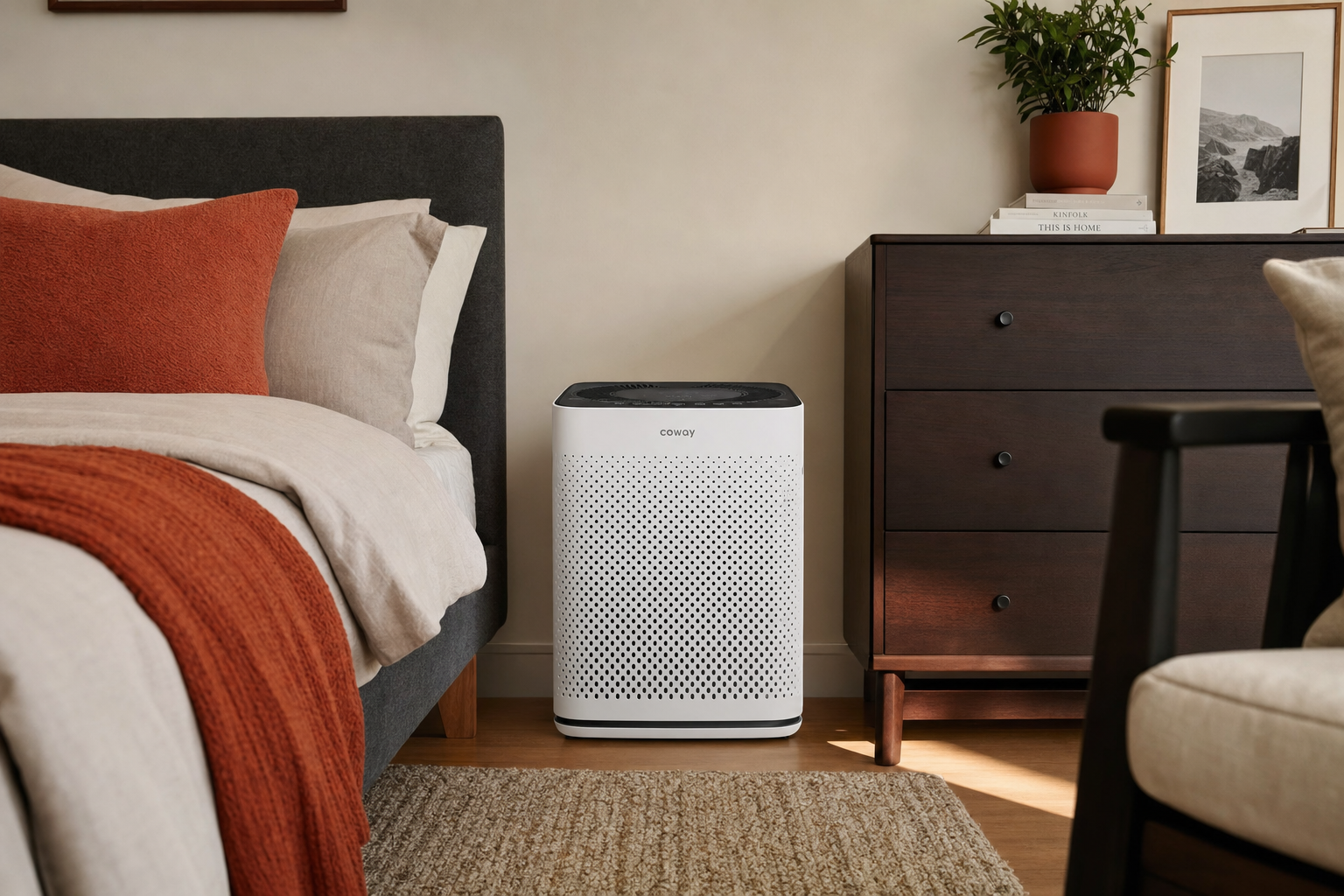
How to think about filtration, room size, and real-world expectations
This is where many review pages get sloppy, so it is worth being direct.
Particles versus odors
The buying case here is strongest when you care about airborne particles such as dust, pollen, and smoke particles. Odor reduction is a different question. Air purifiers with a carbon stage may help with some odors, but buyers should not treat particle filtration and odor control as the same thing.
If odor removal is your main goal, this review cannot responsibly promise more than that the filter system includes a carbon stage if verified in manufacturer materials. Strong odor expectations usually need caution.
Room size claims need context
One of the easiest ways to overbuy or underbuy an air purifier is to rely on broad marketing coverage claims without understanding the test standard behind them. For this category, CADR and AHAM-style room-size guidance are more useful than vague large-room language because they help frame whether a purifier is intended for faster air cleaning in a modest room or slower cleaning in a larger one.
For the Coway Mighty, the editorial fit remains consistent: bedrooms and medium rooms. If you are shopping for a very large open space, this is the wrong place to stretch assumptions.
Wildfire smoke and allergy use
For allergy use, dust, pollen, and smoke particles, a purifier like this can make sense when the room size is matched properly and expectations stay focused on particle reduction. That said, wildfire smoke conditions, room leakage, and overall indoor air strategy can all affect results. A purifier is one part of the plan, not the whole plan.
That is especially important because the evidence base for this article is limited. Where documentation is not fully confirmed in the supplied materials, it is better to stay narrow than to overstate what the unit can do.
Who should buy it
- You want a compact air purifier for a bedroom or medium room.
- Your main concern is particle filtration rather than smart-home features.
- You prefer a mature design with auto mode and air-quality response over app-based controls.
- You want an option that still makes sense in 2026 even if it is not the newest-looking model.
Who should skip it
- You specifically want Wi-Fi or app control.
- You are buying for very large-room coverage.
- Your purchase decision depends on having the newest interface or connected features.
- Your main expectation is heavy odor removal rather than particle-focused air cleaning.
Bottom line
The Coway Airmega AP-1512HH(W) Mighty Air Purifier still looks like a reasonable buy for the right person: someone who wants a compact, established purifier for a bedroom or medium room and does not care about app control.
Its appeal is practical, not flashy. If that matches what you need, it is easy to see why this older model still gets serious consideration. If you want smart-home conveniences or oversized-room ambitions, the trade-off becomes much harder to justify.
Need cooling as well as cleaner air? See our BLACK+DECKER BPACT08WT portable air conditioner review.
FAQ
Is the Coway Airmega AP-1512HH(W) Mighty good for bedrooms?
Yes, that is one of the clearest buyer fits based on the supplied guidance. This model is best matched to bedrooms and medium rooms rather than very large spaces.
Is the Coway AP-1512HH(W) actually HEPA?
This review does not upgrade the claim beyond manufacturer wording. If you are comparing HEPA terminology closely, check the current manufacturer documentation and user materials before buying.
What room size is the Coway Mighty best for?
The safest fit based on the supplied editorial facts is bedrooms and medium rooms. If you need coverage for a very large room, this is one of the main reasons to look elsewhere.
Is the Coway Mighty good for allergies, dust, and smoke particles?
That is the strongest use case for this kind of purifier. The buying logic here is centered on particle filtration for concerns like dust, pollen, and smoke particles, with the usual caveat that room size and overall indoor conditions still matter.
Does the Coway Mighty help with odors or just particles?
Buyers should keep expectations focused on particles first. A carbon stage may contribute to odor reduction, but odor control should not be treated as identical to particle filtration.
Does the Coway Mighty have auto mode and an air-quality sensor?
Yes, automatic air-quality response is one of the model’s main selling points in the supplied facts, and it is part of why the design still appeals despite its age.
Does the Coway AP-1512HH(W) have Wi-Fi or app control?
No Wi-Fi or app automation is the main feature trade-off highlighted for this review. If those features matter to you, this is probably not the right model.
Is the Coway Mighty still worth buying in 2026 versus newer air purifiers?
It can still make sense in 2026 if you value compact size, established design, and automatic operation more than newer connected features. It makes less sense if your priorities are app control or larger-room coverage.