Skip to content
 ARTISTRO 36 Precision Dual-Tip Acrylic Paint Markers Review: Worth It for Crafters?
Most acrylic marker sets make you choose: fine detail or broader coverage. The ARTISTRO 36 Precision Dual-Tip Acrylic Paint Markers (model DTFDA) pitch themselves as a single purchase that handles both, across 36 colors. That sounds efficient. Whether it actually works depends on what you are making and how much you expect from each tip type.
This is a RESEARCH-BASED REVIEW. We have not personally tested this set. What follows is an honest translation of the available product information into practical buyer expectations, with clear notes where evidence is thin and independent judgment is required.
The Product Shortlist may earn a commission from qualifying purchases. This does not affect our verdict.
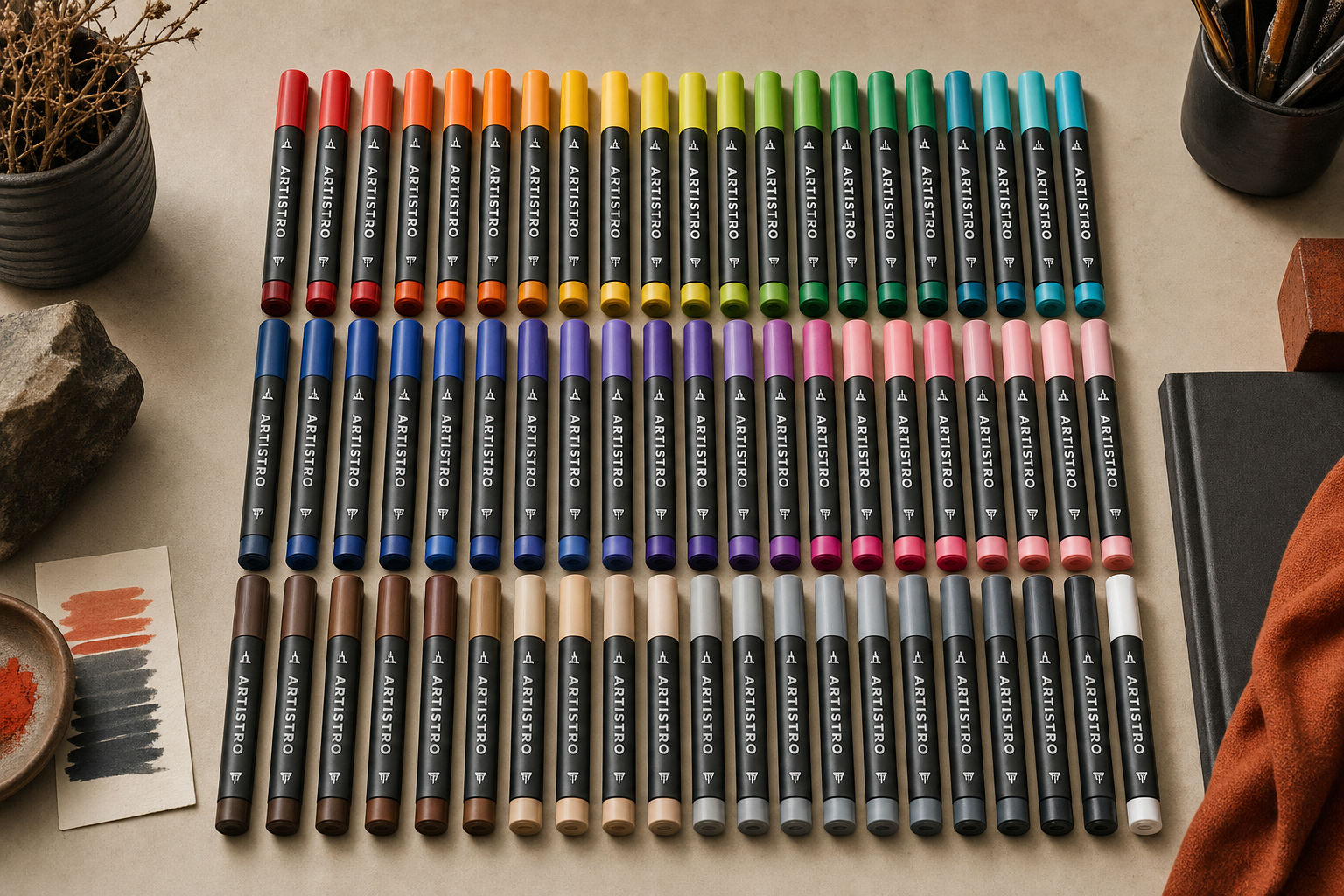
The ARTISTRO 36 Precision Dual-Tip set is a reasonable choice for crafters who want a wide color palette and the flexibility of two tip styles without buying two separate marker lines. The value case is strongest for hobbyists doing rock painting, wood crafts, and mixed-surface projects where both detail work and broader strokes come up in the same session. It is not the right tool for professional illustration, heavy daily use, or anyone who needs consistent, studio-grade ink flow across every single color in a large set.
Best for: Hobbyist crafters, rock painters, wood decorators, beginners building a first acrylic marker collection, and anyone who wants one set to cover most casual craft needs.
Avoid if: You need professional-grade consistency, you work primarily on one surface type and would benefit more from a specialized single-tip set, or you are a frequent crafter who will stress-test nibs daily.
What You Actually Get
The DTFDA set includes 36 markers, each with two tips: a fine precision tip on one end and a flexible brush tip on the other. The ink is water-based acrylic, which means it is permanent when dry, compatible with a wide range of surfaces, and cleanable with water before it sets. The 36-color count covers a broad spectrum including standard primaries, earth tones, metallics, and neons—though the exact breakdown of those categories is not published.
Acrylic markers as a category sit between traditional paint and felt-tip markers. They offer more control than a brush loaded with bottled paint, but they are not as precise as technical drawing pens. That positioning matters when you are deciding whether this format fits your workflow.
The Two Tips: What Each One Is Actually For
This is where most competing reviews fall short—they mention dual tips and move on. The practical reality is that the two tips serve genuinely different purposes, and understanding that distinction determines whether the dual-tip format adds value for you or just adds bulk.
The fine precision tip is suited for outlines, lettering, detail lines, and controlled fills in small areas. On smooth surfaces like sealed rock or primed wood, a well-functioning fine tip can produce clean, consistent lines. On porous or textured surfaces, the same tip may drag or deposit ink unevenly because the nib catches on texture. Fine tips on acrylic markers are also more vulnerable to damage from pressing too hard—a common habit for anyone used to felt-tip pens.
The flexible brush tip handles broader strokes, blending, and areas where you want variable line width based on pressure. It is more forgiving on texture because it conforms slightly to the surface. For rock painting backgrounds, wood grain fills, or canvas washes, the brush tip is the more practical choice. The tradeoff is that brush tips on acrylic markers are harder to control for fine detail, and they can fray with aggressive use.
The honest case for dual tips: if your projects regularly require both detail lines and broader coverage—which is true for most decorative rock and wood work—having both on one barrel saves you from uncapping and recapping two separate markers constantly. That is a real convenience, not a trivial one.

Surface Performance
Acrylic markers perform differently depending on surface porosity, texture, and whether a surface has been sealed or primed. Here is what the evidence supports for common craft surfaces:
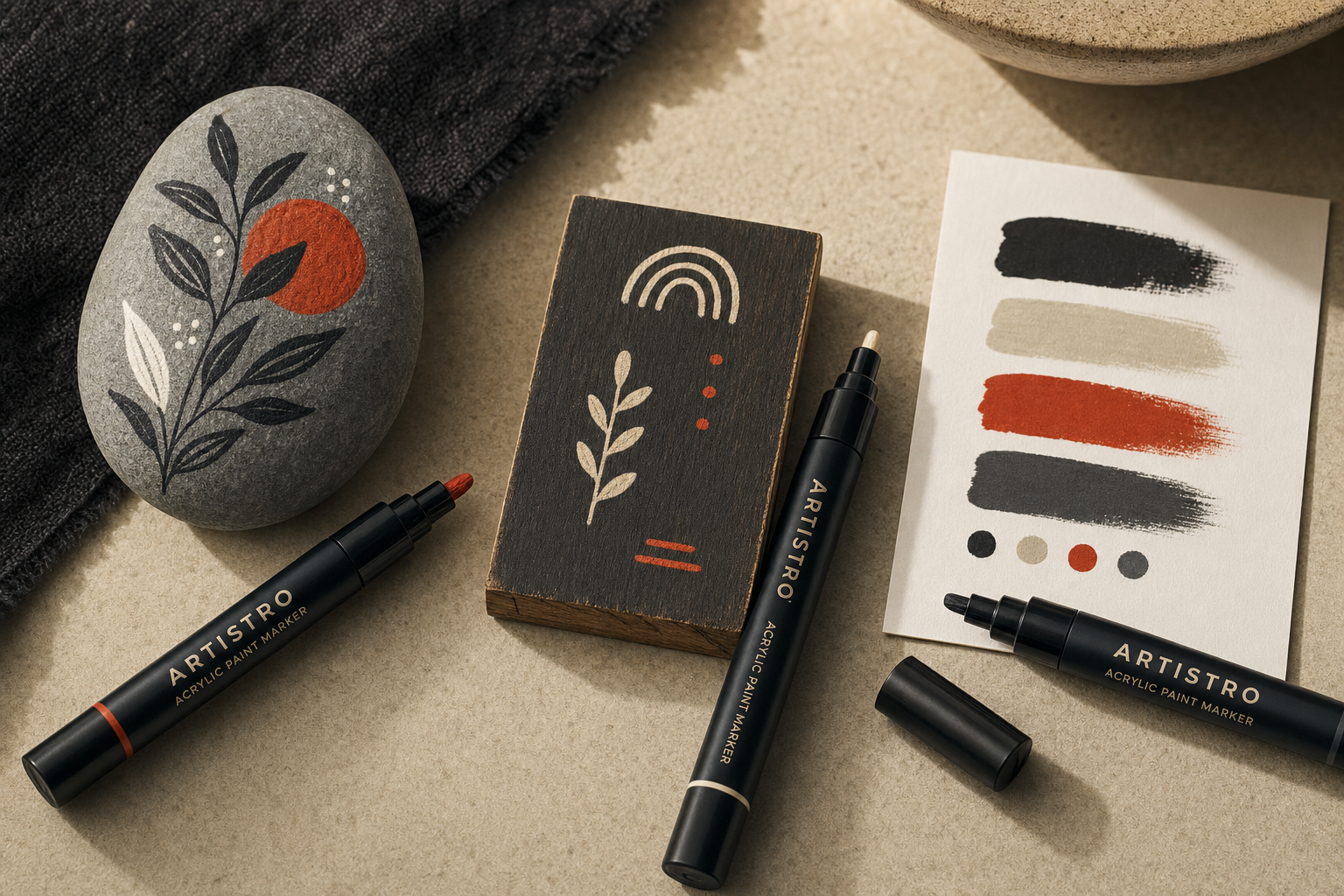
- Rock: Smooth river rocks are one of the better surfaces for acrylic markers. The non-porous surface lets the ink sit on top cleanly, opacity tends to be stronger, and fine tips work as intended. Rough or very porous rocks absorb more ink and may require multiple passes.
- Wood: Raw, unsealed wood is porous and will absorb acrylic ink unevenly, often causing the color to look dull or streaky. A light gesso or sealant coat before marking significantly improves results. Sealed or smooth wood performs much closer to rock.
- Canvas: Stretched canvas with a standard gesso primer accepts acrylic markers reasonably well for detail work, though the texture can challenge fine tips. Canvas panels (stiffer backing) are easier to control on than stretched canvas, which has some give.
- Paper: Standard copy paper is too thin and too porous for acrylic markers—bleed-through and buckling are likely. Cardstock or mixed-media paper handles acrylic markers much better. Bleed-through risk on thin paper is a known limitation of the acrylic marker format generally, not specific to this set.
- Glass, ceramic, plastic: Acrylic markers can adhere to these surfaces, but durability without a sealant coat is limited. For items that will be handled or washed, a topcoat is necessary. We have not confirmed whether ARTISTRO recommends or tests these surfaces with this model.
Color Range and Opacity on Dark Surfaces
Thirty-six colors is a meaningful range for a hobbyist set. It is enough to cover most craft palettes without mixing, which matters for markers since you cannot blend ink in a palette the way you can with bottled paint. The inclusion of metallics and neons—if confirmed in the current set—adds utility for decorative work where those finishes are common.
Opacity on dark surfaces is a legitimate concern with any acrylic marker. Water-based acrylic inks vary considerably in pigment load. Lighter colors—whites, yellows, light pinks—typically require more passes to achieve opacity over black or dark backgrounds than darker, more saturated colors do. Whether the ARTISTRO DTFDA set achieves strong single-pass opacity on dark surfaces across all 36 colors is unverified. As a general rule for acrylic markers in this price range, expect lighter colors to need two coats on dark surfaces, and plan your workflow accordingly.
Layering is possible once the first coat is dry, which with acrylic markers is typically fast—minutes rather than hours in normal conditions. Exact drying times for this model are not published.
Practical Concerns: Nib Durability, Ink Flow, and Storage
Nib durability is the most common failure point for acrylic markers across the category. Fine tips in particular can fray, clog, or flatten with heavy use or improper pressure. Brush tips can splay. How quickly this happens depends heavily on how the markers are used—pressing hard, working on rough surfaces, and not capping promptly all accelerate wear. For occasional hobbyist use, nib longevity is generally acceptable. For daily or high-volume use, it becomes a more significant concern.
Ink flow consistency across 36 colors in a single set is harder to guarantee than in a smaller set. Manufacturing variation means some colors may flow more freely or more reluctantly than others. Shaking and priming the marker before use (pressing the tip gently on a test surface until ink flows) is standard practice and helps with this.
Storage: Acrylic markers should be stored horizontally when possible to keep ink distributed evenly across the nib. Storing tip-down can cause ink to pool and clog; tip-up can cause the nib to dry out faster. A 36-marker set needs a dedicated storage solution—the included packaging may or may not be practical for ongoing use. The listing does not say what storage format the set ships with.
Price and Value
We do not publish current prices, which change. Check price on Amazon before drawing conclusions about value.
The value question for this set comes down to a simple comparison: what would it cost to buy a 36-color fine-tip set and a 36-color brush-tip set separately? If the DTFDA set costs meaningfully less than that combined purchase, the dual-tip format represents genuine savings. If the price difference is small, the question becomes whether the convenience of one barrel per color outweighs the performance tradeoffs of combining both tips into a single marker.
For beginners, a 36-color dual-tip set at a reasonable price point is a practical starting point. You get broad coverage without committing to two separate product lines before you know which tip style you actually use more. For experienced crafters who already know their preferences, a more specialized set in their preferred tip style may serve them better.
Who Should Buy This and Who Should Not
Buy it if: You are a hobbyist crafter who works across multiple surfaces, you want a wide color range without managing two separate marker sets, you do rock painting or wood decoration where both detail and fill work come up regularly, or you are a beginner who wants to explore acrylic markers before investing in specialized tools.
Skip it if: You are a professional or serious artist who needs consistent, high-performance ink flow across every color, you work primarily on one surface type and would benefit from a set optimized for that surface, you use markers daily and will wear through nibs quickly, or you already own a solid fine-tip set and only need brush tips (or vice versa).
Frequently Asked Questions
Is the ARTISTRO 36 Precision Dual-Tip Acrylic Paint Markers set worth it?
For hobbyist crafters who want a wide color range and both tip styles in one purchase, yes—it is a practical value. For professional or high-frequency use, the limitations of a large dual-tip set at this price point may outweigh the convenience.
What surfaces do ARTISTRO acrylic paint markers work best on?
Smooth, non-porous surfaces like sealed rock and primed wood give the best results. Canvas with gesso primer works well for detail. Raw wood and thin paper are more challenging and typically require surface preparation or a heavier paper stock.
Are the colors opaque enough for dark surfaces?
Darker, saturated colors generally cover dark surfaces better than light colors like white or yellow, which typically need multiple passes. Exact opacity per color in this set is not published, but this is a known pattern across acrylic markers in this category.
How useful are the dual tips for crafts and detail work?
Genuinely useful if your projects require both fine lines and broader strokes in the same session—which is common in rock painting and wood decoration. Less useful if you primarily do one type of work, where a single-tip set optimized for that purpose would perform better.
Do these acrylic paint markers bleed through paper?
On thin paper like standard copy paper, bleed-through is likely. Cardstock or mixed-media paper handles acrylic markers significantly better. This is a category-wide limitation, not specific to ARTISTRO.
Are ARTISTRO paint markers good for rock painting and wood projects?
Rock painting on smooth stones is one of the stronger use cases for this set. Wood projects benefit from a sealant or gesso primer coat on raw wood before marking to improve opacity and reduce absorption.
How durable are the tips with regular use?
Fine tips are more vulnerable to wear from pressure and rough surfaces. Brush tips can splay with aggressive use. For occasional hobbyist use, durability is generally acceptable. Daily or high-volume use will stress nibs more quickly.
Is the 36-color set a good value for beginners?
Yes, as a starting point. A wide color range removes the need to mix or buy additional colors early on, and the dual-tip format lets beginners explore both tip styles before deciding what they prefer.
Final Verdict
The ARTISTRO 36 Precision Dual-Tip Acrylic Paint Markers (DTFDA) is a practical, broad-coverage craft set that makes the most sense for hobbyists who want color range and tip flexibility without managing two separate product lines. It is not a professional tool, and it should not be evaluated as one. The dual-tip format is a genuine convenience for mixed-technique craft work, and 36 colors covers most casual project palettes without mixing.
The limitations are real: fine tips require careful handling, opacity on dark surfaces varies by color, and raw porous surfaces need preparation. None of these are disqualifying for the audience this set is designed for—they are just honest expectations to set before you buy.
Our confidence in this assessment is rated B: the product category is well-understood, the format tradeoffs are consistent across acrylic markers, and the buyer use cases are clear. Some specific performance details—exact opacity per color, drying times, included storage format—are not published, and we have not tested them.
If the description above matches your craft workflow, check price on Amazon and make the call based on where it sits relative to buying separate fine-tip and brush-tip sets.