Skip to content
 Amazon Basics Multipurpose Copy Printer Paper Review: Is It Worth It?
Most people buying a 5,000-sheet case of printer paper are not looking for a conversation. They want paper that feeds cleanly, prints legibly, and does not cost more than it should. The question is whether Amazon Basics delivers that reliably enough to justify buying by the case, or whether the savings come with tradeoffs that matter in daily use.
This is a RESEARCH-BASED REVIEW. We have not personally printed thousands of pages on this specific product. What we have done is analyze the published specifications, translate what those specs mean in practice, and identify the tradeoffs that most product listings skip entirely. The goal is to give you enough grounded information to make a confident decision.
The Product Shortlist may earn a commission from qualifying purchases. This does not affect our verdict.
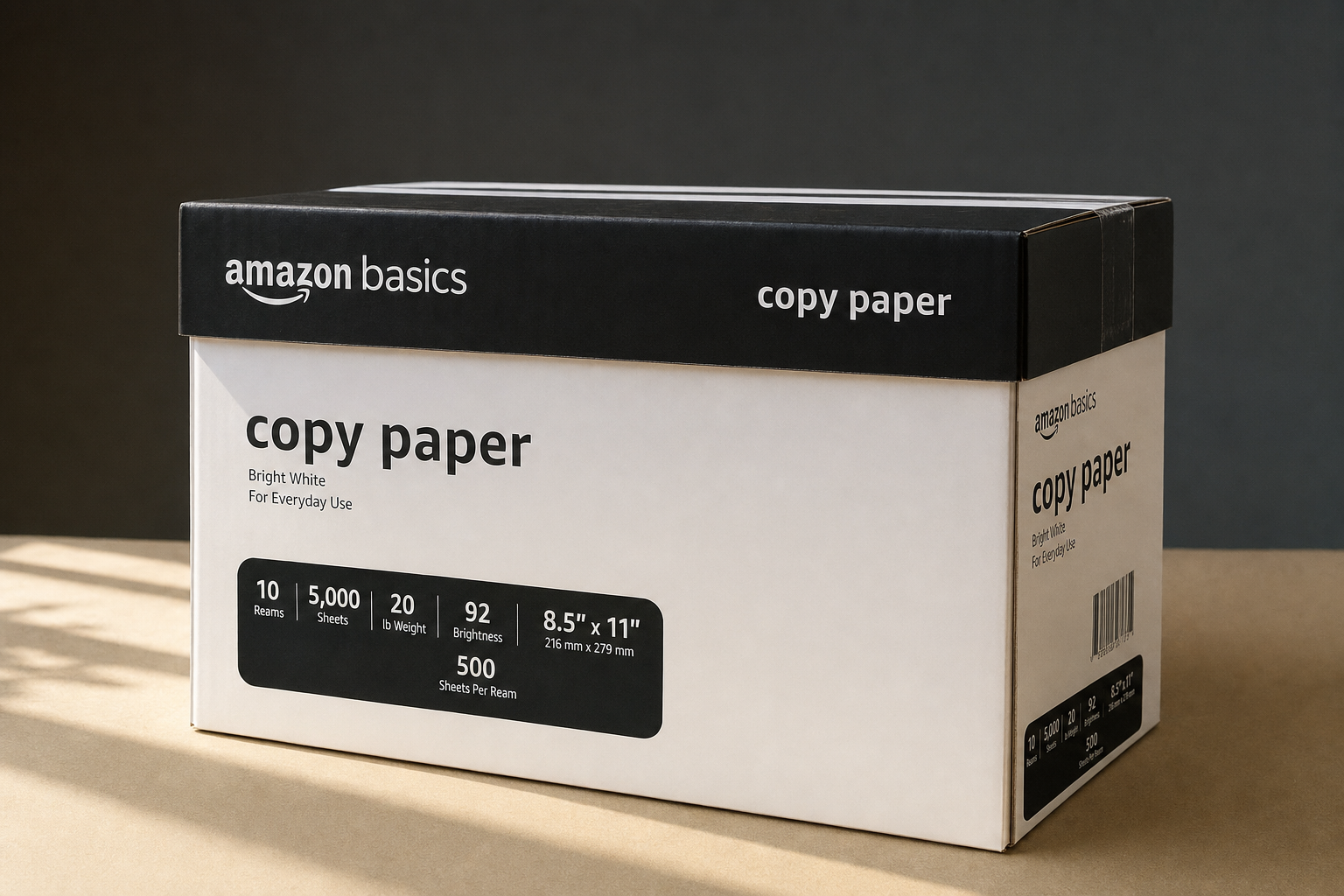
Amazon Basics Multipurpose Copy Printer Paper (model AZ851120) is a competent, budget-oriented 20 lb paper suited to everyday text printing and copying in home offices and small businesses. Its 92 brightness rating and standard 20 lb weight are appropriate for routine single-sided documents. For double-sided printing, photo output, or presentation materials, the weight and opacity are not ideal. Bought by the case, the per-sheet cost is among the lower options in this category. The main practical risks are show-through on duplex jobs and potential packaging damage during shipping — both worth factoring in before committing to 5,000 sheets.
Best For
- Home offices printing primarily text documents, invoices, and forms
- Small businesses running high page volumes where per-sheet cost matters
- Offices with laser printers doing single-sided output
- Anyone who needs a reliable supply buffer and has storage space for a case
Avoid If
- You print double-sided documents regularly and show-through is a concern
- Your output includes photos, graphics, or color-heavy presentations
- You need archival-quality paper (acid-free status is not published)
- You have limited storage and cannot use 5,000 sheets before humidity or storage conditions degrade the paper
What 20 lb Multipurpose Paper Actually Means
Paper weight in the US is measured by the ream weight of a parent sheet at a standard size. For bond and copy paper, 20 lb is the baseline — it is what most offices have used for decades. It is not thin in an alarming way, but it is not thick either. A 24 lb or 28 lb sheet will feel noticeably more substantial, hold ink better on both sides, and resist bleed-through more effectively.
The 92 brightness rating on this paper is worth understanding. Brightness is measured on a scale of 1 to 100, where higher numbers reflect more light. Standard commodity paper often sits at 87–92. Premium office papers from brands like Hammermill or Boise tend to run 96–100. At 92, this paper will look clean and white under normal office lighting. Text will read clearly. It will not have the stark, almost blue-white appearance of premium bright papers, which matters if you are printing anything where color accuracy or contrast is important.
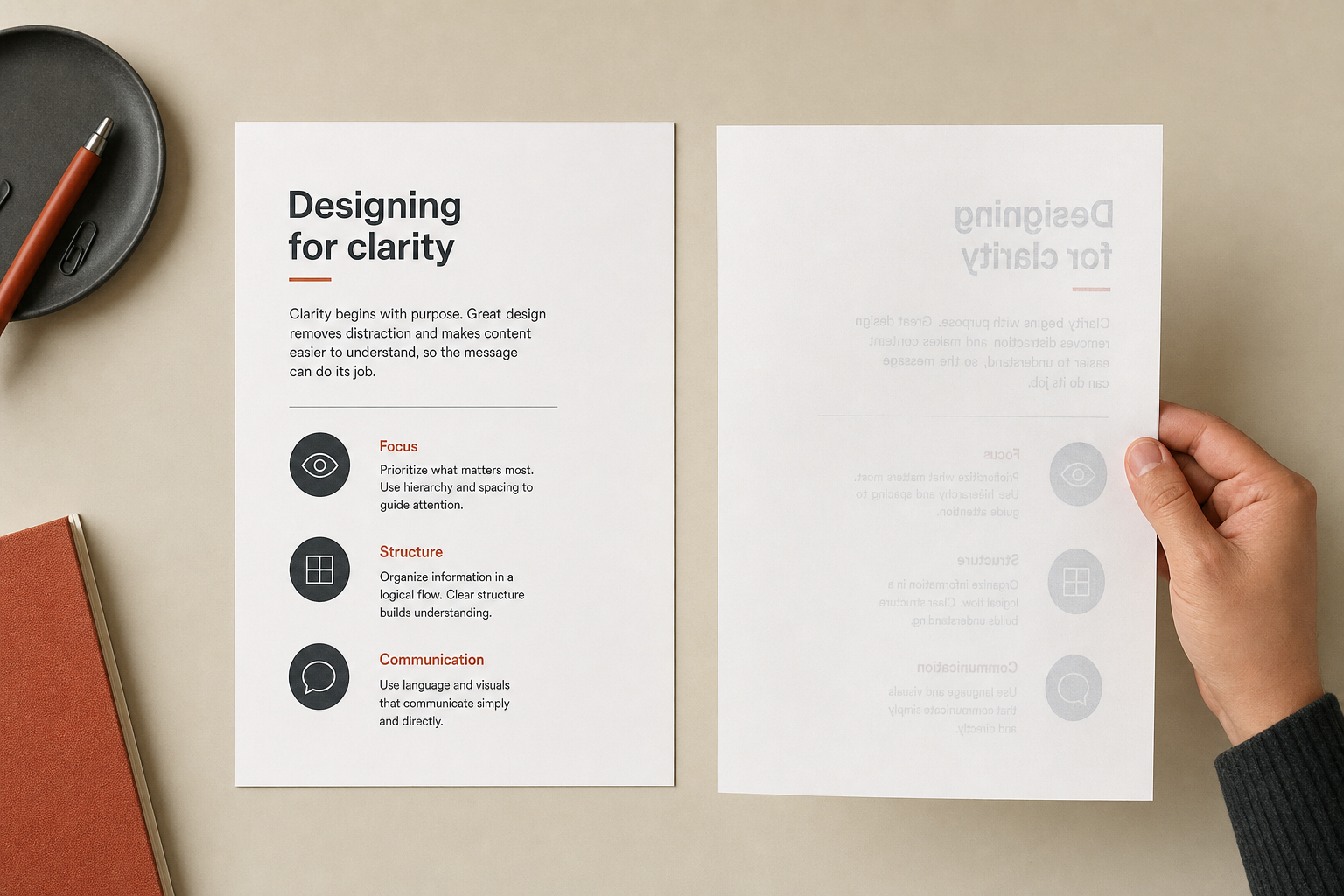
Opacity — how much light passes through the sheet — is directly tied to weight and paper composition. At 20 lb, opacity is adequate for single-sided printing. For duplex jobs, text printed on the reverse side will be visible through the sheet to some degree. How much this bothers you depends on the density of your content and your tolerance for it.
Print Quality and Compatibility
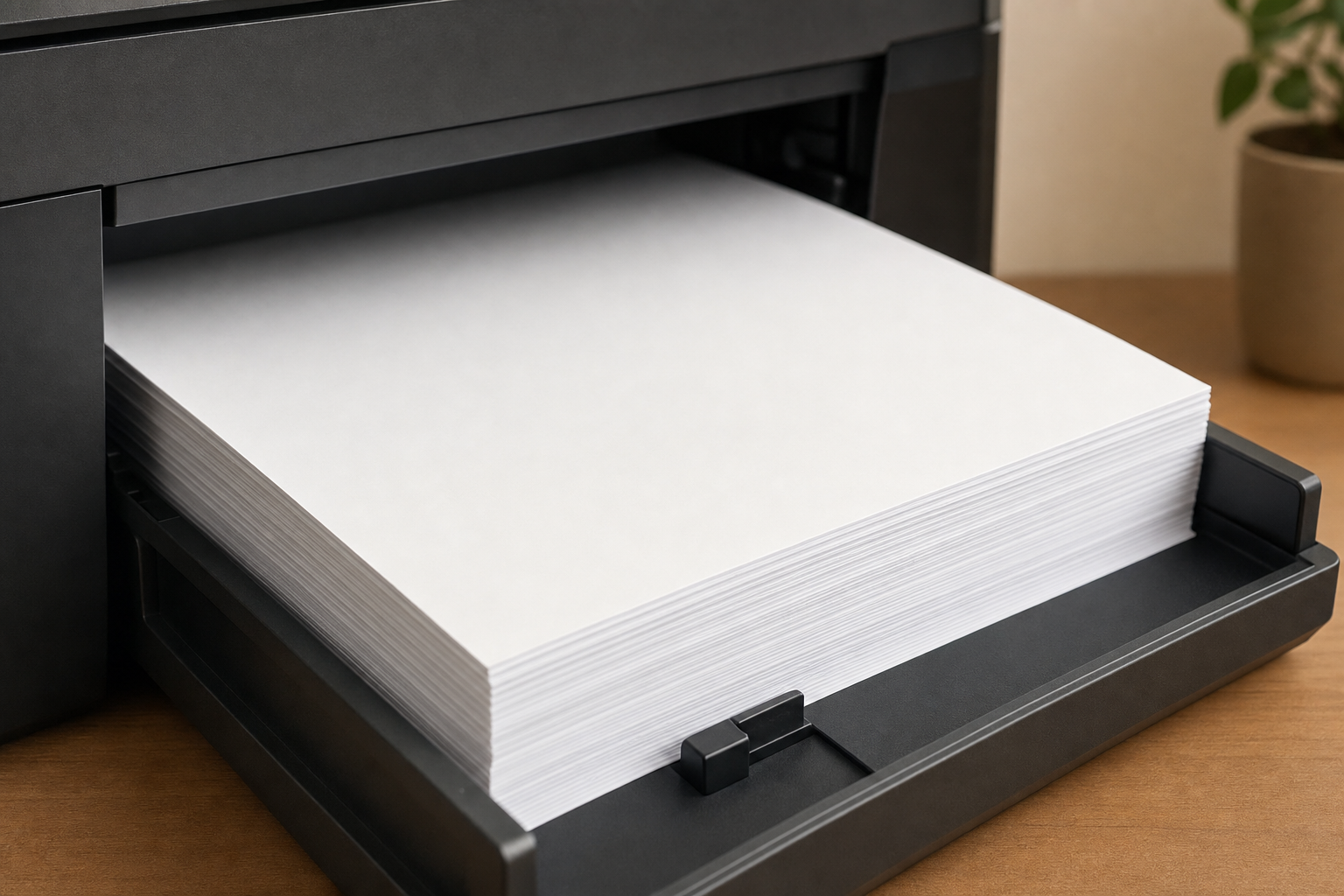
This paper is marketed as multipurpose, meaning it is designed to work in laser printers, inkjet printers, and copiers. That claim is reasonable for a 20 lb sheet at this brightness level. Laser printers fuse toner to the surface and are generally less sensitive to paper surface texture than inkjet printers, which deposit liquid ink that needs to absorb or dry without spreading.
For laser printing of text documents, this paper should perform without issue. For inkjet printing, results will depend on your printer’s ink delivery and the content. Text will print sharply. Color graphics and photos will look acceptable but not impressive — inkjet photo output benefits from coated or photo-specific paper, not standard multipurpose stock.
Print sharpness for text is where 20 lb multipurpose paper at 92 brightness performs most reliably. Characters will be defined, lines will be clean, and the output will be appropriate for professional correspondence, internal documents, and everyday copying. Do not expect the same crispness for fine-detail graphics or small-font text that you would get from a higher-brightness, heavier sheet.
Jam Risk and Sheet Consistency
Paper jams in office printers are caused by several factors: humidity warping sheets, inconsistent sheet thickness, paper dust from cutting, and static causing sheets to stick together. A 20 lb paper at standard moisture content should feed reliably in most modern printers. Whether this specific product has higher or lower jam rates than competitors is not something we can state with evidence, and we have not run a comparison.
What we can say is that paper stored in humid conditions, or paper from a damaged case that has been exposed to moisture, will jam more frequently regardless of brand. If you buy by the case, storage conditions matter. Keep reams sealed until use, store in a climate-controlled space, and do not leave open reams in a humid environment.
Paper dust — fine particles shed during cutting — can accumulate in printer mechanisms over time. This is a general concern with high-volume paper use, not specific to this product, but worth noting if your printer requires regular maintenance.
Packaging and Shipping a 10-Ream Case
A 10-ream case of 5,000 sheets is heavy. Shipping a dense, rigid box creates real risk of corner and edge damage during transit. Damaged packaging can expose reams to moisture or compression that affects sheet flatness and feed performance. This is a practical concern that most product listings ignore entirely.
If you order this case and it arrives with significant box damage, inspect the individual reams before loading paper into your printer. Compressed or moisture-affected sheets are more likely to cause feed problems. Whether Amazon’s current packaging adequately protects the case in transit is not something we can confirm — shipping outcomes vary by carrier, route and handling.
Price and Value
We do not publish current prices because they change. Check price on Amazon to calculate your per-sheet cost at the time of purchase. The relevant comparison is not just against other Amazon Basics products but against name-brand alternatives like Hammermill Copy Plus, Boise X-9, and HP Office20 — all of which occupy the same 20 lb, standard-brightness category.
At typical pricing, Amazon Basics paper by the case is positioned at or near the lower end of per-sheet cost for this category. Whether that difference is meaningful depends on your volume. An office printing 500 pages a month will see modest savings. An office printing 5,000 pages a month will see the difference accumulate meaningfully over a year.
The value calculation also includes the convenience of buying in bulk. Fewer reorder cycles, consistent supply, and a single purchase covering months of use are real benefits for offices with predictable print volume.
Realistic Alternatives
| Paper | Weight | Brightness | Best For |
|---|---|---|---|
| Amazon Basics AZ851120 | 20 lb | 92 | High-volume text, everyday copying |
| Hammermill Copy Plus | 20 lb | 92 | Similar use case, established brand |
| Boise X-9 | 20 lb | 92 | Similar use case, often competitive pricing |
| HP Office20 | 20 lb | 92 | Broad compatibility, widely available |
| Hammermill Premium Multipurpose | 24 lb | 96–100 | Duplex printing, color graphics, presentations |
If your primary concern is double-sided printing quality or color output, moving to a 24 lb paper with higher brightness is the practical upgrade. The per-sheet cost will be higher, but the performance difference on duplex jobs is real. For pure text and single-sided copying at volume, the Amazon Basics case competes directly with Hammermill Copy Plus and Boise X-9 — all three are 20 lb at 92 brightness, and the differences between them in daily use are unlikely to be significant.
Frequently Asked Questions
Is Amazon Basics copy paper good for everyday office printing?
For single-sided text documents, forms, and standard copying, yes. It is a 20 lb, 92-brightness sheet that meets the baseline requirements for routine office output. It is not the right choice for photo printing, color-heavy graphics, or presentation materials.
Is Amazon Basics multipurpose paper worth buying by the case?
If your office prints consistently at high volume and has dry storage space, buying by the case reduces per-sheet cost and reorder frequency. If your print volume is low or storage is limited, a single ream or two-ream pack is more practical.
Does Amazon Basics 20 lb paper work with inkjet and laser printers?
Yes, it is designed for both. Laser performance for text will be reliable. Inkjet performance for text will also be acceptable. For inkjet color graphics or photos, a coated or photo-specific paper will produce noticeably better results.
How bright is Amazon Basics copy paper compared with premium office paper?
At 92 brightness, it sits at the upper end of standard commodity paper. Premium papers from brands like Hammermill or Boise often reach 96–100 brightness. The difference is visible side by side, particularly for color printing, but less obvious for everyday black-and-white text.
Is this paper good for double-sided printing?
It is usable for duplex printing, but 20 lb paper at standard opacity will show some bleed-through from the reverse side, particularly with dense text or dark graphics. If double-sided output is a significant part of your workflow, a 24 lb paper with higher opacity is a better fit.
Does Amazon Basics printer paper jam easily?
There is no reliable evidence to make a specific jam-rate claim for this product. Standard 20 lb paper feeds reliably in most modern printers when stored correctly. Humidity, damaged packaging, and improper storage are the most common causes of feed problems with any paper at this weight.
Who should buy a 5,000-sheet case of printer paper?
Home offices and small businesses with consistent, high print volume, adequate dry storage, and a preference for fewer reorder cycles. If you print fewer than a few hundred pages a month, a case will sit for a long time and risks degrading in storage.
What are the downsides of Amazon Basics multipurpose copy paper?
The main limitations are show-through on double-sided jobs, modest performance for color and photo output, and the practical risk of shipping damage to a heavy case. It is also not differentiated from competing 20 lb commodity papers in any meaningful technical way — you are buying on price and convenience, not on a performance advantage.
Final Verdict
Amazon Basics Multipurpose Copy Printer Paper (AZ851120) does what a 20 lb, 92-brightness multipurpose paper is supposed to do. It is a competent commodity product at a competitive case price. The buyers who will get the most from it are those printing primarily text at high volume on laser printers, where the limitations of weight and opacity matter least.
The buyers who should look elsewhere are those doing regular duplex printing, color graphics, or anything where paper quality visibly affects the output. For those use cases, the modest extra cost of a 24 lb or higher-brightness sheet is worth it.
There is no strong reason to pay a premium for a name-brand 20 lb commodity paper over this one, and no strong reason to choose this over Hammermill Copy Plus or Boise X-9 on performance grounds alone. The decision comes down to price at the time you are buying. Check price on Amazon and compare per-sheet cost against what is available to you. If it is the lowest cost per sheet for a 20 lb, 92-brightness case, it is a reasonable buy for the right use case.