Skip to content
 Atlas Organic Extra Virgin Olive Oil, Moroccan, 1 L Review: Is It Worth It?
Most olive oil reviews either repeat the back-label copy or make sweeping claims about flavor without explaining what any of it means for someone who just wants a reliable bottle for weeknight cooking. This page does something different. It is a RESEARCH-BASED REVIEW that translates what is actually knowable about Atlas Organic Extra Virgin Olive Oil into practical buying guidance: what the label signals, what Moroccan EVOO tastes like compared to more familiar profiles, which kitchen tasks suit it, and whether the 1 L size makes financial sense for a regular home cook.
The Product Shortlist may earn a commission from qualifying purchases. This does not affect our verdict.
Quick Answer
Best for: Home cooks who use EVOO daily, enjoy a bolder, peppery-to-grassy flavor profile, and want single-origin traceability without moving into specialty-retailer pricing.
Avoid if: You prefer a mild, buttery oil for everyday use; you cook infrequently and will not finish a liter within a few months of opening; or you need a neutral high-heat frying oil.
What You Are Actually Buying
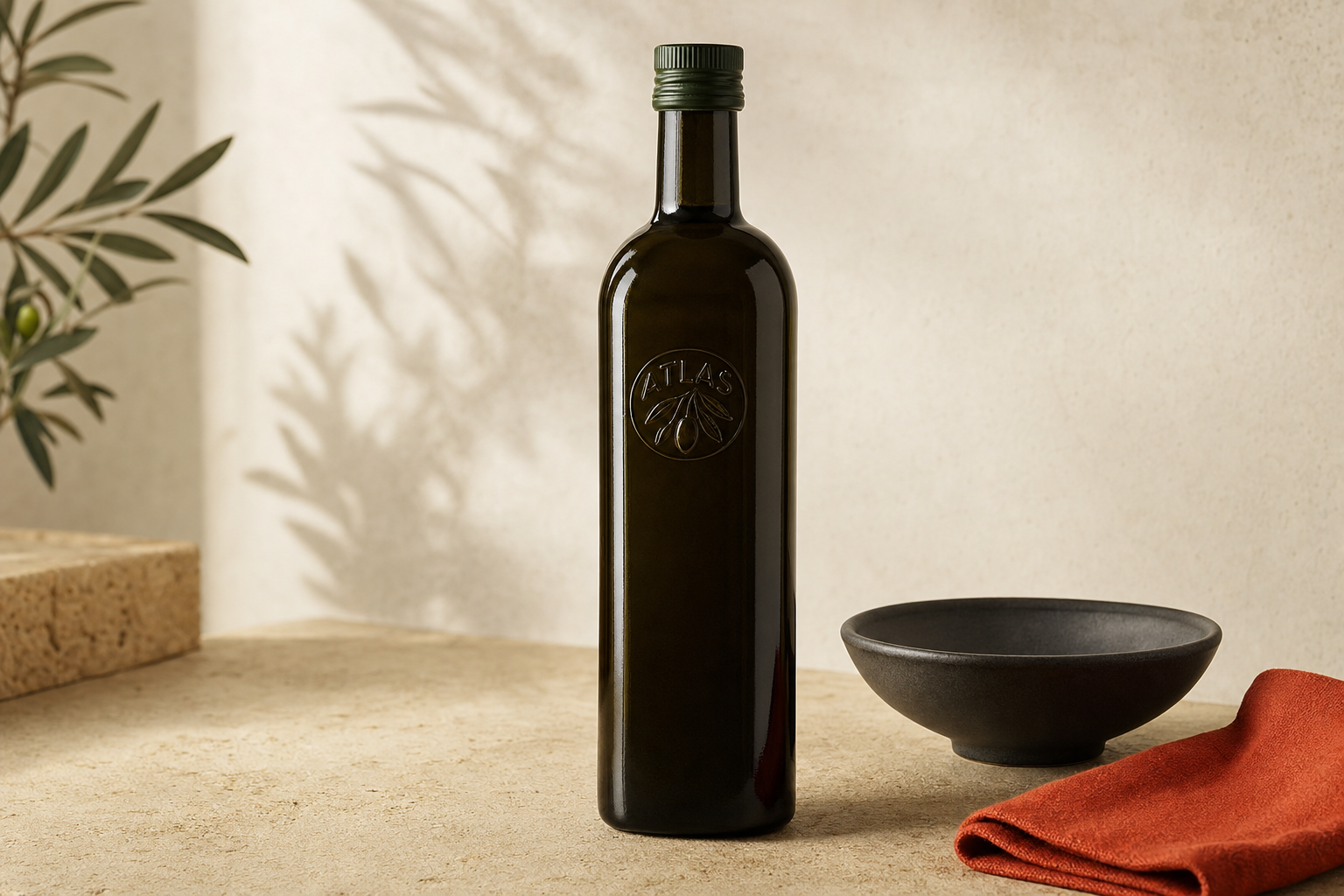
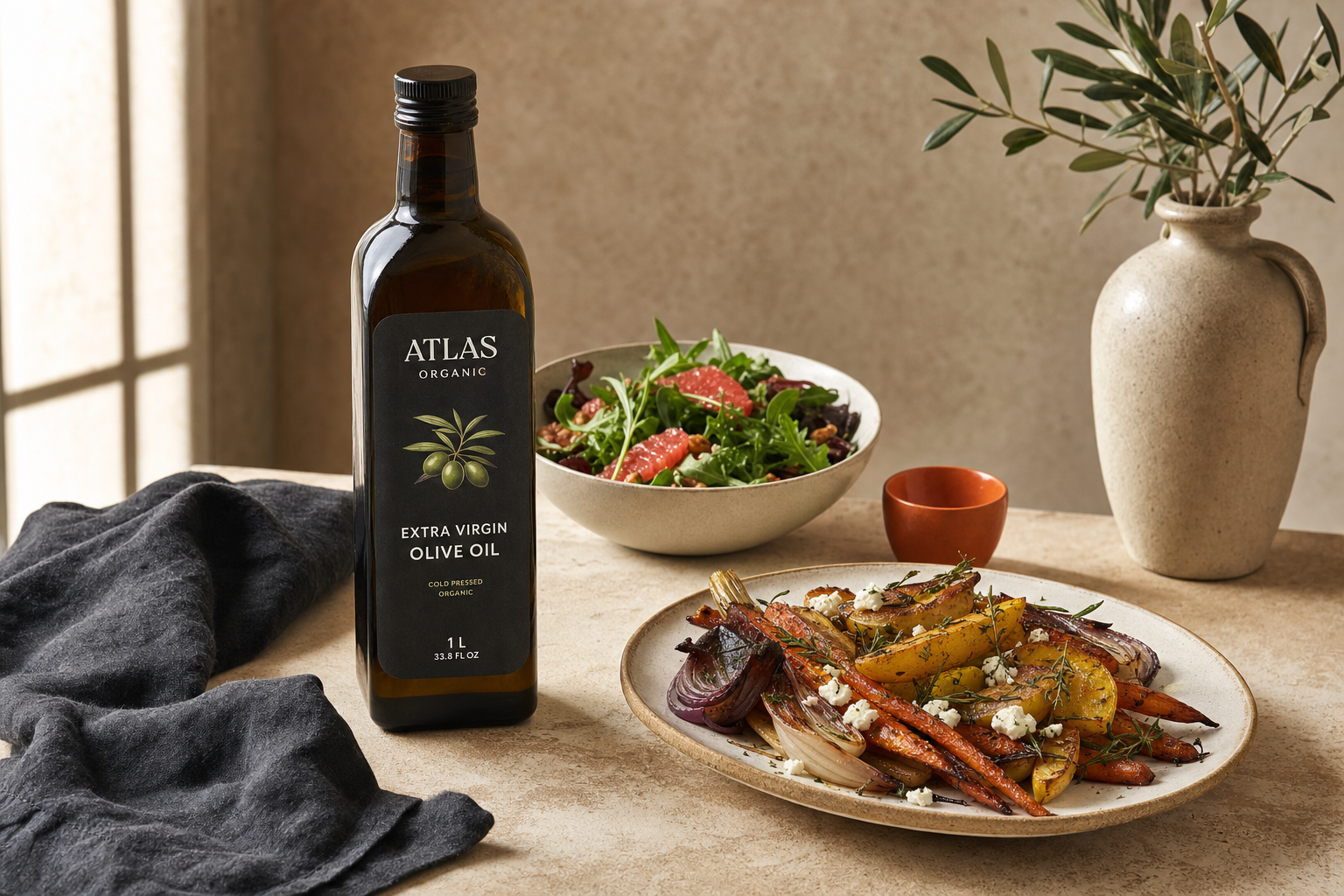
Atlas is a Moroccan brand producing extra virgin olive oil from single-origin Moroccan olives, certified organic. The 1 L variant reviewed here is the standard retail size for regular household use.
A few things the label tells you that actually matter:
- Single-origin: The oil comes from one country — Morocco — rather than being a blend of oils from multiple Mediterranean countries. Blended EVOOs are legal and common; they allow producers to maintain a consistent flavor profile year to year and keep costs down. Single-origin oils reflect the specific olive varieties, soil, and climate of their source region, which means more character but also more vintage-to-vintage variation.
- Organic certification: the certifying body is printed on the label and we have not verified which one it is. Organic certification for olive oil generally means no synthetic pesticides or fertilizers were used in cultivation. It does not, by itself, guarantee superior flavor or freshness.
- Extra virgin: This is the highest grade classification for olive oil, indicating the oil was produced by mechanical means only (no chemical extraction) and meets acidity and sensory standards. EVOO is not a marketing term — it has a defined standard, though enforcement varies by market.
- Morocco as a source: Morocco has become a significant olive oil producer with a growing reputation for quality, particularly from the Picholine Marocaine variety. Moroccan EVOOs tend toward a more robust, grassy, and peppery profile compared to the milder, more buttery character of many commercial Italian or Spanish blends.
Flavor Profile and Practical Expectations
If your reference point for olive oil is a supermarket Italian blend, Atlas Organic is likely to taste noticeably different — more assertive, with a green, grassy quality and a peppery finish at the back of the throat. That peppery bite is not a defect; it is a marker of polyphenol content, which is associated with freshness and the natural compounds found in high-quality EVOO.
Whether that profile suits your cooking depends on what you are making. A bold Moroccan EVOO works well where the oil is a flavor contributor: drizzled over roasted vegetables, used in a vinaigrette, spooned over hummus or soup, or served as a dipping oil with bread. It holds its own against strong ingredients like garlic, lemon, and herbs.
Where it is less ideal: dishes where you want the oil to stay in the background — delicate fish, mild egg preparations, or baking where a neutral fat is called for. In those cases, a milder oil will serve you better.
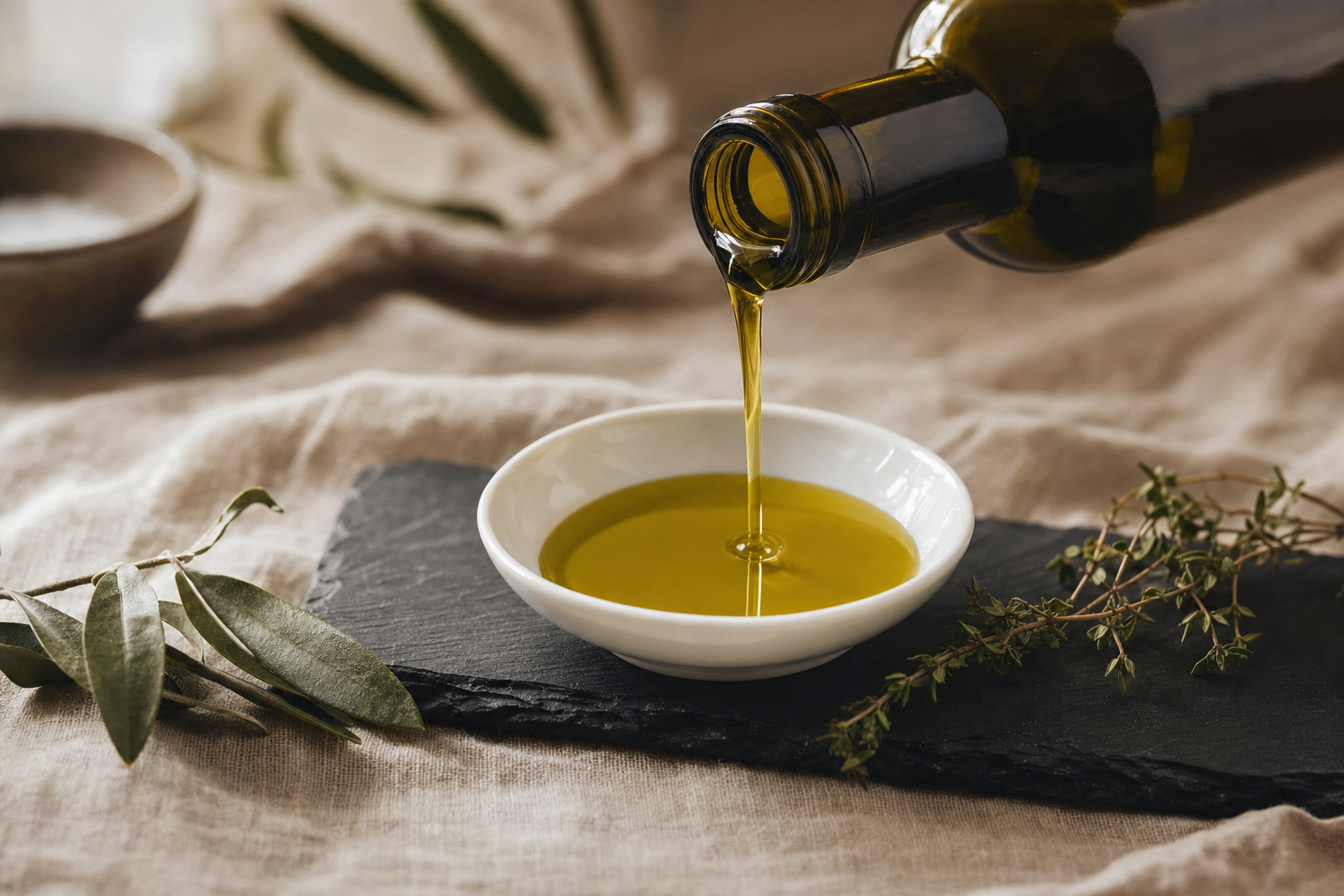
Flavor intensity also changes with freshness. A bottle closer to harvest will have more pronounced green and peppery notes. As the oil ages, those notes soften and eventually the oil becomes flat and stale. This is why harvest date matters more than any tasting note on the label.
Cooking Use: Finishing vs Sautéing
There is a persistent misconception that extra virgin olive oil cannot be used for cooking because of its smoke point. The reality is more nuanced. EVOO has a smoke point that is generally adequate for home sautéing, pan sauces, and roasting at moderate temperatures. The concern is more about wasting a flavorful, more expensive oil on high-heat applications where its character is destroyed anyway.
For Atlas Organic specifically:
- Best use: Finishing dishes, dressings, dips, and light sautéing where the oil’s flavor is part of the dish.
- Acceptable use: Roasting vegetables at moderate oven temperatures, cooking eggs over medium heat, building a soffritto.
- Not the right tool: Deep frying, very high-heat searing, or any application where you need a truly neutral fat. Use a refined oil for those tasks.
If you are buying this oil primarily to fry at high heat, you are paying for flavor complexity you will cook away. A less expensive refined olive oil or neutral cooking oil is the more practical choice for that job.
Freshness and Quality Signals
Olive oil degrades with time, light, and heat. The most useful thing you can do before buying any EVOO — including this one — is check the harvest date or best-by date on the listing or bottle. A best-by date of 18–24 months from harvest is standard; a harvest date is more informative because it tells you exactly how old the oil is.
Signals that favor quality in this product’s listing:
- Dark glass bottle: Atlas uses dark glass, which limits light exposure and slows oxidation. This is a meaningful packaging choice, not just aesthetics. Clear plastic or clear glass bottles are a practical downside for any EVOO.
- Single-origin sourcing: Traceability to a specific country of origin is a positive signal, though it does not guarantee any particular harvest date on the bottle you receive.
- Organic certification: Adds a layer of third-party oversight to production, though again, this is about process, not freshness.
What you cannot verify from a listing alone: the exact harvest date of the specific batch you will receive, storage conditions during shipping and warehousing, or whether the bottle has been sitting in a warm warehouse. If freshness is a priority, buying from a retailer with high turnover and checking the date on arrival is the practical approach.
The 1 L Bottle: Value Assessment
A liter of olive oil is roughly 67 tablespoons. A home cook using two tablespoons per day — a realistic figure for someone cooking most meals at home — would go through a liter in about five weeks. Someone cooking three or four nights a week might take three to four months.
The practical implication: if you cook regularly, a 1 L bottle is a sensible size. You will use it before it goes stale (olive oil is generally best within 18–24 months of harvest and within a few months of opening). If you cook infrequently, a smaller bottle is the smarter buy even if the per-liter cost is higher, because stale oil is wasted money regardless of what you paid for it.
The 1 L size also represents a reasonable middle ground between the small 250–500 mL bottles common at specialty retailers (higher per-liter cost, lower commitment) and the large 3 L tins that make sense only for very high-volume households.
Strengths and Weaknesses
Strengths
- Single-origin Moroccan sourcing with organic certification — more traceability than most supermarket blends
- Dark glass bottle limits light-related degradation
- Assertive, polyphenol-rich flavor profile suits finishing and dressing applications well
- 1 L size is practical for regular home cooks
- Available through a major retailer, reducing friction for reordering
Weaknesses
- Harvest date visibility varies bottle to bottle — check yours on arrival
- Flavor intensity may not suit cooks who prefer a mild, neutral everyday oil
- Not the right oil for high-heat frying
- Single-origin character means vintage variation — the oil may taste slightly different batch to batch
- 1 L is too much volume for infrequent cooks before freshness fades
Price, Value, and Realistic Alternatives
We don’t print a price here — check the listing directly. The comparison below is based on category positioning rather than live prices.
| Option | Origin | Organic | Flavor Profile | Best For |
|---|---|---|---|---|
| Atlas Organic EVOO 1 L | Morocco (single-origin) | Yes | Bold, grassy, peppery | Finishing, dressings, light cooking |
| Typical supermarket EVOO blend | Multi-country blend | Often no | Mild, neutral | Everyday cooking, background fat |
| California Olive Ranch (standard) | USA / blend | Some SKUs | Mild to medium | Everyday cooking, accessible flavor |
| Specialty single-estate EVOO | Varies | Varies | Varies widely | Finishing, gifting, tasting |
Atlas Organic sits in a practical middle tier: more origin transparency and flavor character than a generic supermarket blend, less expensive and more accessible than small-batch specialty oils. For a home cook who wants to move beyond commodity EVOO without committing to specialty-retailer prices, that positioning makes sense.
Who Should Buy It and Who Should Skip It
Buy it if:
- You cook most days and will use a liter within two to three months of opening
- You use olive oil as a flavor element — in dressings, as a finishing drizzle, in dips — not just as a cooking fat
- You want organic certification and single-origin sourcing without paying specialty-shop prices
- You are curious about Moroccan olive oil and want a practical everyday introduction to the profile
Skip it if:
- You cook infrequently and will not finish a liter before it goes stale
- You want a mild, neutral oil that stays in the background of dishes
- Your primary use is high-heat frying, where a refined oil is more appropriate and more economical
- You need a verified harvest date before purchasing and cannot confirm it from the current listing
Frequently Asked Questions
Is Atlas Organic Extra Virgin Olive Oil worth it?
For a home cook who uses EVOO regularly and wants single-origin Moroccan character with organic certification, yes — it offers more traceability and flavor than most supermarket blends at a price point that does not require a specialty retailer. For infrequent cooks or those who prefer a mild oil, it is less clearly worth the premium over a basic EVOO.
What does Atlas Organic olive oil taste like?
Based on the characteristics of single-origin Moroccan EVOO from the Picholine Marocaine variety, expect a grassy, green, and moderately peppery profile — more assertive than most commercial Italian or Spanish blends. The peppery finish at the back of the throat is a sign of polyphenol content, not a defect. Exact flavor will vary by harvest year and freshness of the specific bottle.
Is Atlas Organic EVOO good for everyday cooking?
It depends on how you cook. If you use olive oil as a flavor contributor — in dressings, as a finishing drizzle, in light sautéing — it is well suited to daily use. If you want a neutral background fat for all-purpose cooking, a milder oil will serve you better day to day.
Can you use Atlas Organic olive oil for frying or sautéing?
Light to moderate sautéing, yes. High-heat deep frying, no — not because EVOO cannot handle moderate heat, but because you would be destroying the flavor complexity you paid for, and a refined oil is more practical for that task. Use it where the oil’s character contributes to the dish.
How do you know if Atlas Organic olive oil is fresh?
Check the harvest date or best-by date on the bottle when it arrives. A best-by date 18–24 months from harvest is standard. The dark glass bottle helps slow oxidation during storage, but it does not tell you how long the bottle sat in a warehouse before shipping. If the date is not visible on the listing, check it on arrival and contact the seller if it is unclear.
Is single-origin Moroccan olive oil better than blended EVOO?
Not categorically better — different. Single-origin oils offer more traceability and a more distinct flavor profile tied to a specific place and harvest. Blended EVOOs offer consistency across vintages and are often milder. Which is better depends on what you want from the oil. If flavor character and origin transparency matter to you, single-origin is worth the modest premium. If you want reliable mildness, a quality blend may suit you better.
Does the 1 L bottle make sense for regular home cooks?
Yes, for cooks who use olive oil most days. A liter is roughly 67 tablespoons — a daily user will finish it in five to eight weeks, well within the freshness window after opening. For less frequent cooks, a smaller bottle is the smarter buy even at a higher per-liter cost, because stale oil is wasted money.
Who should buy Atlas Organic Extra Virgin Olive Oil and who should skip it?
Buy it if you cook regularly, enjoy a bold grassy-peppery oil, and want organic single-origin sourcing at a practical price. Skip it if you cook infrequently, prefer a mild neutral oil, or primarily need a high-heat frying fat.
Final Verdict
Atlas Organic Extra Virgin Olive Oil is a well-positioned single-origin Moroccan EVOO for home cooks who want more than a commodity bottle without crossing into specialty-retailer territory. The dark glass packaging, organic certification, and single-origin sourcing are all meaningful signals. The flavor profile — grassy, assertive, peppery — is genuinely suited to finishing and dressing applications, and adequate for moderate cooking tasks.
The main caveats are practical ones: verify the harvest date on the bottle you receive, match the 1 L volume to your actual use rate, and be honest about whether you want a bold oil or a neutral one. If those boxes check out, this is a reasonable buy at its price point.
The Product Shortlist may earn a commission from qualifying purchases. This does not affect our verdict.