Skip to content
 Amazon Basics Extra Thick Exercise Yoga Mat Review: Is It Worth It?
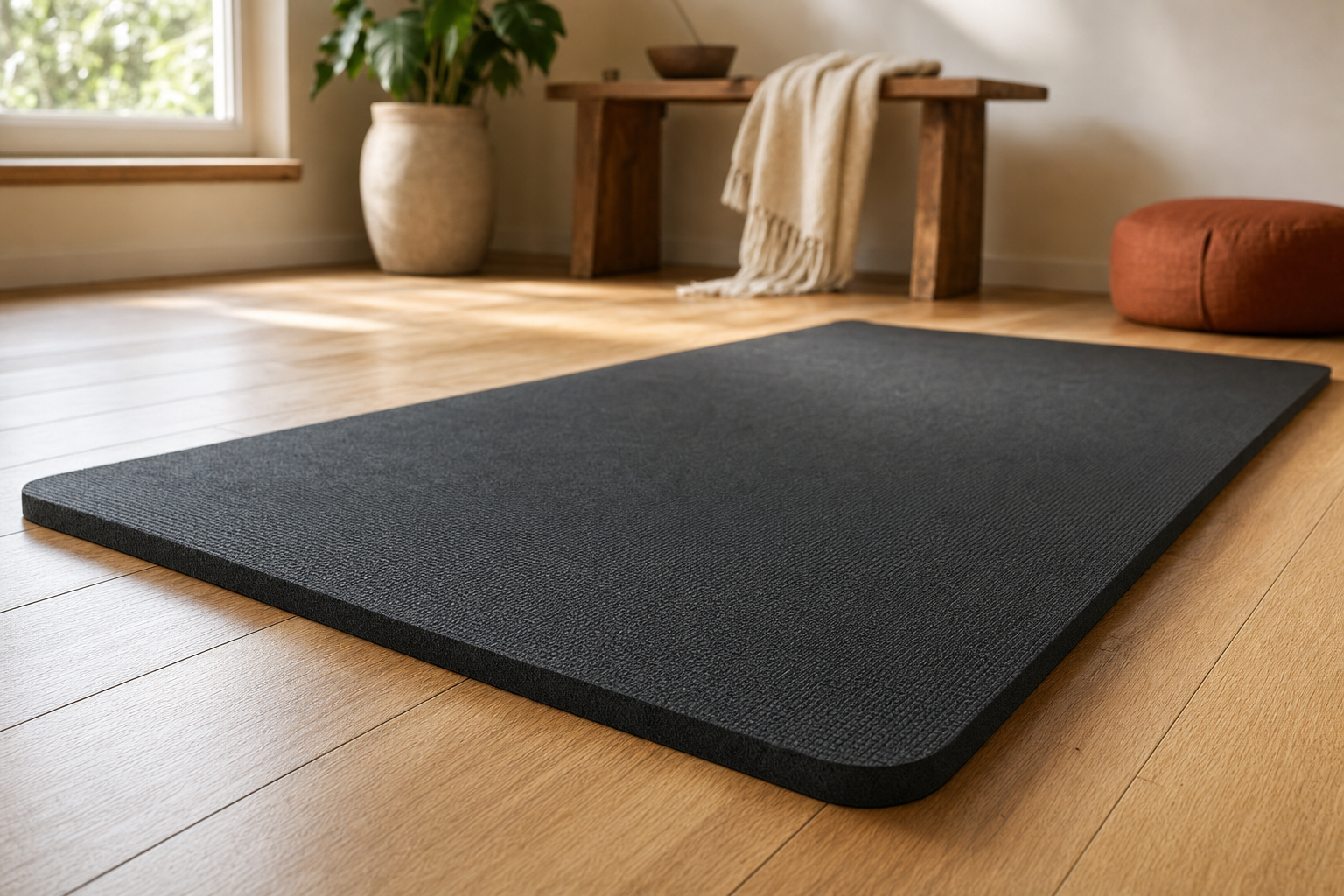
The Amazon Basics Extra Thick Exercise Yoga Mat (model YM2001) is a 74 x 24-inch closed-cell foam mat sold at a budget price point. It shows up constantly in search results for people who want more cushioning than a standard 3mm yoga mat provides. The question worth asking is not whether it is cheap — it clearly is — but whether the extra thickness actually delivers on its promise for the workouts it is meant to support, and where it falls short.
This is a RESEARCH-BASED REVIEW. We have not personally tested this mat. Our analysis draws on published product specifications, verified category knowledge about closed-cell foam mat behavior, and a structured assessment of what the stated features mean in practice for different users and workout types.
The Product Shortlist may earn a commission from qualifying purchases. This does not affect our verdict.
Check price on Amazon before reading further — pricing on Amazon Basics products shifts regularly.
Quick Answer
For floor workouts, stretching, and low-impact exercise where cushioning at pressure points matters, this mat does its core job at a price that is hard to argue with. The extra thickness is a genuine benefit for knees, hips, and elbows on hard floors. The reservations are real, though: extra thickness reduces stability for standing balance poses, grip performance on smooth floors is not guaranteed to match pricier mats, and long-term compression behavior of budget foam is a known category limitation. Buy it for floor work and stretching. Do not buy it expecting the stability of a thin, dense yoga mat.
Best For
- Floor-based workouts: core work, bodyweight exercises, stretching routines
- Users with sensitive knees, hips, or elbows who need padding on hard floors
- Taller users who find standard 68-inch mats too short (74 inches provides meaningful extra length)
- Beginners building a home workout setup on a tight budget
- Supplementary mat use — a second mat for a spare room or travel
Avoid If
- You practice standing balance poses regularly — extra thickness compresses unevenly and reduces proprioceptive feedback
- You want a mat that holds its loft after months of daily heavy use — budget closed-cell foam compresses over time
- You need a mat wider than 24 inches — this is a standard-width mat despite the extra thickness
- You are doing hot yoga or any practice that generates significant sweat — grip under moisture is unverified for this model
The Tradeoff Generic Reviews Miss: Cushioning vs. Stability
Most reviews of this mat either praise the thickness or complain about it without explaining why both reactions are correct depending on what you are doing.
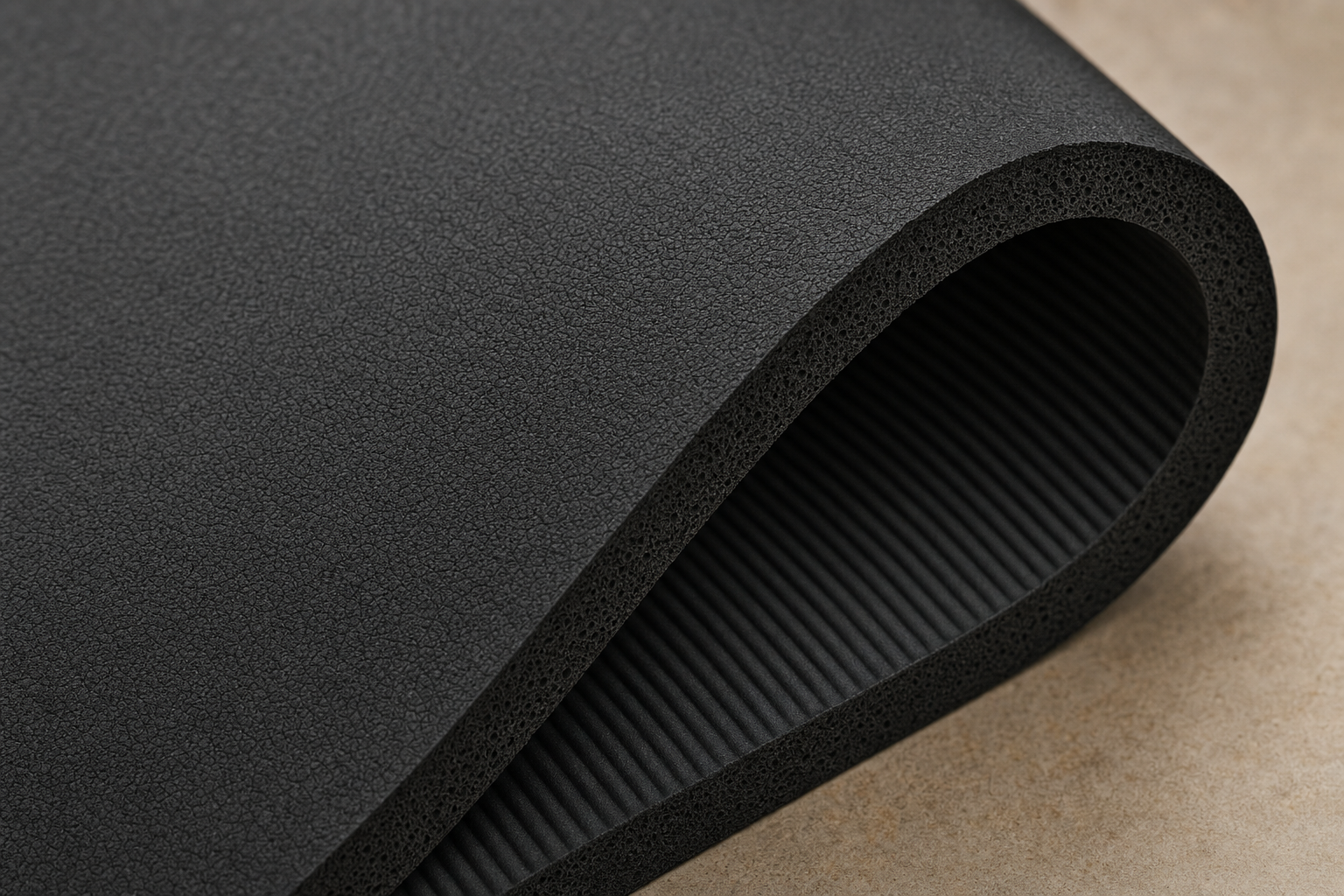
Extra thickness — typically in the range of 10mm or more for mats marketed as “extra thick,” though the exact specification for the YM2001 should be confirmed at the retailer listing — creates a softer surface that absorbs pressure at contact points. For floor exercises like planks, lunges, seated stretches, and supine core work, that cushioning is directly useful. Your knees and elbows are not grinding into a hard surface. That is the mat doing its job.
The same thickness becomes a liability in standing poses that require balance. When you stand on a thick foam mat, the foam compresses unevenly under your foot. Your ankle has to make constant micro-corrections that a thinner, denser mat would not require. Experienced yoga practitioners often prefer 3–4mm mats precisely because they can feel the floor through them. If your practice is primarily floor-based, this tradeoff costs you nothing. If you do a lot of Warrior III or tree pose, it costs you stability.
This is the central decision point. Know which category your workouts fall into before you buy.
Strengths
- Cushioning at pressure points: The extra thickness is the product’s primary value proposition, and for floor work it is a legitimate one. Knees, hips, and elbows benefit on hard floors.
- Length for taller users: At 74 inches, this mat gives users up to roughly 6’1″ a usable margin that a standard 68-inch mat does not. Taller users frequently cite mat length as a frustration with standard options.
- Closed-cell foam surface: Closed-cell construction means the surface does not absorb sweat and moisture the way open-cell foam does, which makes cleaning straightforward — wipe down with a damp cloth.
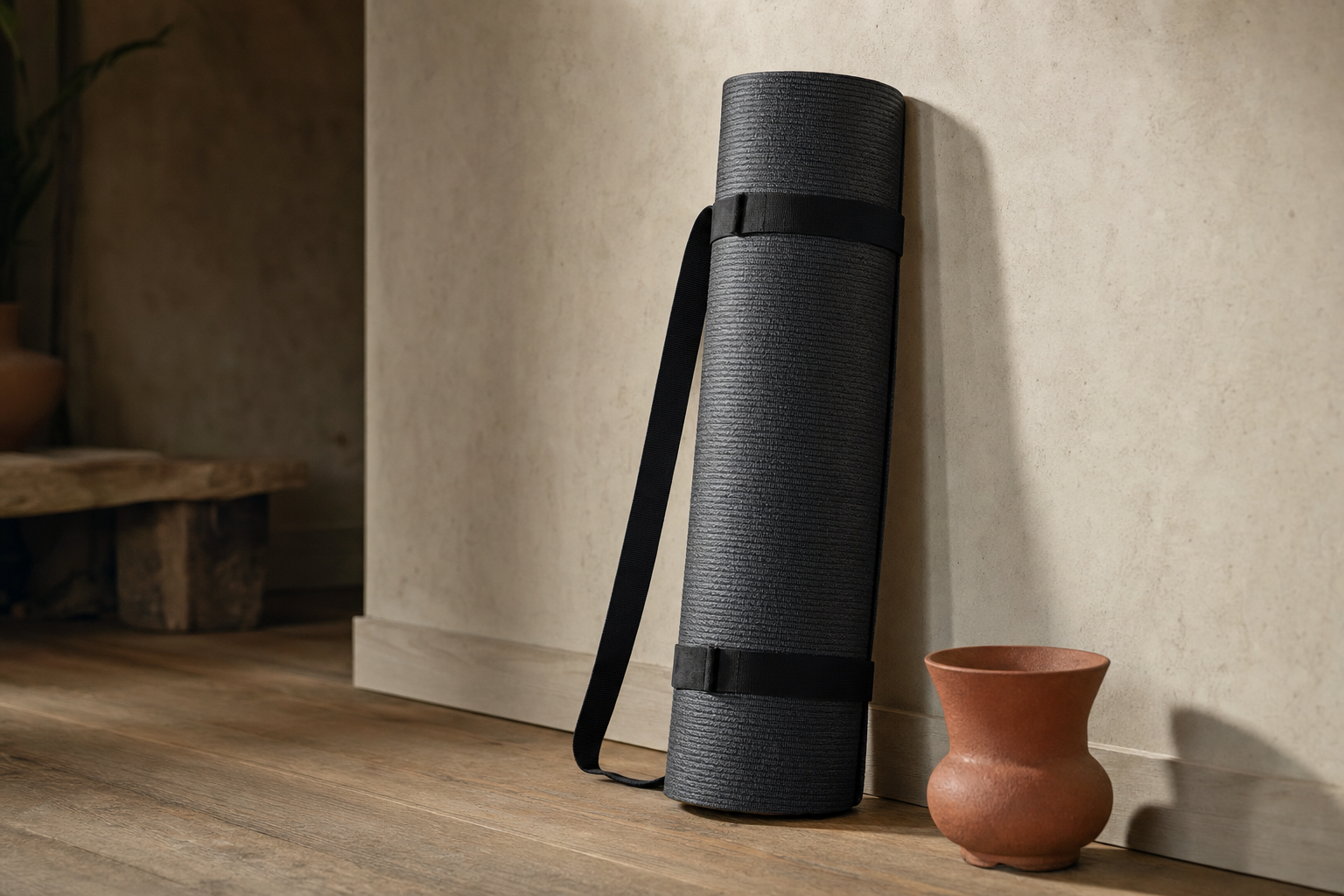
- Carry strap included: A basic but practical inclusion. It keeps the rolled mat manageable without needing a separate bag.
- Price: At the budget tier, this mat competes on value. For occasional or supplementary use, the cost-per-use math is favorable.
Weaknesses
- Foam compression over time: This is a category-wide limitation of budget closed-cell foam mats, not unique to Amazon Basics. With regular use, the foam compresses and the mat loses some of its initial loft. How quickly this happens under daily heavy use is unverified for this model.
- Stability for balance poses: As explained above, extra thickness actively works against you in standing balance work. This is not a defect — it is physics — but it is a real limitation.
- Width is standard: At 24 inches, this is not a wide mat. Users who move laterally or want more room during floor exercises may find it limiting.
- Out-of-box odor: Closed-cell foam mats commonly have a noticeable chemical smell when first unrolled. This typically dissipates with airing out, but the timeline varies, and we have not tested how strong or persistent it is on this model.
- Grip on smooth floors: The bottom surface grip on polished hardwood or tile is a common variable in this product category. We have not tested how well the YM2001 holds position on different floor types without a non-slip underlay.
Size and Portability
The 74 x 24-inch footprint is the same width as most standard yoga mats but meaningfully longer. For users under roughly 5’8″, the extra length is unused space. For users between 5’9″ and 6’1″, it provides a comfortable margin. Above that height, even 74 inches may feel tight in full supine stretches.
The included carry strap is a practical detail. It does not make the mat compact — rolled, a thick foam mat is bulkier than a thin one — but it makes carrying it manageable. This is not a mat you will slip into a gym bag. It is a home-use or car-transport mat.
Grip and Floor Compatibility
Closed-cell foam mats generally perform better on carpet than on smooth hard floors. On hardwood or tile, the bottom surface needs enough texture or friction to prevent sliding during dynamic movements. Whether the YM2001’s bottom surface grips polished floors without a separate non-slip mat underneath is unverified. If you are using this on a smooth hard floor and plan to do any lateral movement or push-off exercises, factor in the possibility that you may need a non-slip underlay.
On carpet, sliding is less likely to be an issue, and the mat’s cushioning benefit is somewhat reduced since carpet already provides some padding.
Durability and Cleaning
Closed-cell foam does not absorb liquid, which is a practical advantage for cleaning. A damp cloth wipe-down is sufficient for routine maintenance. The surface should not be submerged or machine-washed.
Long-term durability depends heavily on use frequency and intensity. Budget foam mats in this category are not designed for daily high-intensity use over multiple years. For occasional stretching and floor work a few times per week, the mat should hold up reasonably well. For daily heavy use, expect the foam to show compression over time. No durability data is published for the YM2001 under specific use conditions.
Price and Value
The Amazon Basics YM2001 sits at the budget end of the exercise mat market. Check price on Amazon — Amazon Basics pricing changes frequently and the value calculation shifts with it.
At its typical price point, the value case is straightforward for floor workouts and stretching. You are paying for cushioning and length, not for premium materials or long-term durability. If you need a mat for occasional home use, the cost is easy to justify. If you are a daily practitioner who wants a mat to last several years, spending more on a denser, higher-quality foam or natural rubber mat is likely the better long-term decision.
Realistic Alternatives
| Mat Type | Best For | Key Tradeoff vs. YM2001 |
|---|---|---|
| Standard 4–6mm yoga mat (any brand) | Balance-focused yoga, portability | Less cushioning, more stability, easier to carry |
| Natural rubber yoga mat (mid-tier) | Grip, durability, yoga practice | Better grip and longevity, higher price, heavier |
| Foam exercise mat (interlocking tiles) | Large floor coverage, home gym | More coverage, less portable, different aesthetic |
| Amazon Basics YM2001 (this mat) | Floor workouts, stretching, budget use | Good cushioning, budget price, limited stability |
Specific competitor model names and current prices are not included here because pricing and availability change. Use the category descriptions above to guide your comparison shopping.
Frequently Asked Questions
Is the Amazon Basics Extra Thick Exercise Yoga Mat worth it?
For floor workouts and stretching on a budget, yes — the extra cushioning is a real benefit for pressure points like knees and hips. For balance-focused yoga or daily heavy use over years, the limitations become more relevant and spending more may be the better call.
How thick is the Amazon Basics YM2001 mat and who benefits most from it?
The precise millimeter figure should be read off the retailer listing. The mat is marketed as “extra thick,” which in this category typically means significantly more than a standard 3–4mm mat. Users who benefit most are those doing floor-based exercise where joint cushioning matters.
Is this mat good for stretching and floor workouts?
Yes. This is where the mat performs best. The extra cushioning reduces discomfort at contact points during supine stretches, core work, and bodyweight exercises on hard floors.
Does the extra thickness make it less stable for yoga poses?
Yes, for standing balance poses. Thick foam compresses unevenly underfoot, which reduces the proprioceptive feedback that helps with balance. For floor-based yoga sequences, this is less of an issue.
Is the 74 x 24 size long enough for taller users?
It provides more length than a standard 68-inch mat, which helps users up to roughly 6’1″. Above that height, even 74 inches may feel short in full supine positions. Width at 24 inches is standard and unchanged.
Does the Amazon Basics mat have enough grip on hardwood or tile?
Grip performance on smooth hard floors is unverified for this model. Closed-cell foam mats vary in bottom-surface friction. If you are using this on polished hardwood or tile, consider whether a non-slip underlay may be needed for dynamic movements.
How durable is the Amazon Basics extra thick yoga mat over time?
Budget closed-cell foam compresses with regular use. For occasional stretching and floor work, it should hold up reasonably. For daily intensive use, expect gradual loft loss over time. Specific durability data is not published.
Is this a good budget alternative to pricier exercise mats?
For the specific use case of floor workouts and stretching, yes. It is not a substitute for a high-density natural rubber mat if grip, longevity, and balance work are priorities. It is a reasonable substitute if cushioning and price are the main criteria.
Is the mat easy to clean and store?
Cleaning is straightforward — the closed-cell surface does not absorb moisture, so a damp cloth wipe-down works. Storage requires space for a rolled mat with some bulk due to the extra thickness. The included carry strap helps with transport.
Does the mat have a strong smell when new?
New closed-cell foam mats commonly have a noticeable odor out of the box. It typically dissipates with airing out. How strong or persistent the smell is on the YM2001 specifically is unverified.
Final Verdict
The Amazon Basics Extra Thick Exercise Yoga Mat (YM2001) is a practical, budget-priced mat that does its core job well for the right buyer. If you do floor workouts, stretching, or low-impact exercise on hard floors and want more cushioning at your knees, hips, and elbows without spending much, this mat makes sense. The 74-inch length is a genuine advantage for taller users. The closed-cell surface is easy to clean.
The limitations are equally real: extra thickness reduces stability for standing balance poses, budget foam compresses over time, and grip on smooth floors should be verified before assuming it will hold without a non-slip underlay. This is not a mat for a serious daily yoga practice focused on balance and precision. It is a mat for floor work and stretching on a budget.
If that matches your use case, check price on Amazon and make the call. The value proposition holds when the price is where it typically sits — it weakens if pricing has shifted upward since this review was last updated.