Skip to content
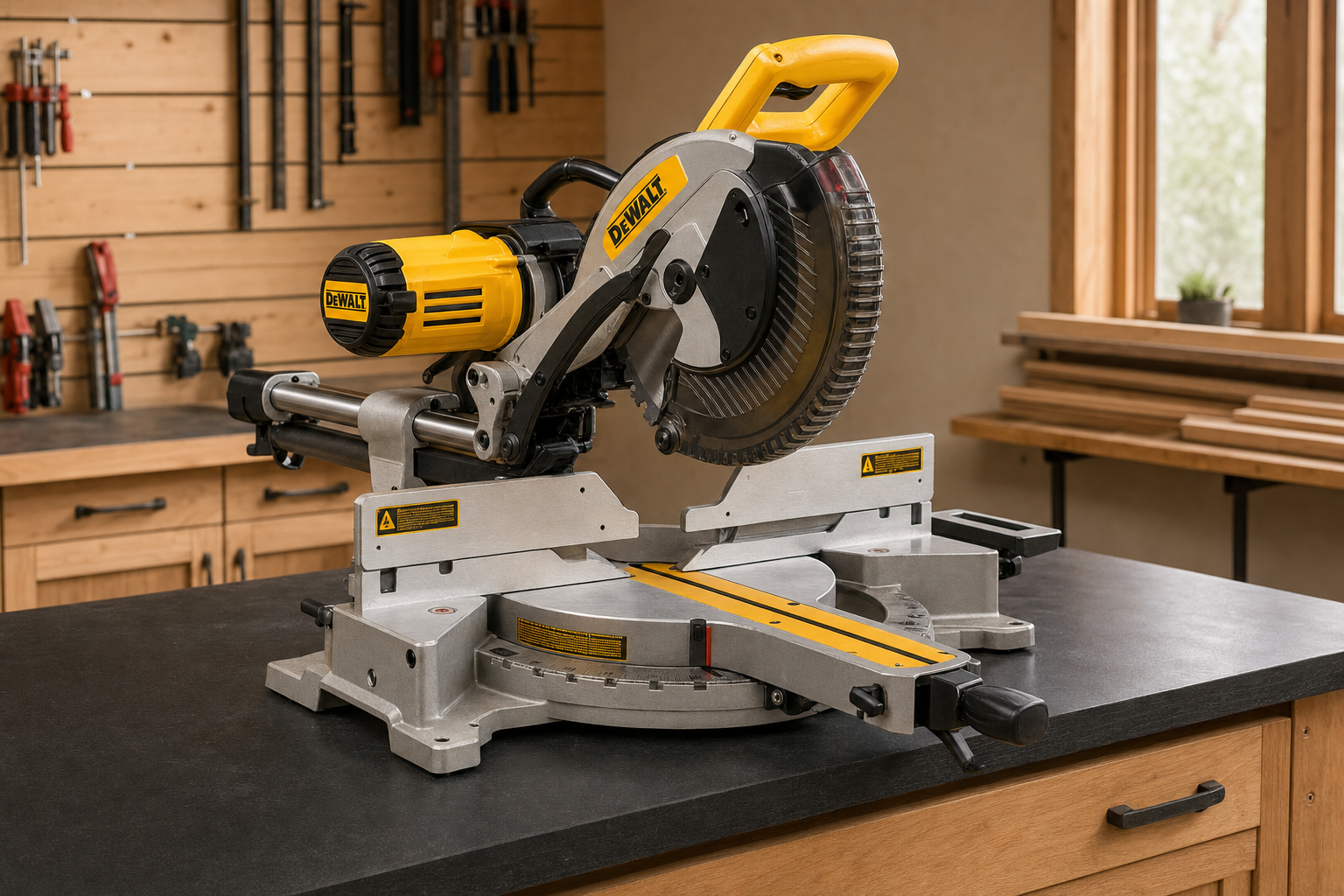
If you are considering the DEWALT DWS780, the real question is not whether a 12-inch double-bevel sliding miter saw sounds impressive on paper. It is whether your projects actually justify a large dedicated cutting station built for repeated crosscuts and angle cuts.
In this RESEARCH-BASED REVIEW, the DWS780 makes the most sense for DIYers and tradespeople who repeatedly cut trim, framing stock, or other material where angle consistency and workflow matter. Its biggest appeal is straightforward: a dedicated platform for repeatable angled cuts. Its biggest downside is just as straightforward: size, weight, and dust management can be cumbersome if your work is lighter, less frequent, or space-constrained.
Quick Answer
Research summary
The DEWALT DWS780 is worth considering if you want a full-size corded miter saw for frequent crosscuts, bevels, and miter work on a dedicated bench or work area. The main reason to choose it is workflow: a larger double-bevel sliding design is built around repeatable angle cuts rather than occasional convenience use.
If your work is light, occasional, or you need something easier to move around, this is where the trade-off becomes harder to justify. A full-size saw like this asks for more bench space, more commitment to setup, and more tolerance for dust and bulk than many casual buyers expect.
The Product Shortlist may earn a commission from qualifying purchases. This does not affect our verdict.
What the DWS780 is really buying you
Many review pages focus too heavily on raw specs. For most buyers, the better way to think about the DWS780 is as a workflow tool. You buy a saw like this because you expect to make repeated cuts with consistent angles on a stable platform, not because you simply need something that can make a cut once in a while.
That matters for projects such as trim work, baseboard, crown molding, and repeated framing cuts where accuracy and repeatability are more important than compact storage. A full-size compound miter saw also makes more sense when you want one corded station in a workshop or semi-permanent setup rather than a tool you constantly carry in and out for small jobs.
The other practical benefit is buyer fit. A 12-inch double-bevel sliding miter saw is aimed at people who already know their work regularly involves angle cuts, crosscuts, and material handling that benefits from a dedicated bench-mounted tool. If that describes your routine, the DWS780 is solving a real problem. If not, it may simply be more saw than you need.
Main trade-offs to think through first
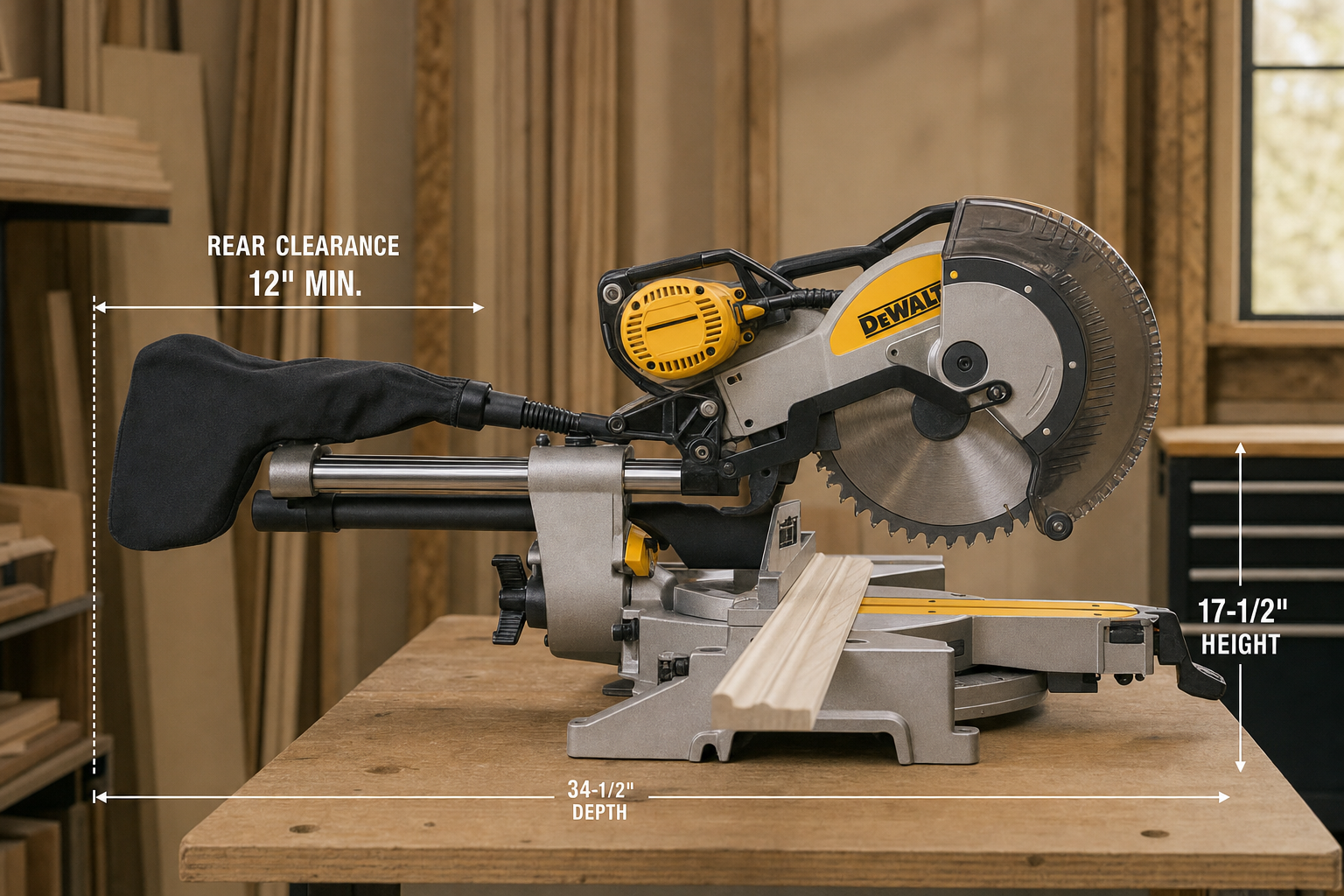
The biggest ownership cost is not subtle: this is a large saw category, and that affects where you put it, how often you move it, and how much bench space it claims. If you are expecting a compact grab-and-go tool for occasional weekend use, the DWS780 is the wrong style of saw to start with.
Dust management is the other trade-off worth taking seriously. For a saw in this class, dust collection performance is part of the ownership experience, not a minor footnote. Based on the supplied editorial evidence, dust management is a known limitation area rather than a headline strength. That does not make the saw unusable, but it does mean buyers should go in expecting compromise instead of assuming a clean, low-mess experience.
There is also the basic reality of setup expectations. A large miter saw can offer strong repeatability once integrated into your workflow, but that only pays off if you actually have the space and work volume to benefit from it. Buyers who cut infrequently often overestimate how much value they will get from a dedicated large-format saw.
Best fit: who should buy it
- DIYers who regularly build or install projects involving repeated crosscuts and angle cuts
- Tradespeople who want a dedicated corded cutting platform for miter and bevel work
- Buyers planning a bench-mounted or workshop-based setup
- People doing trim, molding, baseboard, or framing tasks where repeatability matters more than portability
If your work comes in batches rather than one-off cuts, the DWS780’s value proposition is easier to justify. It is not just about cut capability in the abstract; it is about making recurring work more controlled and predictable.
Who should skip it
- Anyone who needs a highly portable saw for light occasional work
- Buyers with limited bench space or a small shop footprint
- People who only make infrequent straight cuts and do not regularly need bevel or miter flexibility
- Shoppers considering a full-size sliding miter saw mainly because it feels like the safer long-term purchase
If that sounds like you, a smaller platform may be the better buy. For example, if portability matters more than a dedicated full-size station, a more compact model such as the DEWALT DCS361B may fit your workflow better than a heavier shop-oriented setup.
DEWALT DWS780 Saw pros and cons
| Pros | Cons |
|---|---|
| Designed around repeatable angled cuts on a dedicated platform | Large size can be excessive for occasional users |
| Good fit for repeated trim, molding, and framing-related workflows | Weight and bulk make portability a real trade-off |
| Double-bevel sliding format suits more demanding miter-saw tasks | Dust management is a notable weak point |
| Better matched to workshop or bench-mounted use than casual convenience use | Requires enough project volume and space to justify it |
How it compares in practical terms
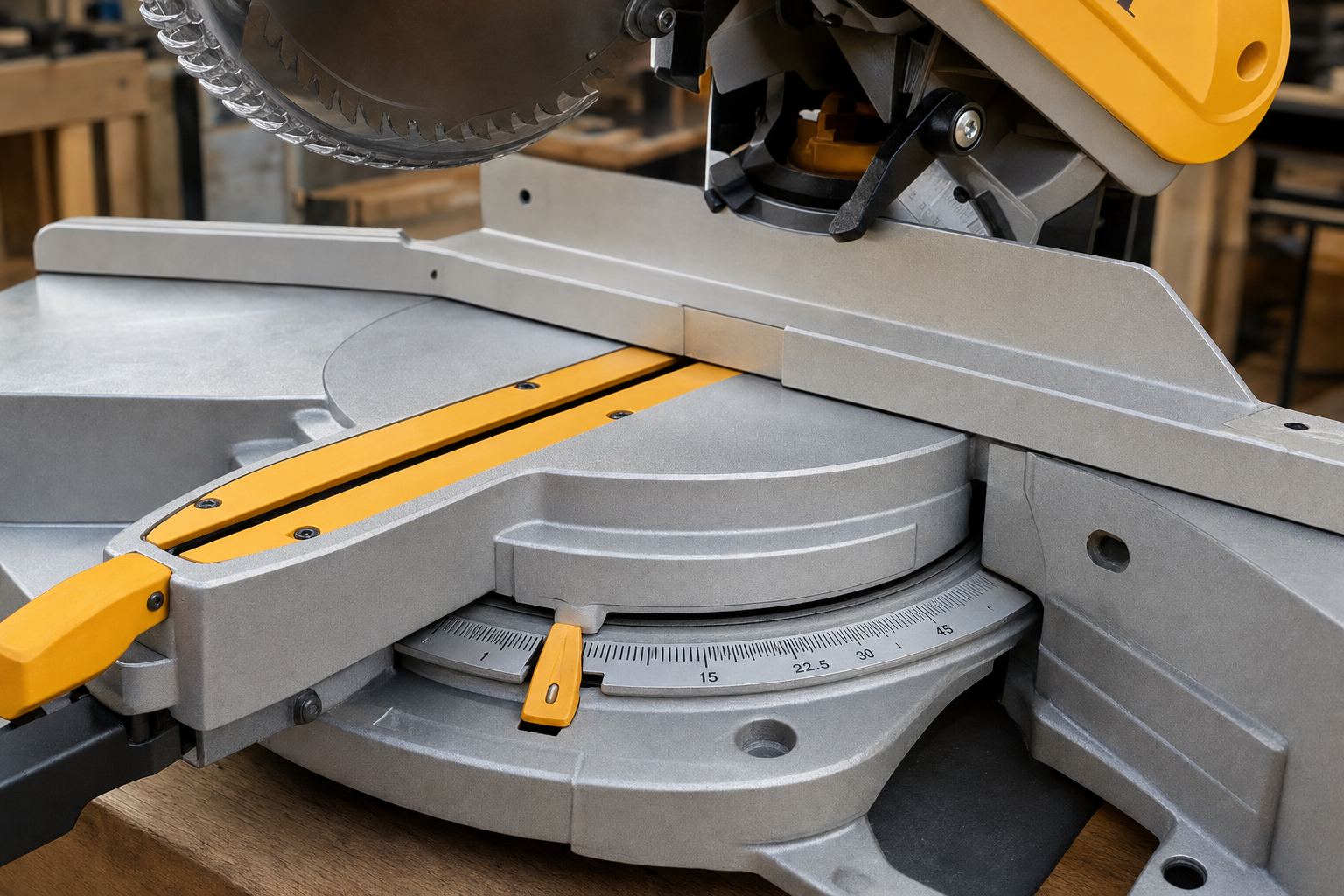
Compared with smaller or more portable saws, the DWS780’s advantage is not that it automatically makes every buyer’s life easier. It makes sense specifically when your workflow benefits from a full-size dedicated platform. That usually means more repeated cuts, more angle work, and more time spent at one cutting station.
Compared with compact cordless options, the trade-off is simple: you give up some portability and convenience in exchange for a more committed stationary cutting setup. If your jobs move constantly and your cuts are lighter-duty or less frequent, compact options can be easier to live with. If your work is repetitive and accuracy-driven, the DWS780’s format becomes more appealing.
That is why the answer to is DEWALT DWS780 Saw worth it depends less on the spec sheet and more on your workload. Frequent trim and angle work pushes the answer toward yes. Light occasional work pushes it toward no.
Bottom line
The DEWALT DWS780 is easiest to justify for buyers who already know they want a full-size 12-inch double-bevel sliding miter saw and have the space and project volume to use it properly. Its main strength is clear: it is built around repeatable crosscuts and angle cuts on a dedicated platform. Its main ownership costs are also clear: bulk, weight, and less-than-ideal dust management.
If that trade-off matches the way you actually work, it is a sensible saw to shortlist. If you are buying for occasional light-duty tasks or need easier transport, you should probably look smaller.
FAQ
Is the DEWALT DWS780 worth it for DIYers?
It can be, but mostly for DIYers who regularly make repeated crosscuts and angle cuts. If your projects often involve trim, molding, or framing-related work, a dedicated full-size miter saw can make more sense. For occasional light work, the size and weight may be harder to justify.
What is the main advantage of the DEWALT DWS780 over smaller miter saws?
The main advantage is its role as a dedicated cutting platform for repeatable angled cuts. That matters more when you do recurring miter and bevel work than when you only need a saw from time to time.
Is the DEWALT DWS780 too heavy for jobsite use?
For some buyers, yes. The supplied evidence indicates that size and weight are real trade-offs. It is better suited to buyers who accept the bulk of a full-size sliding miter saw than those who want a highly portable tool for quick light-duty work.
How good is dust collection on the DEWALT DWS780?
Dust management is one of the main compromises called out in the available evidence. It is better to treat dust collection as a limitation to evaluate carefully rather than assume it will be a standout strength.
Who should buy a 12-inch double-bevel sliding miter saw?
Buyers who regularly handle repeated crosscuts, bevels, and miter cuts and want a dedicated cutting station are the best fit. That usually includes active DIY workshop users and tradespeople with recurring trim or framing tasks.
Who should skip the DEWALT DWS780?
Skip it if you need a highly portable saw for light occasional work, have very limited bench space, or rarely make angle cuts. A smaller saw is often easier to own in those situations.