Skip to content
If you are considering this drone, the real question is not whether DJI can make a capable small aircraft. It is whether the DJI Mini 4K Fly More Combo gives you the right balance of portability, stabilized 4K capture, and ownership convenience without the extra flight protection found on higher-end Mini models.
This is a RESEARCH-BASED REVIEW, so the goal here is simple: help you decide whether this exact bundle makes sense for your travel or beginner use case, and where the biggest compromise sits before you buy.
Quick Answer
Research summary
The DJI Mini 4K Fly More Combo looks most appealing for travelers and first-time drone owners who want a sub-249g folding drone with 3-axis gimbal stabilization and 4K video in a portable package. Its clearest advantage is that it keeps the aircraft small and travel-friendly while still targeting stabilized aerial footage rather than toy-drone results.
The main reason to hesitate is also clear: it has no forward obstacle-avoidance system. It does have downward vision and infrared sensors that help it maintain position and hover; these do not replace pilot control or steer it around trees and walls. DJI’s Mini 4K manual explains these sensors and their limits. For some beginners, that will be an acceptable trade-off for a lighter, simpler, more portable drone. For others, especially anyone nervous about flying near obstacles or wanting more autonomous flight protection, that missing safety layer is the deciding factor.
If you already know you want the product, check the current price. The Product Shortlist may earn a commission from qualifying purchases. This does not affect our verdict.
What this bundle gets right
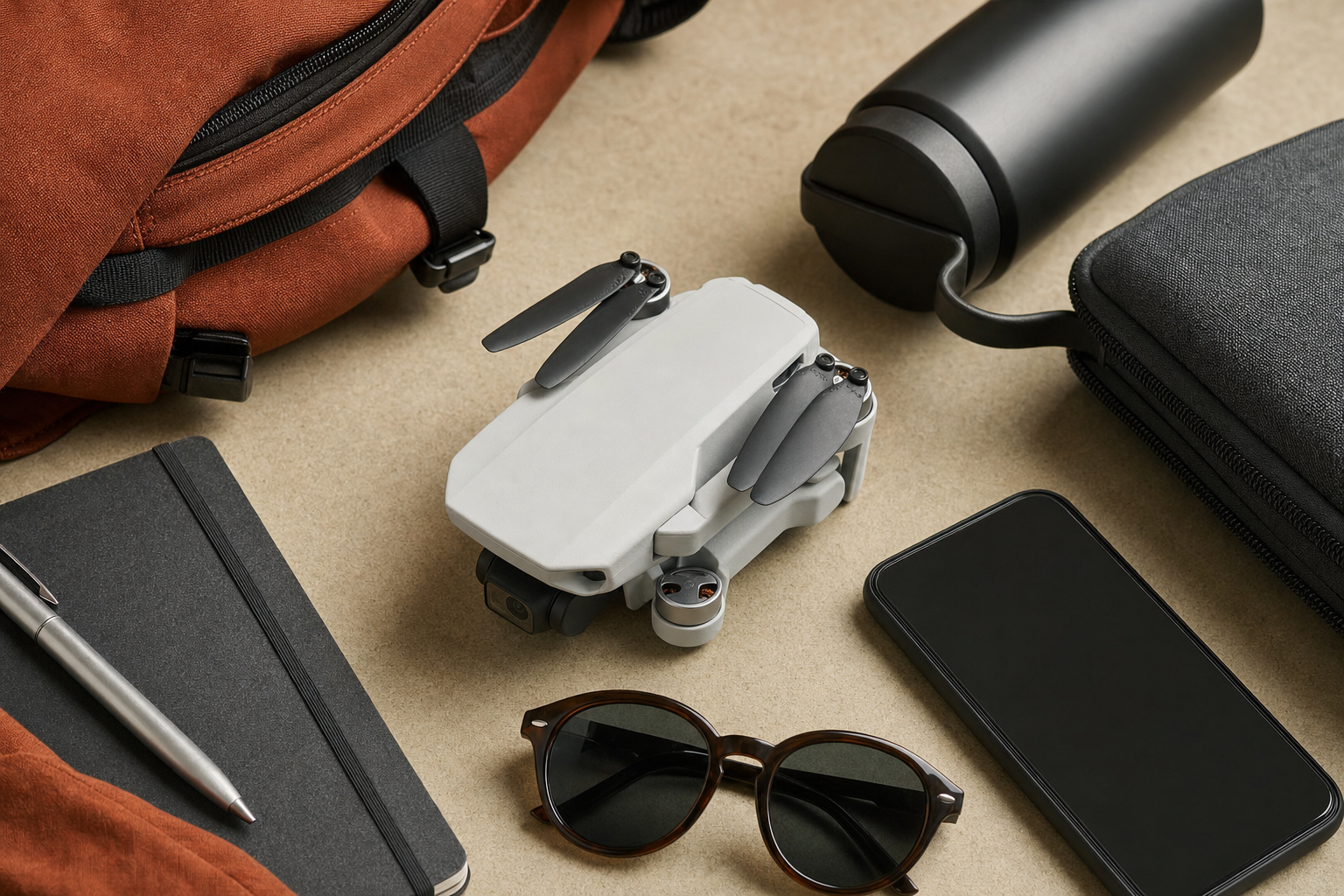
The strongest case for the DJI Mini 4K Fly More Combo is convenience. The aircraft is positioned around three things many buyers actually care about more than long spec lists: portability, stabilized video, and lower-friction ownership for casual use.
- Sub-249g travel appeal: A lightweight folding drone is easier to pack and more realistic to bring along on trips than a bulkier aircraft.
- 3-axis gimbal stabilization: That matters because it separates this from basic entry-level drones that may advertise resolution but struggle to deliver smooth-looking footage.
- 4K aerial video: For a lot of first-time buyers, that is the threshold where the drone starts to feel like a real camera tool rather than just a flying gadget.
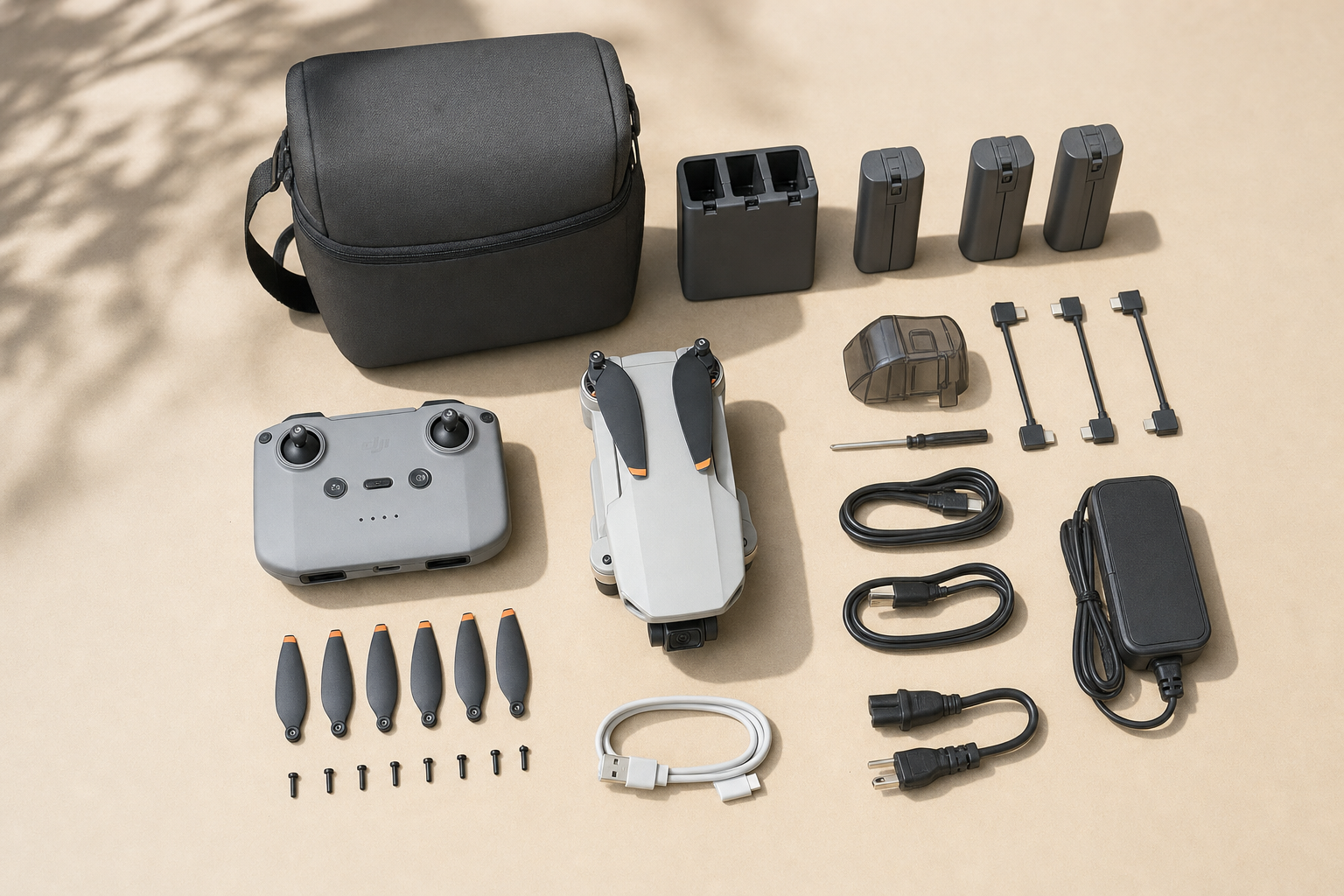
- Fly More Combo framing: This bundle is most likely valuable for buyers who do not want to start with the bare minimum and then immediately wish they had more accessories or more than one battery on hand.
In plain terms, this package makes the most sense if you want a first drone that feels compact enough to take places and capable enough to justify bringing it.
The trade-off that matters most
The biggest objection for beginners is also the right one: the DJI Mini 4K does not have obstacle avoidance. That is not a minor missing extra. It is the clearest dividing line between this drone and more advanced Mini models.
Why that matters: first-time pilots do not only make mistakes at high speed or in dramatic conditions. They make small judgment errors around trees, walls, wires, and tight framing. Obstacle-sensing hardware cannot replace careful flying, but it can add flight protection that this model simply does not offer.
That means your buying decision should be based less on headline video capability and more on your risk tolerance:
- If you plan to fly mostly in open spaces and are comfortable learning carefully, this limitation may be acceptable.
- If you know you want more help avoiding collisions, this is probably the wrong Mini to start with.
Many thin roundup articles underplay this point. We would not. For a beginner drone, lack of obstacle sensing is the central trade-off, not a footnote.
Fly More Combo vs skipping the bundle
The Fly More Combo question is practical: does the bundle improve ownership enough to justify choosing it over the standard package?
Based on the positioning of this product, the answer is usually yes for the right buyer, but not because bundles are automatically better value. It is because a travel drone is easy to carry and easy to use only if you are not constantly managing limited flight time or missing key accessories. Extra batteries and the included accessories matter most when they reduce friction between wanting to fly and actually flying.
The bundle is easier to justify if you are:
- buying your first drone and want a more complete starting point
- planning to use it while traveling, where charging and repacking convenience matters more
- expecting to shoot multiple short flights instead of one quick test flight
You may be fine skipping the combo if you are still unsure whether drone flying will become a regular hobby, or if your bigger concern is safety rather than convenience. In that case, moving up to a model with obstacle-sensing hardware may matter more than getting more accessories with this one.
If you want to see the exact bundle listing, check the current price.
Who it makes sense for
Best fit
- Travelers who want a compact folding drone that is easier to pack
- First-time drone owners who specifically want stabilized 4K aerial video
- Buyers who understand the safety limitation and plan to fly conservatively in open areas
- People who would rather buy a fuller kit upfront than piece together accessories later
Why this buyer profile works
The DJI Mini 4K Fly More Combo seems strongest when the goal is simple, portable aerial capture. If your mental checklist is ‘small enough to bring, good enough to keep,’ this bundle lines up with that better than a base kit aimed at the lowest entry cost.
Who should skip it
- Anyone who needs obstacle-avoidance sensors for more autonomous flight protection
- Beginners who expect the drone to actively help prevent close-range mistakes around obstacles
- Shoppers deciding between this combo and a more advanced DJI Mini mainly on safety confidence rather than portability
If your top priority is feeling more protected while learning, this model’s main weakness is probably too important to ignore.
Bottom line
The DJI Mini 4K Fly More Combo has a clear, sensible appeal: it pairs sub-249g portability with 3-axis stabilized 4K video in a folding drone that should fit well into travel and beginner ownership. That is the good reason to buy it.
The equally good reason to pass is that it lacks obstacle-sensing hardware, and that limitation directly affects how forgiving it may feel for a first-time pilot.
If you want a compact travel drone and are comfortable treating obstacle avoidance as your job rather than the drone’s, this is the kind of bundle that can make sense. If you want more flight protection, it makes more sense to look beyond this model than to talk yourself into accepting a compromise you already know will bother you.
Check the current price if that trade-off matches what you want.
FAQ
Is the DJI Mini 4K Fly More Combo worth it for beginners?
It can be, especially for beginners who want a portable first drone with stabilized 4K video and who plan to fly carefully in open spaces. The main caution is that it does not offer obstacle-avoidance sensors, which matters more for some first-time pilots than extra accessories do.
Is the Fly More Combo better value than the standard DJI Mini 4K package?
For many buyers, yes in practical terms, because a more complete bundle can reduce ownership friction. That matters most for travelers and new owners who expect to use the drone regularly. If you are unsure you will use it much, or if your main concern is flight protection, the better move may be skipping this bundle and reconsidering the model itself.
Does the DJI Mini 4K have obstacle avoidance?
No. The key trade-off highlighted in this review is that the DJI Mini 4K lacks the obstacle-sensing hardware found on more advanced DJI Mini models.
How important is obstacle avoidance for a first drone?
It depends on your comfort level. Careful piloting still matters either way, but obstacle sensing can add useful protection for beginners who are likely to fly near trees, buildings, or other obstacles. If that extra safety margin is high on your list, it is worth prioritizing.
Is the DJI Mini 4K good for travel?
On paper, yes. Its strongest travel-friendly traits are its sub-249g class and folding design, which are the main reasons it stands out for portability-focused buyers.
Does the DJI Mini 4K shoot stabilized 4K video?
Yes. The central appeal of this model is that it combines 4K video with 3-axis gimbal stabilization in a compact drone.