Skip to content
 Amazon Basics AA Alkaline High-Performance Batteries, 48 Pack review: is it worth it?
Bulk AA batteries are one of those purchases that sounds straightforward until you start asking the right questions: Do these actually last as long as the name brands? Is a 48-pack a smart stock-up or a recipe for a drawer full of dead cells? And does “High-Performance” on the label mean anything in practice?
This is a RESEARCH-BASED REVIEW of the Amazon Basics AA Alkaline High-Performance Batteries, 48 Pack (model ALK AA48FFP-U AMZ). We have not personally cycled these batteries through a test rig. What we have done is examine the verified product specifications, the category context for alkaline AA cells, and the practical realities of bulk battery buying for households with remotes, toys, clocks, and similar devices. The goal is to give you a clear, honest answer on whether this pack earns its place in your home.
Quick Answer
The Amazon Basics AA 48-pack is a solid value buy for households that run through AA batteries regularly across low- to medium-drain devices. The per-cell price is competitive, the shelf life claim is long enough to justify bulk buying, and the pack size makes sense if you have three or more AA-dependent devices in active use. It is not the right call for high-drain devices like digital cameras or high-powered flashlights, and it is not a substitute for rechargeables if your usage is very high volume. For the average home with remotes, wall clocks, kids’ toys, and wireless mice, this pack is a practical, low-fuss choice.
Best For
- Homes with multiple remotes, wireless keyboards, wall clocks, and similar low-drain devices
- Parents who burn through AA batteries in kids’ toys and handheld game controllers
- Anyone who wants a reliable bulk stock without paying premium-brand prices
- Households that can store batteries properly and will realistically use 48 cells within a few years
Avoid If
- Your primary AA use is high-drain devices: digital cameras, high-lumen flashlights, or motorized toys with continuous draw
- You only use a handful of AA batteries per year — a 48-pack is likely to outlast your patience and possibly its own shelf life
- You already own a good AA charger and rechargeable cells — the economics shift significantly at high usage volumes
- You need guaranteed leak protection for expensive or irreplaceable devices — see the leak-risk section below
What You Get
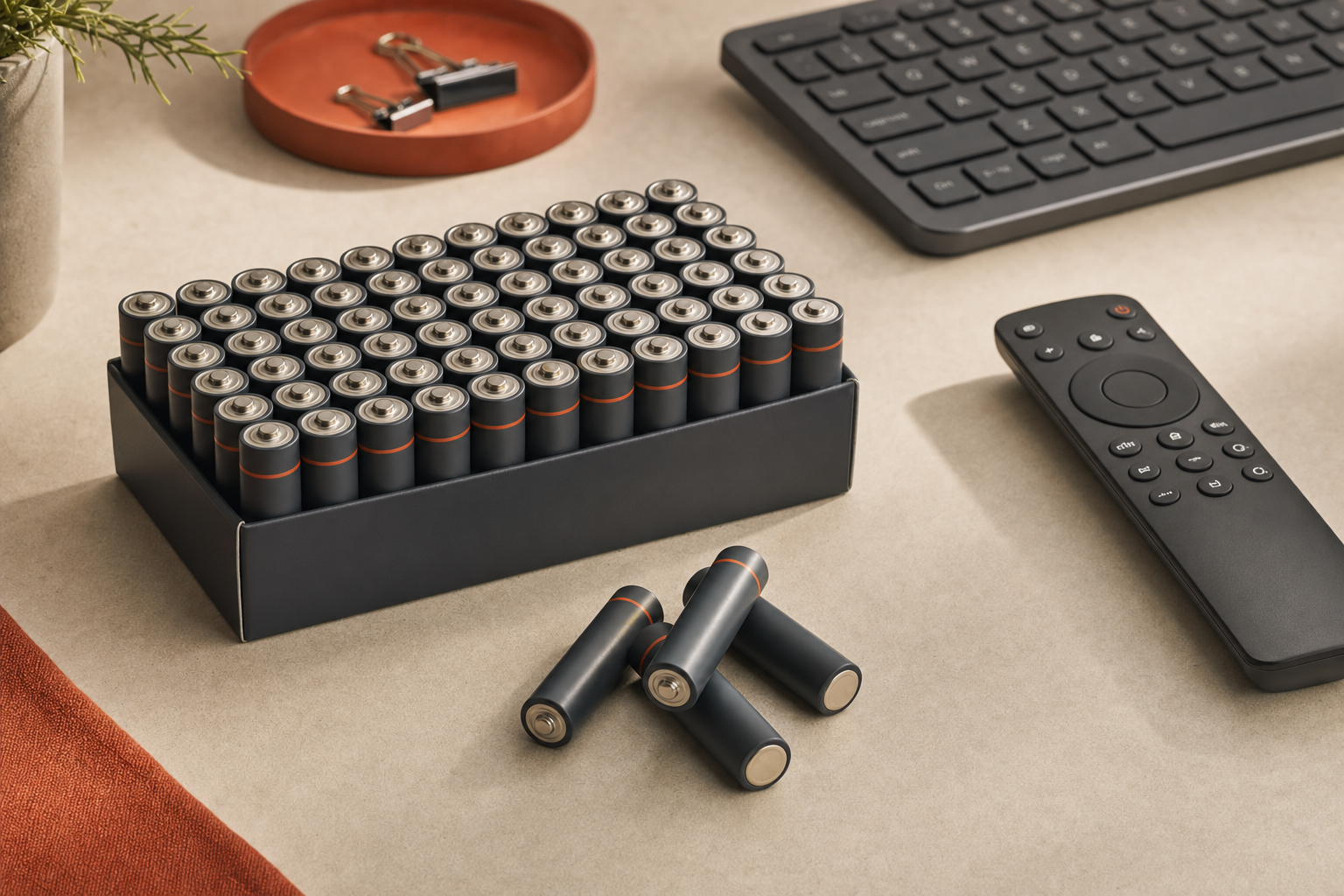
The ALK AA48FFP-U AMZ is a standard 1.5V alkaline AA cell, sold in a 48-count pack. Amazon lists a 10-year shelf life for these batteries when stored correctly. The “High-Performance” label places them above Amazon Basics’ entry-level alkaline line, though the practical difference between the two tiers in everyday household use is modest for most low-drain applications. Amazon’s listing does not publish a milliamp-hour (mAh) capacity figure for these, and we have not tested one.
The pack ships in a cardboard tray format. Individual cells are standard size and compatible with any device that takes AA alkaline batteries.
Performance by Device Type
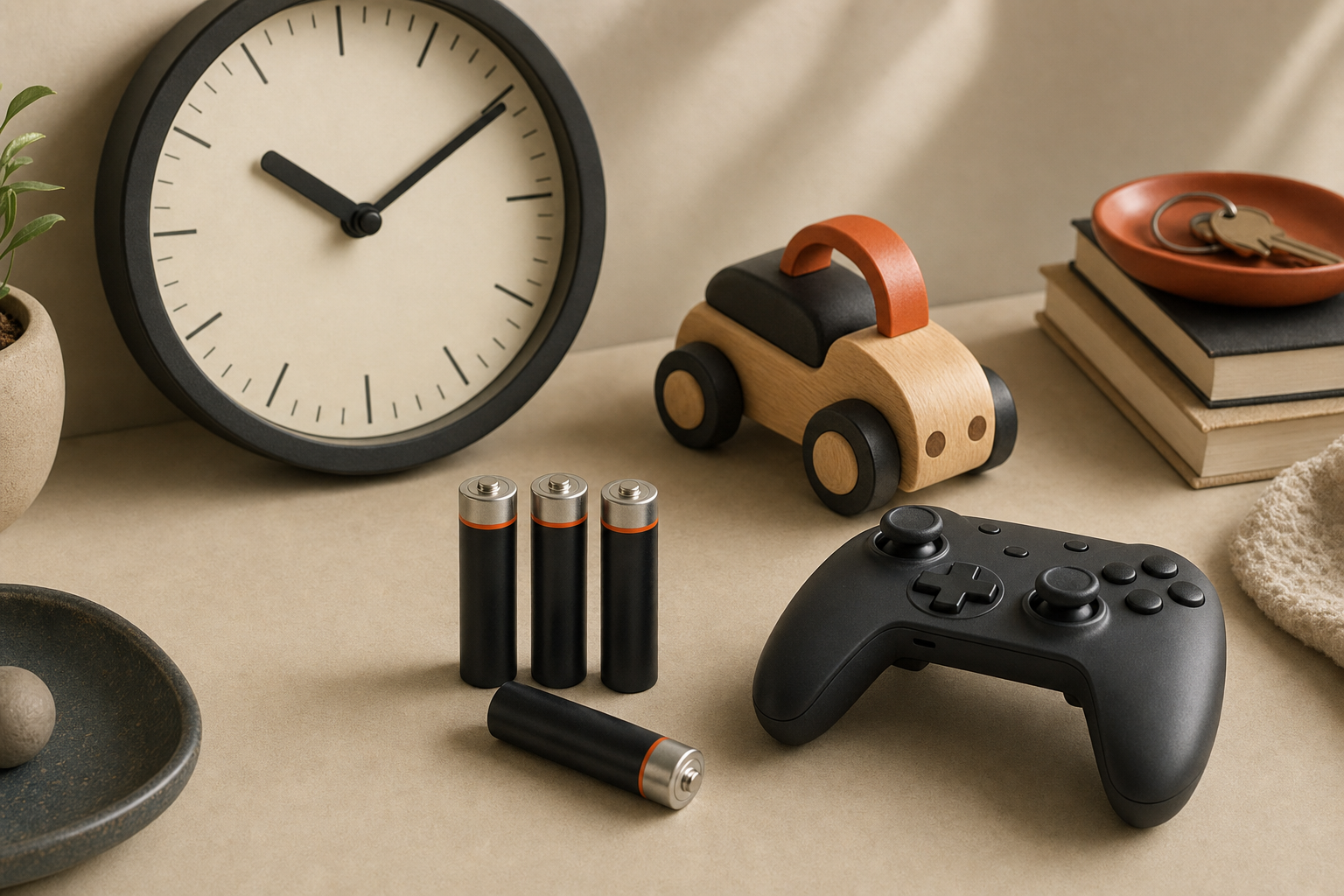
Not all AA devices are equal, and this is where most battery reviews fall short. Here is how alkaline cells like these perform across the most common household use cases:
Low-Drain Devices (Best Match)
Remote controls, wall clocks, smoke detector backup slots, wireless keyboards, and computer mice draw very little current. Alkaline chemistry is well-suited here. A single set of AAs in a TV remote can last a year or more. This is where the Amazon Basics pack delivers its clearest value — the per-cell cost is low, the performance is adequate, and you are not leaving significant runtime on the table versus a premium brand.
Medium-Drain Devices (Good Match)
Kids’ toys with lights and sounds, handheld game controllers, LED lanterns, and portable speakers fall into this category. Alkaline cells work fine here, though you will notice shorter runtimes than in low-drain applications. The 48-pack size starts to make practical sense for households with active children, where toy batteries get swapped out every few weeks.
High-Drain Devices (Poor Match)
Digital cameras, high-output flashlights, and motorized devices with sustained high current draw are where standard alkaline cells — including these — underperform relative to lithium AA batteries. Alkaline voltage drops faster under heavy load, which can cause devices to report “low battery” while significant capacity remains, or simply deliver shorter runtimes than you would expect. For these use cases, lithium AAs (such as Energizer Ultimate Lithium) are a better technical fit, though they cost considerably more per cell.
Shelf Life and Leak Risk
Amazon claims a 10-year shelf life for these batteries under proper storage conditions — meaning cool, dry, room-temperature storage away from direct heat or humidity. That figure is consistent with what reputable alkaline manufacturers publish for their standard lines, so it is plausible, though we cannot independently verify it. If you store these in a climate-controlled home environment, a 48-pack bought today should remain usable well into the future for a typical household.
Leak risk is a more nuanced topic. All alkaline batteries can leak, particularly when fully discharged and left in a device. Amazon Basics batteries do not carry the same anti-leak guarantees that Duracell’s Optimum or Energizer’s MAX lines advertise explicitly. If you are leaving batteries in a device you rarely use — a guest room remote, a seasonal decoration, a backup flashlight — there is a real risk of leakage over time with any alkaline cell, including these. For devices you use regularly and swap batteries in on a normal cycle, the practical leak risk is low. For devices that sit unused for months with batteries inside, consider removing the batteries regardless of brand.
Is a 48-Pack Practical for a Real Household?
This is the question most reviews skip. A 48-pack is not automatically a good deal if you only use six AA batteries a year — you would be storing cells for eight years, which pushes the limits of even a generous shelf-life claim and introduces storage management overhead most people do not want.
A rough household audit helps here. Count your active AA devices: each remote, clock, toy, keyboard, mouse, and flashlight. Estimate how often you change batteries in each. If that math gets you to 20 or more cells per year, a 48-pack is a sensible two-year supply. If you are under 10 cells per year, a 20- or 24-pack is a more honest fit for your actual usage.
Homes with young children, multiple remotes, and several battery-powered toys will often find 48 cells disappear faster than expected. Single-person households or couples with minimal battery-dependent devices may find the pack size more aspirational than practical.
Price and Value
We don’t print a per-cell price here — Amazon pricing on these changes frequently. As a general editorial observation: Amazon Basics AA batteries have historically priced below Duracell and Energizer on a per-cell basis, often by a meaningful margin at bulk pack sizes. The value proposition is real if the performance is adequate for your use case — and for low- to medium-drain devices, it generally is.
The comparison that matters most is not Amazon Basics versus Duracell Coppertop. It is Amazon Basics alkaline versus rechargeable AAs. If your household uses more than 50 AA batteries per year, a set of quality NiMH rechargeables (such as Panasonic Eneloop) with a good charger will likely cost less over two to three years and produce less waste. The Amazon Basics 48-pack is a value play for moderate users, not a substitute for a rechargeable system at high volumes.

Realistic Alternatives
- Duracell Coppertop AA (bulk packs): Slightly higher per-cell cost, with Duracell’s published leak guarantee on some lines. Worth considering if you have expensive devices or leave batteries in rarely-used equipment for long periods.
- Energizer MAX AA (bulk packs): Similar positioning to Duracell. Energizer publishes a leak-protection claim on MAX cells. Per-cell cost is typically higher than Amazon Basics.
- Energizer Ultimate Lithium AA: Significantly more expensive per cell, but the right choice for high-drain devices, cold-weather use, or situations where weight matters. Not a direct competitor for everyday remote and toy use.
- Panasonic Eneloop NiMH Rechargeables: Higher upfront cost, lower long-term cost at high usage volumes. Better environmental profile. Requires a charger and some discipline around charging cycles. The right answer for heavy users, not for occasional battery buyers.
Comparison at a Glance
| Battery | Best For | Leak Guarantee | High-Drain Fit | Relative Cost/Cell |
|---|---|---|---|---|
| Amazon Basics AA 48-pack | Low/medium-drain, bulk value | Not explicitly stated | Poor | Low |
| Duracell Coppertop AA | General household, leak-sensitive devices | Yes (select lines) | Moderate | Medium |
| Energizer MAX AA | General household, leak-sensitive devices | Yes | Moderate | Medium |
| Energizer Ultimate Lithium AA | High-drain, cold weather, cameras | N/A | Excellent | High |
| Panasonic Eneloop NiMH | High-volume users, long-term savings | N/A | Good | High upfront, low long-term |
Cost and guarantee details are editorial generalizations based on category knowledge. We have not verified current pricing or guarantee terms for any product in this table.
Frequently Asked Questions
Are Amazon Basics AA batteries worth buying?
For most households using AA batteries in remotes, clocks, toys, and similar low- to medium-drain devices, yes. The per-cell cost is competitive, the 10-year shelf life claim is consistent with the alkaline category, and the 48-pack size suits homes that go through batteries at a reasonable pace. They are not worth buying if your primary use is high-drain devices or if you would realistically use fewer than 15-20 cells per year.
How long do Amazon Basics AA alkaline batteries last in remotes and toys?
Amazon claims a 10-year shelf life in storage. In active use, runtime depends heavily on the device. In a TV remote, a set of AAs can last six months to over a year. In a battery-hungry toy with motors and lights, the same cells might last a few weeks of regular play. We cannot provide device-specific runtime figures without independent testing data, which we do not have for this product.
Are Amazon Basics AA batteries good for high-drain devices?
No. Standard alkaline chemistry — including these batteries — is not well-suited to high-drain applications like digital cameras or high-output flashlights. Voltage drops faster under heavy load, leading to shorter runtimes and early low-battery warnings. Lithium AA batteries are the better technical choice for those use cases.
Do Amazon Basics AA batteries leak more than premium brands?
Amazon does not publish an explicit anti-leak guarantee for this product line, whereas some premium brands (Duracell, Energizer) do on select products. All alkaline batteries carry some leak risk, particularly when fully discharged and left in a device. For devices used regularly, practical leak risk is low with any brand. For devices that sit unused for months with batteries inside, remove the batteries regardless of brand. If leak protection is a primary concern for an expensive or irreplaceable device, a brand with an explicit guarantee is the more defensible choice.
Is a 48-pack of AA batteries too much for a typical household?
It depends on your household. A home with several remotes, active kids’ toys, clocks, and wireless peripherals can realistically use 20-30 AA batteries per year, making a 48-pack a reasonable 18-to-24-month supply. A smaller household with minimal battery-dependent devices might find the pack size impractical. Do a quick count of your active AA devices before buying.
Should you buy Amazon Basics alkaline batteries or rechargeable AAs?
If your household uses more than roughly 50 AA batteries per year, quality NiMH rechargeables will likely cost less over two to three years and generate less waste. If your usage is moderate — say, 20 to 40 cells per year — the Amazon Basics 48-pack is a simpler, lower-friction option without the upfront cost of a charger and rechargeable cells. The right answer depends on your volume, not on which option sounds more responsible in the abstract.
The Bottom Line
The Amazon Basics AA Alkaline High-Performance Batteries, 48 Pack is a straightforward, honest value proposition for the right buyer. It does not pretend to be something it is not. These are standard alkaline cells at a competitive bulk price, suited to the low- and medium-drain devices that make up the majority of AA use in most homes. The 48-pack size is practical for active households and a mild overreach for light users. The absence of an explicit leak guarantee is a real consideration for anyone storing batteries in expensive or rarely-used devices. For everyday household use — remotes, clocks, toys, wireless peripherals — this pack earns its place.
If that describes your home, check price on Amazon and decide whether the per-cell cost makes sense against what you would pay for a smaller pack of a premium brand.