Skip to content
If you are looking at the ARCCAPTAIN 200A 6-in-1 because you want one machine that covers more than basic flux core work, the real question is not whether the feature list sounds impressive. It is whether a budget-priced multi-process welder gives you the specific processes, power options, and upgrade path you actually need for your projects without creating frustration later.
This is a RESEARCH-BASED REVIEW, not a hands-on test. That matters here because many listings in this category blur together 4-in-1, 5-in-1, and 6-in-1 claims, and buyers can end up assuming capabilities that are not fully confirmed. So the useful way to approach this model is as a decision framework: who a 200A-class multi-process welder usually makes sense for, where budget all-in-one machines often involve tradeoffs, and what you should verify in the official product page and manual before spending money.
Quick Answer
Research summary
The ARCCAPTAIN 200A 6-in-1 is most interesting for DIYers and light-duty shop users who want broader process flexibility than an entry-level flux core or stick machine, but do not want to jump straight to a higher pro-tier purchase. On paper, a 200A multi-process welder can make sense if your work spans home garage fabrication, repair, and learning more than one welding process.
The caution is simple: with budget multi-process welders, the buying risk is usually not the idea of the machine. It is the details around exact process support, required accessories, input power requirements, and the quality of the included torch, leads, and clamps. Before you buy, verify those points in the official documentation rather than relying on a retailer headline.
The Product Shortlist may earn a commission from qualifying purchases. This does not affect our verdict.
What this welder is trying to be
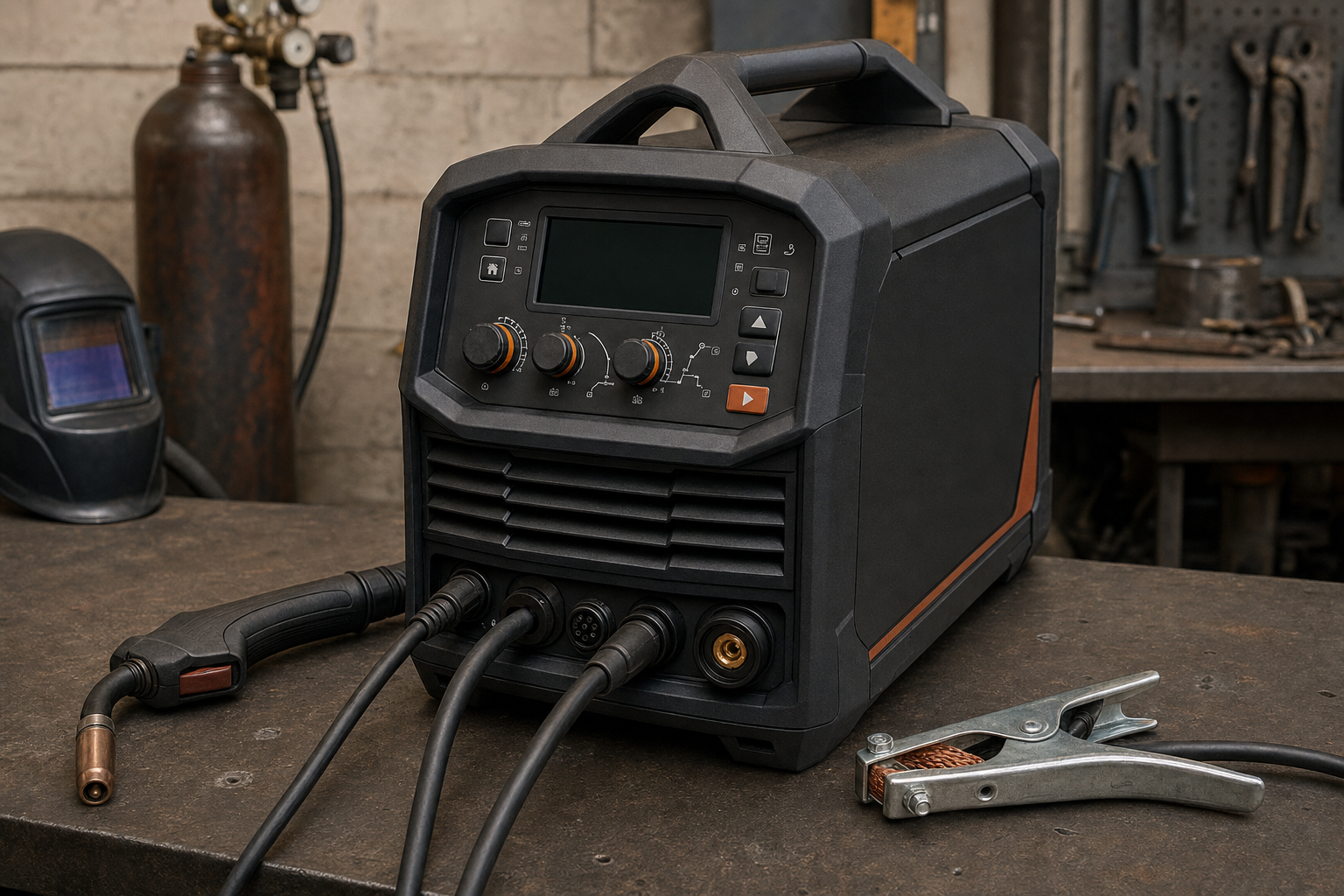
The appeal of an ARCCAPTAIN 200A 6-in-1 welder is straightforward: instead of buying one machine for flux core, another for stick, and possibly adding TIG capability later, you are considering a single platform intended to cover several common shop jobs. For many buyers, that is the right starting point. It can be a practical way to get beyond a very basic beginner setup while keeping footprint and cost under control.
Where this matters in real buying terms is not the headline number alone. A 200A-class machine typically attracts buyers who have moved past occasional repair welds and want something that may better support a wider range of projects, materials, and processes than smaller entry-level units. That does not automatically make it the right choice for every garage, but it does explain why this model sits in an appealing middle ground for late-stage buyers.
Who it makes sense for
Good fit for DIYers who want room to grow
If you are starting with basic home fabrication, equipment repair, brackets, carts, workbench projects, or automotive-style shop tasks, the ARCCAPTAIN 200A 6-in-1 may be worth a closer look because it is positioned as more than a one-process beginner box. Buyers in this group often outgrow very small machines quickly, especially if they want to try MIG, stick, and TIG-adjacent workflows rather than staying with only one method.
Potential fit for light trade users who understand budget-tool compromises
For tradespeople or side-business users, the key question is not just whether the machine advertises multiple processes. It is whether you are comfortable with the usual compromises that can come with lower-cost all-in-one welders: more setup verification, less certainty about accessory quality, and a greater need to confirm what is included versus what requires add-ons. If that tradeoff sounds acceptable, this kind of machine can still be appealing.
Especially relevant if you want one machine instead of a collection of entry-level units
Some buyers simply want a cleaner shop setup. One compact multi-process unit can be more practical than accumulating separate low-end machines over time, provided the official manual confirms the exact functions you need.
Where buyers should be careful
The biggest risk with an ARCCAPTAIN multi process welder review is treating the ‘6-in-1’ label as if it answers every buying question. It does not. In this category, the details matter more than the headline.
- Process labels can be interpreted loosely. Verify exactly which welding modes are officially supported and whether any require optional accessories.
- TIG expectations need checking. Buyers often assume full TIG capability when a machine may instead support a more limited form such as lift TIG. Confirm the official wording before buying.
- Aluminum claims often need an asterisk. If you plan to weld aluminum, verify whether a spool gun or other extra accessories are required and whether they are included or sold separately.
- Power requirements matter. Do not assume your garage circuit is appropriate. Confirm the supported input voltage and any setup guidance in the manual before purchase.
- Included accessories can affect value. On budget welders, lead, clamp, and torch quality can shape day-to-day satisfaction as much as the machine itself. Those details should come from the official package list, not assumptions.
That is the practical downside of a budget 6-in-1 welder: it may offer a lot of flexibility, but the burden is on the buyer to confirm the fine print.
ARCCAPTAIN 200A vs 165A: the buying logic
If you are deciding between this model and a smaller ARCCAPTAIN unit, the broad logic is simple. A 165A-class machine is usually the more conservative buy for lighter-duty DIY work and simpler needs, while a 200A-class machine usually appeals to buyers who want more headroom and a stronger chance of not outgrowing the machine as quickly.
What we cannot do here, without the official documents in front of us, is claim exact spec differences process by process. But if your projects are expanding and you are already comparing the ARCCAPTAIN 165A vs 200A welder decision, the 200A model is the one to investigate when you want more flexibility from a single purchase. For the smaller model’s positioning, see our ARCCAPTAIN 165A 4-in-1 Welder review: is it worth it?.
What to verify before buying
Before you click buy, check the official product page and manual against this list. This step matters more than reading another generic roundup.
- Supported processes: Confirm exactly what the 6-in-1 claim includes.
- Input power: Verify whether it supports 120V, 240V, or both, and what the manual says about circuit requirements.
- Amperage range and duty cycle: Use official documentation only. These specs affect project fit more than marketing labels.
- TIG details: Confirm whether TIG is lift TIG or another implementation, and whether the torch is included.
- Aluminum path: Verify any spool gun compatibility and what extra accessories are required.
- Package contents: Confirm which leads, torches, clamps, adapters, and consumable-related items are actually in the box.
- Safety guidance: Read the grounding, PPE, and setup instructions in the official manual before use.
If you cannot easily verify those points, that alone is a reason to slow down.
Bottom Line
For the right buyer, the ARCCAPTAIN 200A 6-in-1 could be a sensible middle-ground purchase: more ambitious than a basic beginner welder, but not automatically a substitute for a more established professional machine. Its appeal is process flexibility and potential room to grow. Its main buying risk is that budget multi-process welders often look more straightforward on a retailer page than they do in real ownership.
If your goal is a home-shop or light-duty fabrication machine and you are willing to verify the manual details first, it is worth shortlisting. If you need fully documented capabilities, stronger certainty around accessories, or you are buying for heavier daily professional use, you should be more cautious.
FAQ
Is the ARCCAPTAIN 200A 6-in-1 welder worth buying for DIY use?
Potentially, yes. It is most appealing for DIY buyers who want more than a single basic welding process and do not want to outgrow an entry-level machine too quickly. The deciding factor is whether the official manual confirms the specific processes and power options your projects require.
What welding processes does the ARCCAPTAIN 200A 6-in-1 actually support?
That should be verified directly on the official product page and manual. With multi-process welders, it is important not to rely on a retailer headline alone, because different listings can summarize process support differently.
Can the ARCCAPTAIN 200A 6-in-1 run on 120V and 240V?
Do not assume. Check the official documentation for supported input voltage and any circuit guidance before buying or installing it in a garage or shop setup.
Is the ARCCAPTAIN 200A suitable for beginners?
It may be suitable for motivated beginners who want room to learn multiple processes, but a multi-process machine can also add complexity. Beginners should verify setup requirements, included accessories, and safety instructions carefully.
Can it weld aluminum, and what extra accessories are required?
Possibly, but this is one of the most important points to verify before purchase. If aluminum capability is part of your reason for buying, confirm the official documentation on spool gun compatibility or any other required accessories and whether those items are included.
How does the ARCCAPTAIN 200A compare with the ARCCAPTAIN 165A 4-in-1?
At a high level, the 200A model is the one to investigate if you want more headroom and broader flexibility from one machine, while the 165A-class option is usually the simpler choice for lighter DIY needs. For more on the smaller machine, see our related 165A review.
Is this welder powerful enough for automotive, farm, or fabrication work?
That depends on the exact jobs, materials, and process requirements. A 200A-class multi-process welder is often considered by buyers doing those kinds of tasks, but you should match the official amperage, duty cycle, and process support to your actual workload rather than relying on the class alone.
What are the likely downsides of a budget 6-in-1 welder?
The most common buying concerns are unclear listing language, uncertainty around accessory quality, added setup complexity, and the need to verify optional versus included functionality. In short, the machine may be capable enough, but the fine print matters.
Does it support lift TIG or full TIG features?
That needs to be confirmed in the official manual or manufacturer page. Buyers should not assume a full TIG feature set from a brief retailer description.
What should buyers verify before purchasing this welder?
Verify the supported processes, input voltage, amperage range, duty cycle, TIG details, aluminum-related accessory requirements, package contents, and safety/setup instructions. Those points determine whether the welder fits your work better than the marketing summary does.