Skip to content
Quick Answer
Research summary
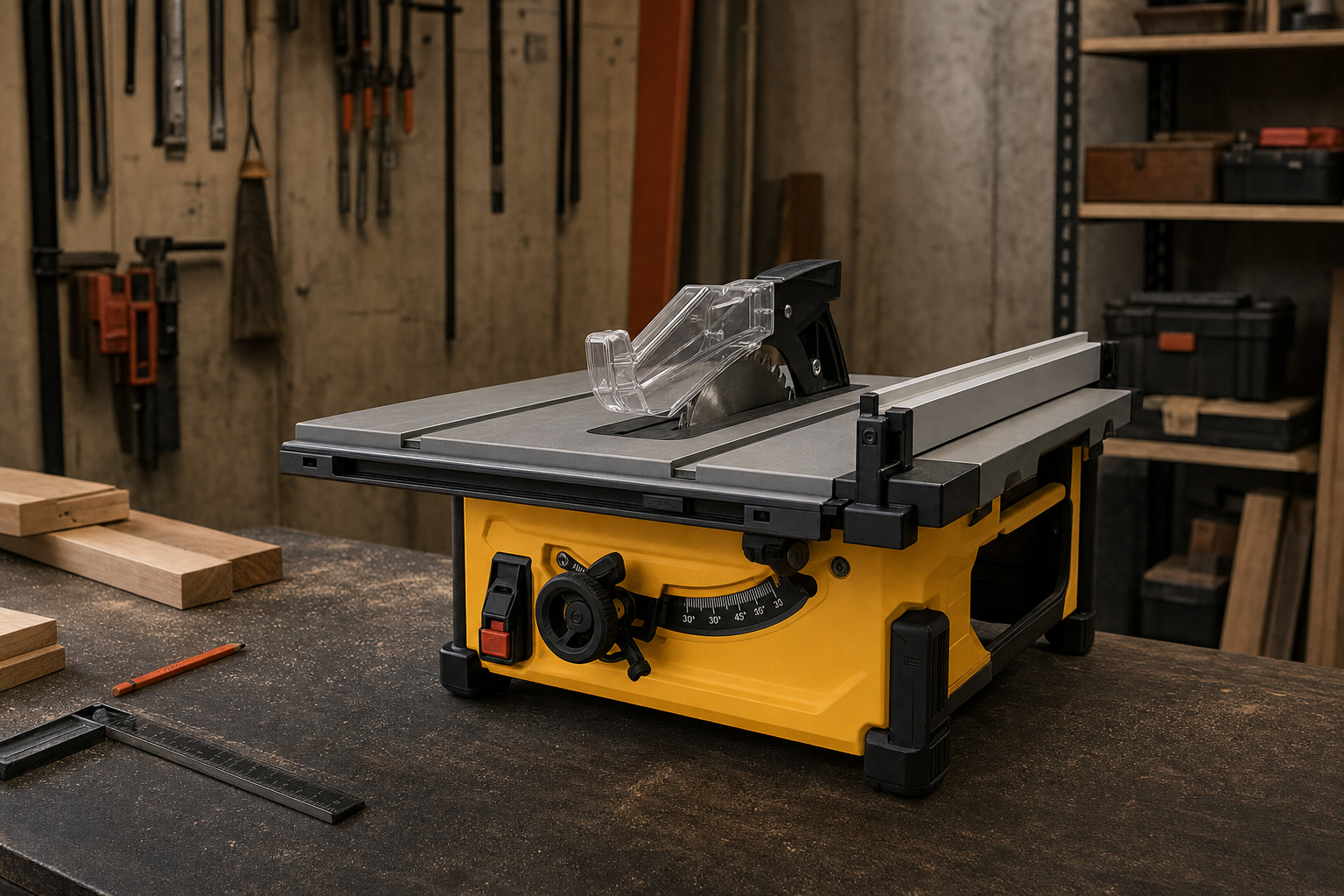
This DEWALT 8-1/4-inch Compact Jobsite Table Saw review comes down to one decision: do you want a table saw that is easier to move between jobs, or do you need the extra cut depth and larger overall format of a 10-inch model? Based on the available evidence, the DWE7485 makes the most sense for contractors and serious DIYers who value transport-friendly size, jobsite practicality, and a compact footprint more than maximum blade depth.
The Product Shortlist may earn a commission from qualifying purchases. This does not affect our verdict. Check current price
A lot of buyer hesitation around the DWE7485 is reasonable. An 8-1/4-inch table saw can sound like a compromise if you are used to thinking in 10-inch jobsite saw terms. But that framing misses the real appeal. The point of this saw is not to out-size a full-size jobsite model. It is to give you a more compact platform that still fits real work for people who transport tools often or do not want a larger saw taking over the truck, trailer, garage, or small shop.
This is a RESEARCH-BASED REVIEW, so the goal here is not to pretend every question is settled by direct use. Where the evidence is clear, we say so. Where a detail would require manufacturer-document verification or hands-on confirmation, we keep the claim narrow. The main buyer takeaway is straightforward: if your work regularly rewards compact transport and you can live with less blade depth than a 10-inch saw, the DWE7485 looks like a sensible fit.
What this saw is really for
The best fit is not simply ‘anyone who needs a table saw.’ It is a specific kind of buyer: someone doing jobsite work, punch-list work, trim-oriented tasks, sheet-good-related cuts within the saw’s intended capacity, or serious DIY projects where portability and footprint matter every time the tool gets moved or stored.
That is why the DWE7485 stands out in late-stage buying decisions. The real question is whether the compact format solves more problems than it creates for your work. If you carry tools in and out frequently, work in tight spaces, or want a saw that is easier to transport between jobs, the compact platform is the feature. If you expect your saw to cover thicker material and want the added margin a 10-inch blade provides, this model becomes a more conditional choice.
Main strength: why the compact format matters
The strongest reason to consider the DWE7485 is simple: DEWALT’s compact 8-1/4-inch platform is easier to transport while still aiming to preserve jobsite rip capability. That matters more in the real world than spec-sheet readers sometimes admit.
For many contractors and serious DIYers, table saw friction is not just about how it cuts. It is about how often the saw gets loaded, unloaded, repositioned, stored, and worked around. A compact jobsite table saw can be the better buying decision when the alternative is a larger tool that is more annoying to move and therefore less likely to come along when needed.
Editorially, this is the strongest case for the DWE7485: it appears to target buyers who want a practical middle ground between full-size jobsite capability and easier transport. That can be especially appealing if your work setup changes often or if your shop space is limited.
Main trade-off: what you give up vs a 10-inch saw
The main weakness is also clear and should not be softened: the smaller blade limits maximum cut depth compared with 10-inch table saws. For some buyers, that is a minor compromise. For others, it is the whole decision.
If your work regularly depends on the larger cut-depth envelope of a 10-inch saw, the DWE7485 is probably not the right tool to force into that role. This is the key trade-off behind the phrase is DEWALT 8-1/4-inch Compact Jobsite Table Saw worth it. It is worth it when compact transport and space efficiency matter more than having the bigger blade format. It is easier to skip when your work consistently asks for the extra capacity of a full-size saw.
That trade-off also helps answer whether an 8-1/4-inch table saw is enough for serious DIY projects. In many cases, yes, especially when the work does not demand the larger depth capacity of a 10-inch saw. But if your project list often pushes the limits of what a smaller blade can handle, buying once into the larger class may make more sense.
Pros and cons
| Pros | Cons |
|---|---|
| Compact format should be easier to transport between jobs than a larger 10-inch jobsite saw | Smaller 8-1/4-inch blade means less maximum cut depth than a 10-inch saw |
| Good fit for buyers with limited shop or garage space | Less appealing if you want one saw specifically for thicker-stock needs |
| Better aligned with buyers who value portability as much as cutting function | The value case weakens if transport and storage convenience are not priorities |
| DEWALT jobsite positioning makes sense for contractors and serious DIYers seeking a durable compact option | Some feature-level details should be verified against DEWALT documentation before purchase |
Who should buy it
- Contractors who move tools between jobs and want a table saw that is easier to transport
- Serious DIYers who need a compact jobsite table saw for a garage or small workshop
- Buyers who understand the 8-1/4-inch vs 10-inch trade-off and are intentionally choosing the smaller platform
- People who want a practical saw for space-conscious setups rather than the largest format they can fit
If that sounds like your use case, the DWE7485 is worth a closer look. Check current price
Who should skip it
- Anyone who already knows they need the larger cut capacity and blade depth of a full-size 10-inch saw
- Buyers who rarely move their saw and therefore get less value from a compact transport-focused design
- Shoppers expecting a smaller saw to be a no-compromise replacement for a larger jobsite table saw
That last point matters. The DWE7485 seems easiest to like when you buy it for what it is, not for what a bigger class of saw does better.
Bottom line
In practical terms, this DEWALT 8-1/4-inch Compact Jobsite Table Saw review supports a fairly clear conclusion: the DWE7485 looks most appealing for buyers who want a compact, durable-feeling jobsite-oriented table saw and are comfortable giving up some cut depth versus a 10-inch model. That is the whole decision framework.
If frequent transport, limited space, and a smaller jobsite footprint are high on your list, the DWE7485 appears well positioned. If your first priority is maximum blade depth and bigger-saw headroom, you should probably keep shopping in the 10-inch category instead.
For buyers who fit the intended use case, the next step is simple: Check current price.
FAQ
Is the DEWALT DWE7485 worth it for contractors?
It can be, especially for contractors who move between jobs often and value a compact table saw that is easier to transport. The main question is whether portability matters more to you than the added cut depth of a 10-inch model.
What are the pros and cons of the DEWALT 8-1/4-inch Compact Jobsite Table Saw?
The main pro is the compact, transport-friendly format. The main con is the smaller blade, which limits maximum cut depth compared with a 10-inch table saw.
Is an 8-1/4-inch table saw enough for serious DIY projects?
Often yes, if your projects do not depend on the extra cut depth of a 10-inch saw. The better question is not whether 8-1/4 inches is enough in the abstract, but whether it is enough for the materials and cuts you expect to make most often.
What do you give up with the DWE7485 compared with a 10-inch table saw?
The clearest trade-off is maximum cut depth. That is the main limitation buyers should weigh against the benefit of a smaller, easier-to-transport saw.
Is the DEWALT DWE7485 good for transporting between jobs?
Based on its compact platform and positioning, that is one of the strongest reasons to consider it. Buyers who move tools frequently are the clearest audience for this model.
Who should buy the DWE7485 and who should skip it?
Buy it if you want a compact jobsite table saw and accept the smaller blade trade-off. Skip it if you need the larger cut capacity and depth of a full-size 10-inch saw.