Skip to content
 AstroAI Cordless Tire Inflator Review: Is It Worth It?
A flat or low tire at the wrong moment is a genuine inconvenience. The question is whether a cordless inflator like the AstroAI AIRUN L7 solves that problem well enough to justify the cost — or whether you are better served by a wired 12V compressor, a gas-station air pump, or simply a better roadside plan.
This is a RESEARCH-BASED REVIEW. We have not personally tested the AIRUN L7. What follows is an honest editorial analysis built from verified product specifications, documented features, and a clear-eyed look at where this category of device succeeds and where it falls short. We will tell you exactly who this inflator makes sense for and who should pass.
Quick Answer
Best For
- Drivers who want a compact emergency top-off tool that lives in the trunk or glove box
- Cyclists who inflate road, mountain, or hybrid bike tires and want preset modes without hunting for the right adapter
- Commuters and road-trippers who want to check and correct tire pressure without finding a gas station
- Anyone who wants USB-C charging so the inflator can share a power bank or car charger with other devices
Avoid If
- You need to inflate a completely flat car tire quickly — cordless inflators in this class are slower than a wired 12V compressor and battery capacity is a real constraint
- You run high-volume tires (truck tires, SUV tires at the upper end of their pressure range) and need sustained high-pressure output
- You want a primary inflation tool for a fleet, a shop, or frequent heavy use — this is a personal convenience device, not a workhorse
- You already own a reliable 12V compressor and have a car outlet available — the cordless convenience may not justify the additional cost
What the AstroAI AIRUN L7 Actually Does
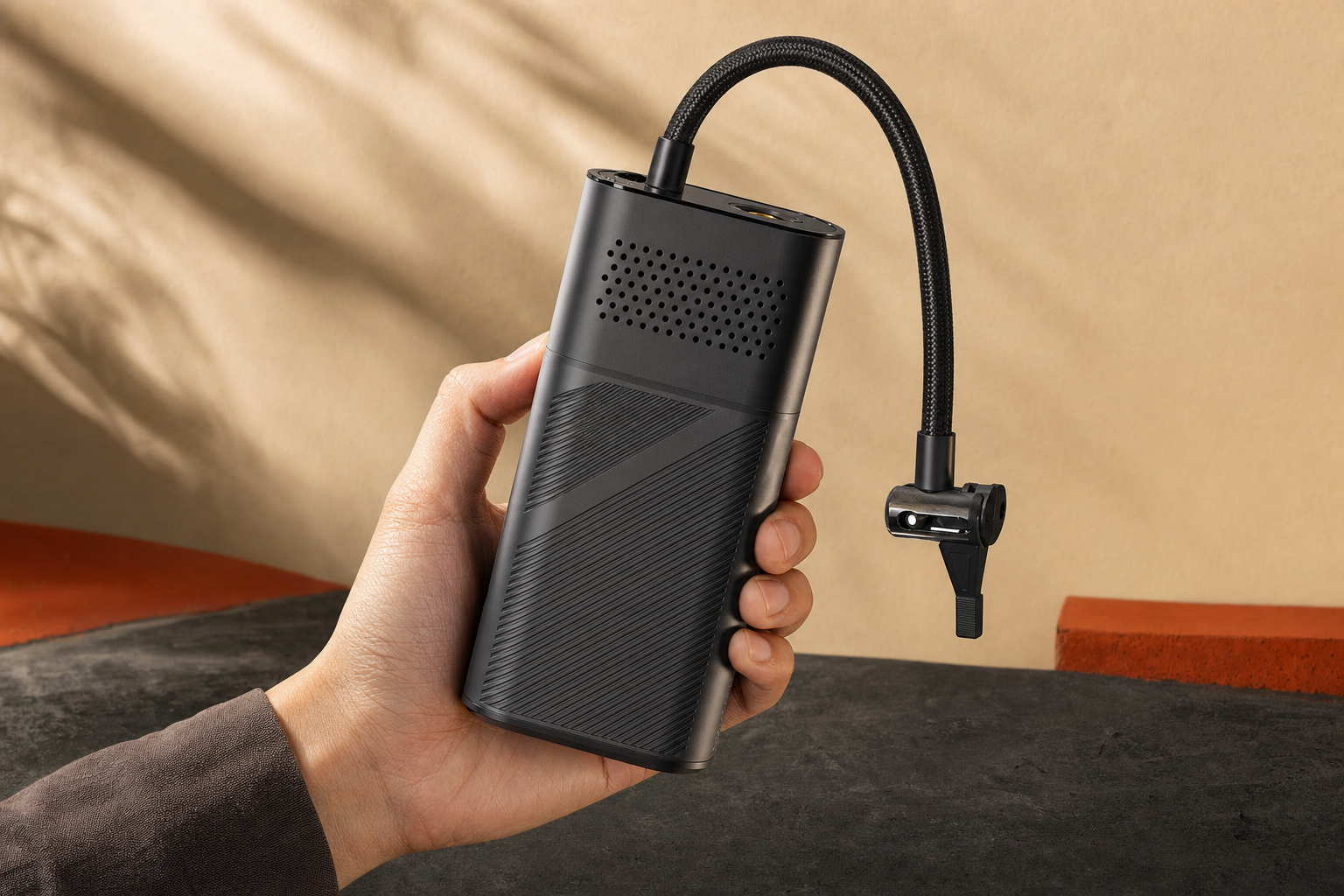
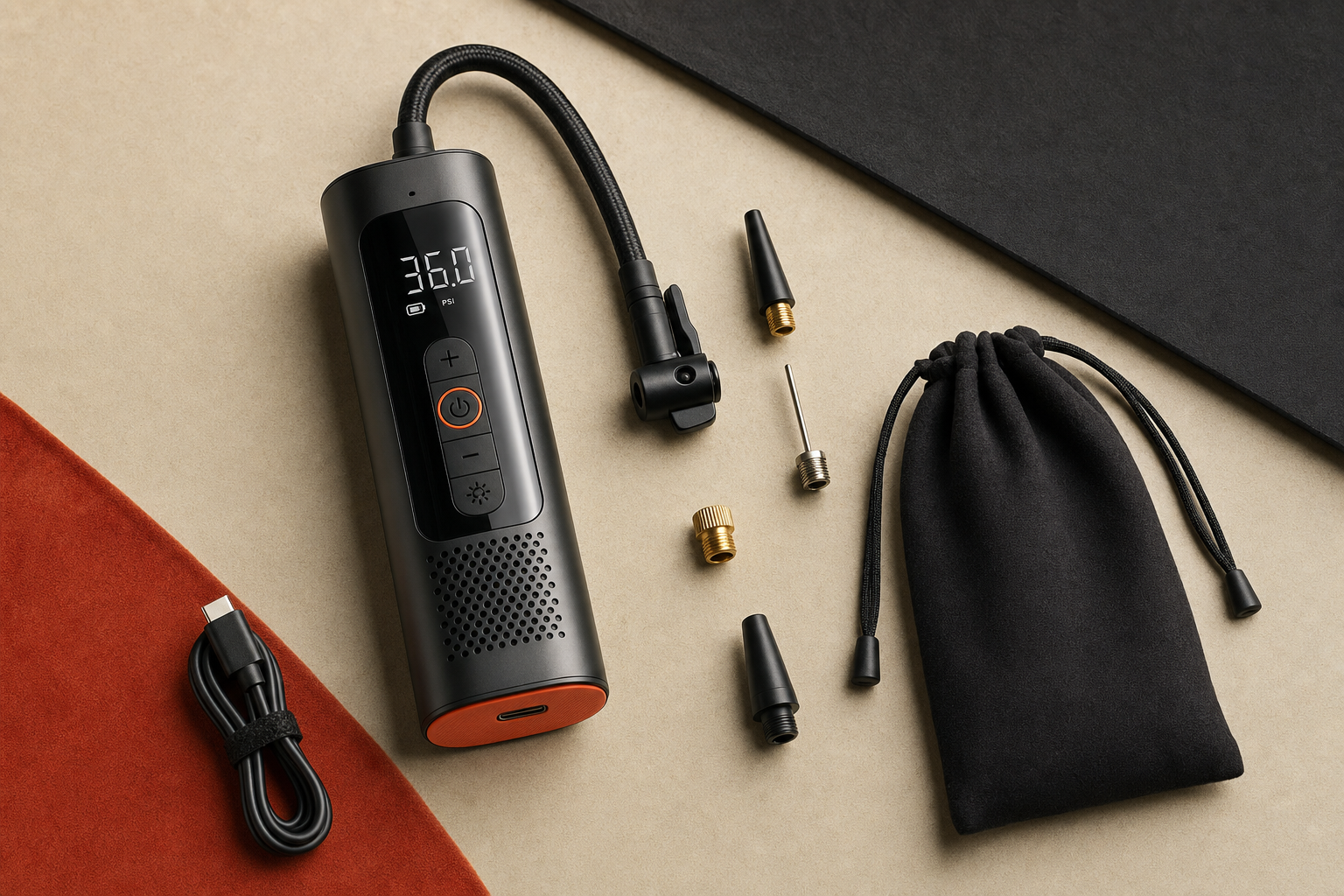
The AIRUN L7 is a battery-powered portable air compressor designed for inflating car tires, bicycle tires, and other inflatables. Its core proposition is cordless operation: no 12V cigarette-lighter cable, no need to keep the engine running, no tethering to the car. It charges via USB-C, which means it fits into the same charging ecosystem as phones, laptops, and power banks.
The device includes a digital pressure display, preset inflation modes for different tire types, and an auto shutoff feature that stops inflation when the target PSI is reached. It ships with nozzle adapters to cover Schrader valves (standard on car tires) and Presta valves (common on road bikes), plus adapters for sports balls and other inflatables.
What it is not: a replacement for a full-size compressor, a shop tool, or a device that will inflate a completely flat car tire in under a few minutes. Understanding that distinction is the most important thing this review can tell you.

Performance: Car Tires vs Bike Tires
Car Tire Top-Offs
The AIRUN L7 is well-matched to the most common real-world car tire task: correcting pressure that has dropped a few PSI over weeks of driving. Most passenger car tires run between 32 and 36 PSI. If a tire is 4–6 PSI low — which is typical after a cold snap or gradual seepage — a cordless inflator in this class can handle that without straining the battery or taking an unreasonable amount of time.
Where it becomes a slower proposition is a tire that has lost significant pressure or gone fully flat. Filling a completely flat passenger car tire from near-zero to 35 PSI is a sustained, high-volume job. Cordless inflators in this category are not optimized for that scenario. We have not verified inflation times from zero to full pressure, and AstroAI’s own figures have not been checked against independent testing.
Bike Tires
This is arguably where the AIRUN L7 earns its keep most reliably. Bike tires hold far less volume than car tires, so the battery goes further per inflation. Road bike tires typically run 80–120 PSI, which is within the stated pressure range of inflators in this class, though you should verify the AIRUN L7’s maximum rated PSI against your specific tire requirements before purchase. Mountain bike tires run lower pressure but higher volume — still manageable for a cordless device. The inclusion of a Presta valve adapter is a practical detail that matters to road cyclists who would otherwise need a separate adapter.
Battery, Charging, and Real-World Limits
USB-C charging is a genuine convenience. It means the AIRUN L7 can be topped up from a laptop charger, a car USB-C port, or a power bank — the same infrastructure most people already carry. That said, USB-C charging speed depends on the charger and cable used, and AstroAI does not publish a depleted-to-full charging time.
Battery capacity determines how many tires you can inflate per charge. For routine top-offs on a standard passenger car, the battery should handle multiple tires. For a fully flat tire, the math changes — you may be drawing significantly more from the battery for a single tire. If you are planning to use this as a road-trip emergency tool, it is worth keeping it charged rather than storing it depleted for months and expecting it to perform when needed.
One practical note: lithium batteries in devices stored in a hot car trunk can degrade faster than those stored at room temperature. If you plan to keep this in your vehicle year-round, that is a real consideration for long-term battery health.
Pressure Accuracy and Auto Shutoff
The auto shutoff feature — which stops inflation when the preset target PSI is reached — is one of the more useful aspects of this type of device. It reduces the risk of over-inflating a tire, which matters both for safety and tire longevity.
How accurate is it in practice? Pressure gauge accuracy in portable inflators varies, and we have found no independent verification of the AIRUN L7’s shutoff precision. As a general category note: digital gauges on portable inflators can read within 1–2 PSI of a calibrated reference gauge, but this varies by unit and conditions. If precise pressure matters to you — as it does for road cyclists and performance drivers — cross-checking with a separate quality gauge after inflation is a reasonable habit regardless of which inflator you use.
Portability, Noise, and Heat
The AIRUN L7’s size is designed for portability — it should fit in a glove box, a backpack, or a cycling kit bag. That physical convenience is the core reason to choose cordless over wired. You are not dependent on being near the car, near a power outlet, or near a gas station.
Noise is a real factor with any portable compressor. These devices are not quiet. Expect motor noise during operation — the kind that makes conversation difficult at close range. This is normal for the category and not a defect, but it is worth knowing if you plan to use it in a parking garage, a quiet neighborhood at night, or near others.
Heat buildup is also expected during sustained use. Most portable inflators in this class are designed for intermittent use rather than continuous long runs. Inflating one or two tires is within normal operating parameters. Running it continuously for an extended period can cause the motor to heat up, and some units have thermal protection that pauses operation. AstroAI does not publish thermal limits or a duty cycle for the AIRUN L7.
Price and Value vs Alternatives
The AIRUN L7 sits in the mid-range of the cordless portable inflator market. Check price on Amazon before drawing conclusions, as pricing in this category shifts frequently.
The honest comparison is against three alternatives:
- Wired 12V compressor (cigarette lighter): Typically cheaper, often faster for car tires, and does not have battery depletion as a concern. The tradeoff is the cable, the need to keep the engine running, and less flexibility for bike use. If your primary use case is car tires only and you always have access to your car’s power outlet, a 12V compressor may serve you better for less money.
- Gas station air pump: Free or very cheap per use, but requires finding one, often involves a coin or app payment, and is unavailable when you are on a remote road or a trail. Not a reliable emergency plan.
- Other cordless inflators: Several brands compete in this space at similar price points. The AIRUN L7’s USB-C charging and dual car/bike capability are genuine differentiators worth weighing against competitors that charge via proprietary cables or lack Presta valve support.
Comparison Table
| Feature | AstroAI AIRUN L7 | Wired 12V Compressor | Gas Station Pump |
|---|---|---|---|
| Cordless | Yes | No | No |
| USB-C charging | Yes | N/A | N/A |
| Bike tire support | Yes (with adapter) | Varies | Varies |
| Auto shutoff | Yes | Varies | No |
| Full flat car tire speed | Slower | Faster | Fastest |
| Battery dependency | Yes — must be charged | No | No |
| Portability | High | Medium | None |
Setup and Usage Friction
Setup is straightforward: charge the device, select the appropriate nozzle for your valve type, set your target pressure using the controls, connect to the valve, and press start. The auto shutoff handles the rest. There is no complicated calibration or software involved.
Practical friction points to be aware of:
- Hose length determines how easily you can reach all four tires without repositioning the inflator. AstroAI does not publish the hose length.
- The device needs to be kept charged to be useful in an emergency. A depleted inflator in the trunk is not a safety net.
- Switching between car and bike valve types requires swapping the nozzle adapter — a minor step but worth knowing if you expect to move between uses frequently.
Frequently Asked Questions
Is the AstroAI Cordless Tire Inflator worth it?
For drivers who want a portable, cordless tool for tire pressure maintenance and emergency top-offs, and for cyclists who want one device that handles multiple valve types, yes — it delivers genuine convenience. If you need to inflate fully flat car tires quickly or regularly, a wired 12V compressor is a more practical choice.
Can the AstroAI AIRUN L7 inflate car tires and bike tires?
Yes. It includes adapters for Schrader valves (standard on car tires) and Presta valves (common on road bikes), making it usable across both. Verify the maximum rated PSI against your specific tire requirements before purchase.
How accurate is the pressure gauge on the AstroAI tire inflator?
The digital display and auto shutoff are designed to stop at your preset PSI. We have found no independent accuracy testing. As a general practice, cross-checking with a separate calibrated gauge is sensible for any portable inflator.
How long does the AstroAI cordless inflator battery last?
Battery life depends on how much pressure work you are doing per session. Routine top-offs on multiple tires are within normal range. Full inflation from flat draws more from the battery. AstroAI does not publish charge cycles or runtime.
Is the AstroAI AIRUN L7 good for emergencies or only top-offs?
It is most reliable as an emergency tool for tires that are low but not completely flat. For a fully flat tire, it will work but will be slower than a wired compressor and will draw significantly on the battery. Keep it charged if you want it to function as a genuine emergency backup.
How fast does the AstroAI Cordless Tire Inflator work?
Inflation speed for top-offs is reasonable for the cordless category. Full inflation from flat on a passenger car tire is slower than a wired 12V compressor. We have not verified inflation times against either AstroAI’s specifications or independent testing.
Does the AstroAI inflator have auto shutoff?
Yes. You set a target PSI and the device stops automatically when that pressure is reached. This reduces the risk of over-inflation and removes the need to monitor the gauge continuously.
Is a cordless tire inflator better than a 12V inflator?
It depends on your use case. Cordless wins on flexibility — no cable, no need to keep the engine running, usable away from the car. A 12V wired compressor typically wins on sustained inflation speed and does not have battery depletion as a risk. For mixed car and bike use with a priority on portability, cordless makes sense. For car-only use where speed matters, wired is often the better call.
Final Verdict
The AstroAI AIRUN L7 is a practical, well-specified cordless inflator for the buyer who has a clear use case: keeping car tires properly inflated between gas station visits, handling a low-pressure situation away from a power source, or managing bike tire inflation across multiple valve types. USB-C charging, auto shutoff, and a compact form factor are real advantages over older wired designs.
The honest limits are equally clear. This is not a fast solution for a completely flat car tire. Battery management is a real responsibility — a depleted device in the trunk is not a safety net. And if your primary need is rapid car tire inflation and you always have access to a 12V outlet, a wired compressor may serve you better for less money.
For the right buyer, the AIRUN L7 earns its place in the glove box or cycling kit. For the wrong use case, it will disappoint at exactly the moment you need it most.
Next step: If the use case fits, check price on Amazon and verify the maximum PSI rating against your specific tire requirements before purchasing.