Skip to content
Quick Answer
Research summary
The ASUS Dual GeForce RTX 5060 Ti 16GB OC is most interesting for buyers who already know they want this GPU class but are still deciding whether the 16GB version is worth paying extra for. In a RESEARCH-BASED REVIEW like this, the clearest conclusion is that the extra memory is the main reason to consider this card, not the factory overclock by itself.
That matters if you play texture-heavy games, use mods, keep lots of background apps open, or want more breathing room for newer titles at 1440p settings that can push memory use harder than older games. If your focus is straightforward 1080p gaming and you are choosing between a cheaper 8GB-class option and this 16GB ASUS card, the value case is less automatic.
The Product Shortlist may earn a commission from qualifying purchases. This does not affect our verdict.
Many GPU pages blur together the underlying RTX 5060 Ti chip and the specific board partner model. That is exactly where buyers can get misled. The ASUS Dual GeForce RTX 5060 Ti 16GB OC review question is not just whether the GPU tier makes sense, but whether this specific dual-fan ASUS version is the right way to buy into it.
Based on the evidence provided here, we can responsibly discuss the decision framework around 16GB VRAM, likely buyer fit, and what you should verify before ordering. We cannot responsibly claim measured thermals, noise, frame rates, or card dimensions for this exact ASUS Dual variant without verified manufacturer documentation and reputable third-party testing for this specific card.
What this card is really competing on
The 16GB question matters more than the OC label
For most buyers, the important split is not ‘ASUS Dual’ versus every other brand in isolation. It is whether you should buy an RTX 5060 Ti 16GB at all, or save money with an 8GB-class alternative. The OC branding may matter at the margins, but memory capacity is the bigger practical fork in the road.
Editorially, that makes this a card for buyers trying to reduce compromise rather than chase a label. More VRAM can make more sense if your game library includes newer, heavier titles, high-resolution texture packs, or modded games that are more likely to stress memory. It can also be more appealing if you keep a GPU longer and want a bit more headroom for future titles.
If that is not your use case, the 16GB premium can be harder to justify. Buyers who mostly play lighter esports titles or stick to uncomplicated 1080p settings may not get enough practical benefit from the extra memory alone.
Who this card makes the most sense for
Best fit buyers
- Buyers who specifically want an RTX 5060 Ti 16GB rather than an 8GB version.
- Gamers balancing 1080p and 1440p use and wanting more memory headroom for newer games.
- People with texture-heavy, modded, or less predictable game libraries where VRAM limits can matter more.
- Light creator users who like the idea of extra memory overhead, while understanding this article does not claim tested creator-app results for this exact card.
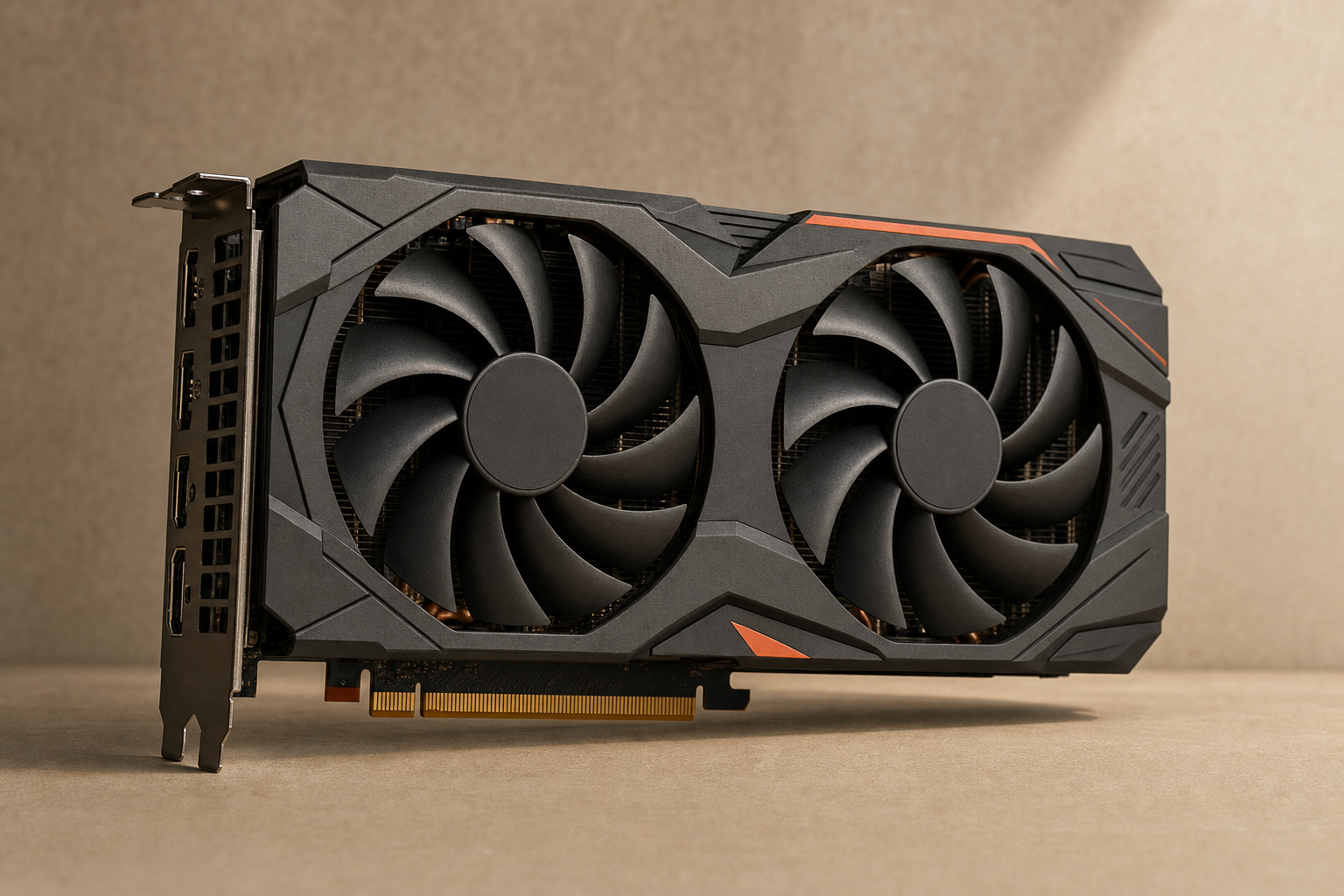
- Shoppers who prefer a more compact-looking dual-fan style over larger triple-fan models, but are willing to verify exact fit and cooling details before buying.
Who should probably skip it
- Buyers whose main goal is the lowest possible cost in this performance tier.
- Mostly-1080p players who do not use heavy texture settings, mods, or demanding newer titles.
- Anyone who wants proven low-noise or low-temperature behavior from this exact ASUS Dual model, since that requires card-specific test data not supplied here.
- Small-case builders who cannot confirm clearance, thickness, and connector space before purchase.
What we can say with confidence
Likely advantages of choosing the 16GB version
The strongest case for this card is simple: 16GB VRAM gives you more flexibility than 8GB when workloads get less forgiving. That does not automatically mean higher performance in every game, but it can reduce the chance that memory capacity becomes the limiting factor in certain settings, mod stacks, or heavier titles.
That is also why this model may make more sense for buyers who keep hardware for several years. Extra memory can be easier to appreciate over time than a small factory-overclock marketing difference.
Where this exact ASUS Dual model is still an open question
The biggest limitation in this review is board-specific verification. We do not have validated source material here for the ASUS Dual GeForce RTX 5060 Ti 16GB OC specs page, dimensions, slot thickness, display outputs, power connector details, or official cooling design language. We also do not have reputable third-party testing for this exact card’s thermals, noise, or power behavior.
So while the model name suggests a dual-fan design and factory overclock, buyers should treat cooler adequacy, acoustic behavior, and case-fit confidence as things to verify before purchase rather than assumptions to make from branding.
Buying this ASUS model vs an 8GB alternative
When 16GB is easier to justify
- You play recent AAA games where memory demands can swing with texture settings.
- You use mods or texture packs that increase VRAM pressure.
- You want more comfort at 1440p than an 8GB card may provide in tougher scenarios.
- You want one card that can cover gaming plus light creator use without being as constrained by memory.
When an 8GB-class option may still be enough
- Your gaming is mainly 1080p.
- You mostly play competitive or lighter games.
- You upgrade often enough that long-term VRAM headroom matters less to you.
- You are more sensitive to purchase price than to edge-case memory limitations.
If that is your situation, our coverage of the ASUS Dual GeForce RTX 5060 8GB OC review may be a useful companion read, especially if you are trying to decide how much extra memory is really worth in your setup.
Before you buy: the practical checks that matter
Fit, power, outputs, and intended resolution
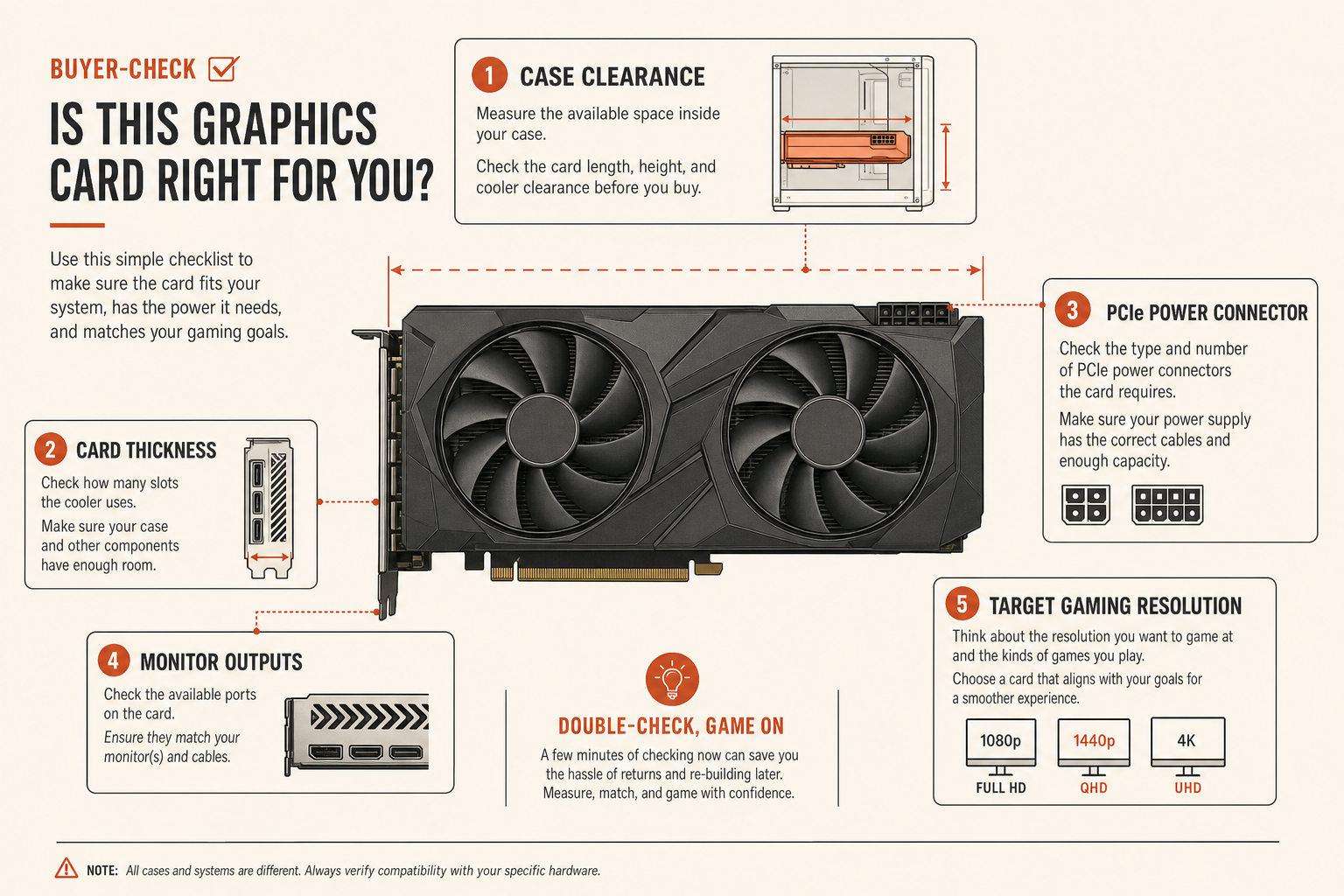
Because verified board-level documentation was not supplied here, this is the shortlist to work through before buying:
- Case clearance: Confirm the card length and thickness from ASUS documentation or the retailer listing before ordering.
- Power connector: Verify what connector this exact model uses and whether your power supply already supports it cleanly.
- Power supply capacity: Check ASUS guidance for this model instead of guessing from similar cards.
- Monitor outputs: Make sure the exact port mix fits your display plan.
- Cooling expectations: If low noise matters to you, look for a reputable review that measured this specific ASUS Dual 16GB OC card rather than a different RTX 5060 Ti board.
- Your real target resolution: If you are buying for 1440p gaming headroom, the 16GB version is easier to justify than if you are strictly a lighter-duty 1080p player.
Bottom Line
The ASUS Dual RTX 5060 Ti 16GB OC worth it question comes down to whether you are buying for memory headroom or simply for the cheapest way into this part of the market.
If your workloads are unpredictable, your games are heavier, or you want a more comfortable 1080p-to-1440p card with fewer memory-related compromises, the 16GB angle is the most defensible reason to consider this model. If your needs are simpler and cost matters more than extra VRAM insurance, an 8GB-class alternative may be the more rational buy.
What keeps this from being a stronger recommendation is not an obvious flaw. It is missing verification. Without confirmed board-level specs and trustworthy testing for this exact ASUS Dual card, you should treat the purchase as potentially sensible but not fully de-risked.
FAQ
Is the ASUS Dual GeForce RTX 5060 Ti 16GB OC worth buying?
It can be, especially if you specifically want the 16GB version for more VRAM headroom. The main caution is that this is a RESEARCH-BASED REVIEW without verified card-specific thermals, noise, or dimension data for this exact ASUS model in the supplied evidence.
Is 16GB VRAM worth it on the RTX 5060 Ti?
It is easier to justify if you play newer or heavier games, use mods, or want more breathing room at 1440p. It is less compelling if you mostly play lighter games at 1080p and care most about minimizing cost.
How does the ASUS Dual RTX 5060 Ti 16GB OC compare with 8GB versions?
The clearest difference is memory capacity, which can matter in heavier gaming scenarios and some light creator use. This article does not claim measured performance differences for this exact ASUS 16GB card versus any specific 8GB card because that testing was not supplied.
Is the ASUS Dual cooler good enough for a factory-overclocked RTX 5060 Ti?
Possibly, but that needs model-specific thermal and acoustic testing. A dual-fan design can be perfectly reasonable in this class, but buyers should not assume low noise or strong thermal margins without verified reviews of this exact board.
Is this card better for 1080p or 1440p gaming?
The 16GB version is easier to justify if 1440p is part of your plan, because extra VRAM can offer more flexibility in tougher games and settings. For mostly lighter 1080p use, the value case is less clear.
How big is the ASUS Dual RTX 5060 Ti 16GB OC and will it fit in a compact case?
You should verify the exact dimensions and thickness from ASUS or the retailer listing before buying. Those model-specific measurements were not included in the verified source facts provided for this article.
What power supply do you need for the ASUS Dual RTX 5060 Ti 16GB OC?
Check ASUS guidance for this exact model. It is better to confirm the official recommendation and connector type than to infer it from similar cards.
Does this GPU make sense for creators as well as gamers?
Potentially, in the limited sense that 16GB VRAM can be attractive for some lighter creator workloads. This article does not claim tested creator-app performance for this exact card.
Should you buy this ASUS model or a different RTX 5060 Ti brand?
If board-specific factors like noise, size, outputs, or connector placement matter to you, compare exact manufacturer specs and independent reviews before deciding. Without that card-specific evidence, the main reason to choose this listing is still the 16GB memory configuration rather than a proven advantage of this ASUS variant itself.
What should you verify before buying this card?
Check case clearance, slot thickness, power connector type, PSU compatibility, monitor outputs, and whether there is a trustworthy third-party review of this exact ASUS Dual 16GB OC card’s thermals and noise.