Skip to content
Quick Answer
Research summary
The ASUS ProArt B850-CREATOR WiFi NEO looks aimed at buyers who want an AM5 creator motherboard rather than a gaming-first board, but the key buying question is not the name on the box. It is whether its verified connectivity, storage layout, and expansion behavior match your actual workflow.
This is a RESEARCH-BASED REVIEW, not a first-hand test. Based on the available brief and the intended use case, this board is most interesting for a Ryzen build where rear I/O, fast networking, WiFi, storage flexibility, and creator-focused layout matter more than gamer styling. The catch is simple: lane-sharing, exact port counts, supported CPUs, and any USB4 or Thunderbolt-related claims should be confirmed directly on ASUS’s product page, manual, CPU support list, BIOS page, and memory QVL before you spend money.
The Product Shortlist may earn a commission from qualifying purchases. This does not affect our verdict.
For buyers searching for an ASUS ProArt B850-CREATOR WiFi NEO review, the real decision is whether a creator-branded B850 motherboard gives you enough practical benefit over a cheaper gaming AM5 board, or whether your build is advanced enough that you should step up to a higher-end creator or workstation option.
That matters because motherboard value is usually decided by fit, not by marketing. If you need specific storage behavior, front-panel high-speed USB, dependable networking, and a clean upgrade path for a Ryzen editing or streaming PC, a board like this can make sense. If you only need a stable AM5 platform for a GPU, one SSD, and standard USB devices, paying extra for creator positioning may not move the needle much.
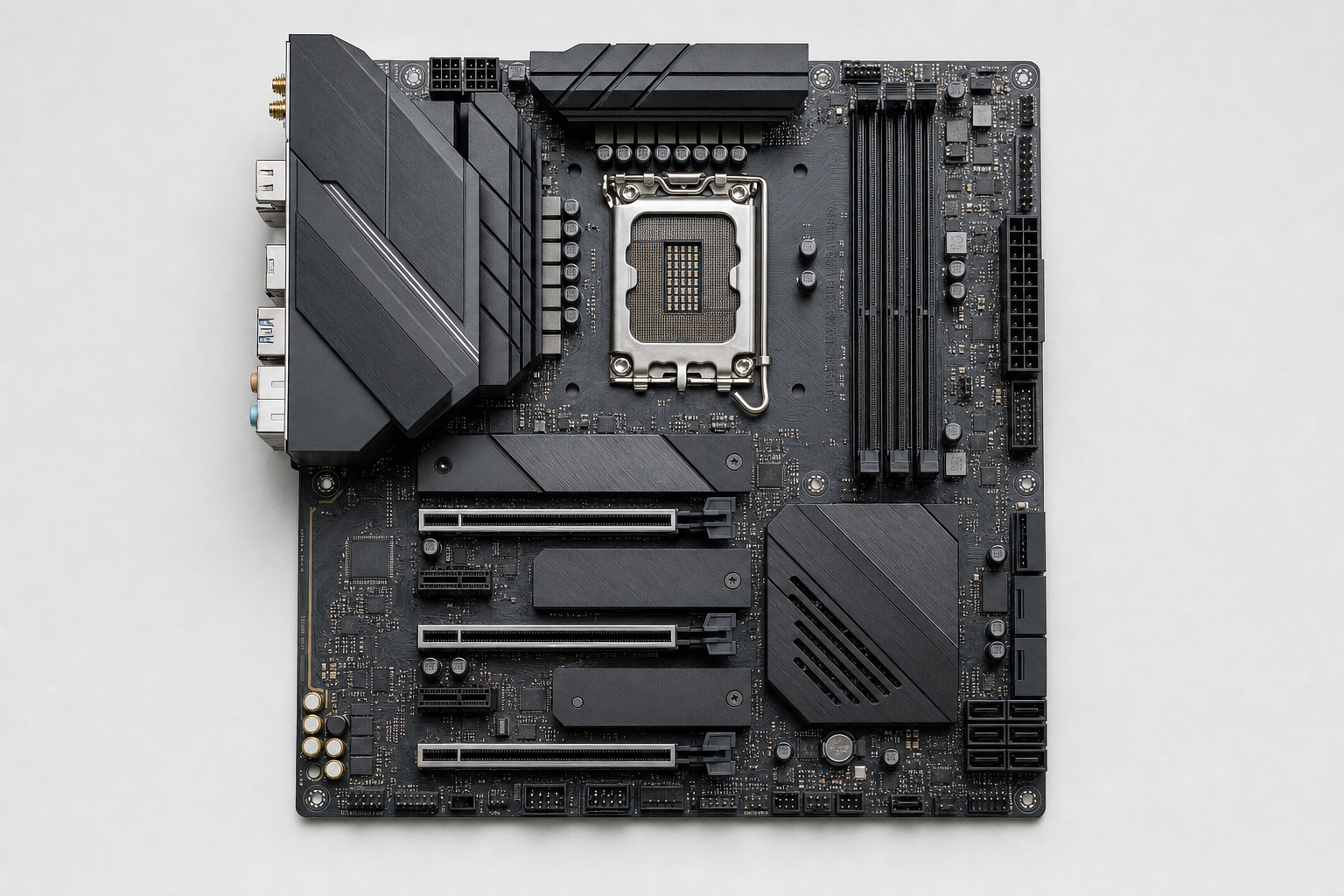
What this board is really trying to do
The ProArt line usually targets buyers who care more about workstation-friendly connectivity and less about gaming aesthetics. In practical terms, that generally means the board needs to justify itself through useful I/O, storage options, expansion planning, and a layout that suits content creation builds.
Because the supplied evidence here does not include the full ASUS spec sheet or manual text, it would be careless to list exact port counts, PCIe behavior, supported memory details, or storage disable rules as settled facts. That missing detail is important, especially in a category where one M.2 slot can change SATA availability or reduce PCIe flexibility. So the right approach is to treat this board as a promising fit for creator workflows, with final purchase confidence depending on document-level verification.
Who this motherboard makes sense for
Best fit
- Buyers building an AMD AM5 creator PC and actively comparing a B850 creator motherboard against gaming-oriented alternatives.
- Users who care about motherboard layout, rear I/O usefulness, networking, WiFi, and upgrade planning more than RGB-heavy features.
- Shoppers who want a middle-ground option: more creator focus than a basic gaming board, without automatically jumping to a pricier X870-class board.
Skip it if
- You have not confirmed the exact slot-sharing and storage-disable behavior in the manual.
- Your use case is simple enough that a less expensive AM5 gaming board would do the same job.
- You specifically need features that may only be guaranteed on a higher-tier chipset or more expensive workstation-oriented board.
What matters most before you buy
Creator branding only matters if you will use the connectivity and expansion
A creator motherboard earns its place when its ports, slot layout, storage options, and networking reduce friction in real work. That can mean easier external-drive use, better planning for multiple NVMe drives, more useful front-panel connectivity, or cleaner long-term expandability. If your workflow does not benefit from those things, the premium can be hard to justify.
B850 can be the sensible middle ground
For many buyers, the appeal of a B850 creator motherboard is straightforward: it may offer a more work-focused feature set than mainstream gaming boards while avoiding the automatic cost jump of a flagship-tier platform. That does not make it the right answer by default. It simply means the value case depends on whether this exact board’s connectivity map matches your build.
Lane-sharing and slot tradeoffs need manual verification
This is the part many reviews gloss over. On modern motherboards, storage slots and expansion slots can interact in ways that matter a lot once you add more than one SSD, capture hardware, or other expansion cards. Before buying, verify the manual for:
- Which PCIe slots run at which generations and widths
- How many M.2 slots are available
- Whether populating certain M.2 slots disables SATA ports or affects PCIe slots
- Whether the board’s fastest storage and GPU paths are shared in ways that affect your build plan
- Exactly which rear and front USB options are present
If those details are central to your decision, do not rely on retailer summaries alone.
Research-based strengths
- Clear buyer positioning: Among AM5 boards, this model is aimed at a creator/workstation-style buyer rather than a pure gaming-first audience.
- Potentially better fit than many gaming boards: If your workflow benefits from richer I/O and expansion planning, a ProArt-style board can make more sense than paying for gaming-oriented extras you will not use.
- AM5 platform relevance: For buyers considering a Ryzen editing or streaming PC, the platform itself remains attractive because it is current and comparison shoppers are often looking for an upgrade path, storage flexibility, and modern connectivity.
Research-based limitations
- Evidence gap in the supplied brief: We do not have the full verified specification set here, so exact claims about USB4, Thunderbolt compatibility, Ethernet speed, M.2 count, CPU support, display outputs, audio, ECC behavior, or PCIe 5.0 support should be treated as unconfirmed until checked against ASUS documentation.
- B850 is still a tradeoff platform choice: Depending on your needs, there may be reasons to step up to a more expensive creator board if you need broader I/O, fewer expansion compromises, or other higher-tier features.
- Potential overbuy for simpler systems: If your build is basically one GPU, one or two drives, and ordinary peripherals, a cheaper motherboard may deliver the same practical result.
Bottom Line
The ASUS ProArt B850-CREATOR WiFi NEO appears most compelling for a buyer who already knows they want a creator-leaning AM5 board and is now deciding whether this specific B850 option is enough. That is likely the strongest case for it: not as a universal recommendation, but as a fit-driven choice for a workflow where motherboard connectivity and layout genuinely matter.
What keeps this from being an easy blanket recommendation in this review is the missing verified detail. Before buying, confirm the ASUS product page, specifications page, manual, BIOS support page, CPU support list, and memory QVL. If those documents show the right mix of storage flexibility, networking, USB options, and slot behavior for your build, this board could be a sensible middle-ground choice. If not, either save money with a simpler AM5 board or move up to a higher-end creator platform.
FAQ
Is the ASUS ProArt B850-CREATOR WiFi NEO good for content creation?
It looks positioned for that kind of buyer, especially someone building a Ryzen-based creator PC and comparing creator-focused boards with gaming models. The right answer depends on the exact connectivity, storage layout, and expansion behavior listed in ASUS documentation.
Is the ASUS ProArt B850-CREATOR WiFi NEO worth buying over a gaming motherboard?
Only if you will actually use the creator-focused advantages. If your workflow benefits from better I/O planning, storage flexibility, and workstation-style layout priorities, it may be worth it. If your needs are basic, a less expensive gaming board could be the better value.
What CPUs work with the ASUS ProArt B850-CREATOR WiFi NEO?
This article does not list CPU support because that needs direct confirmation from the official ASUS CPU support page for this model. Since it is an AM5 motherboard, buyers should verify exact supported Ryzen processors and any BIOS requirements before purchase.
Does the ProArt B850-CREATOR WiFi NEO support PCIe 5.0 for GPU or SSD?
That should be verified on the official specifications page and in the manual. PCIe generation support can differ by slot, and those details matter more than a headline claim.
How many M.2 slots and high-speed USB ports does the board have?
Do not rely on this review for exact counts because those numbers were not supplied in the verified brief. Check ASUS’s specifications and manual for the exact M.2 layout and rear or front USB details.
Does using certain M.2 slots disable SATA ports or PCIe slots?
Possibly, and that is one of the most important things to verify before buying. Motherboards in this class often have lane-sharing rules that affect SATA or secondary expansion, so the manual matters here.
Does it include WiFi and fast Ethernet?
The product name indicates WiFi is part of the package, but exact wireless and Ethernet specifications should still be confirmed on ASUS’s official product and specifications pages.
Who should skip the ASUS ProArt B850-CREATOR WiFi NEO?
Skip it if you do not need creator-focused connectivity, if a cheaper AM5 board already covers your build, or if your expansion needs are demanding enough that you may be better served by a higher-end creator or workstation motherboard.