Skip to content
Quick Answer
Research summary
In this RESEARCH-BASED REVIEW, the DEWALT DWX726 Rolling Miter Saw Stand looks most appealing for one specific buyer: someone who regularly moves a miter saw between work areas or jobsites and is tired of lifting and repositioning a heavy setup by hand.
Its clearest benefit is simple: a rolling stand can make a miter saw much easier to position as part of a real shop-to-jobsite workflow. The main reason to hesitate is just as simple: that convenience comes with extra cost, added storage footprint, and more transport bulk than a permanently bench-mounted setup.
If that sounds like your daily friction, this is the kind of accessory that can make sense. If your saw rarely moves, the value case gets much weaker.
The Product Shortlist may earn a commission from qualifying purchases. This does not affect our verdict.
The buying decision here is not really about whether a rolling stand is nice to have. It is about whether mobility solves a meaningful problem in your setup. For some buyers, especially those moving a saw often, that can be enough to justify the purchase. For others, it is just another large piece of equipment to store.
That is why a useful DEWALT DWX726 Rolling Miter Saw Stand review should focus less on generic praise and more on workflow fit. A rolling stand only earns its keep if it saves enough effort, setup friction, or repositioning hassle to outweigh its bulk.
What this stand is really buying you
The strongest case for the DEWALT DWX726 is not abstract portability. It is easier movement of a heavy miter saw setup. If you work in more than one area, need to roll a saw out when needed, or move between storage and use repeatedly, that core benefit is easy to understand.
That matters because miter saws can be awkward even before you think about a stand. A wheeled setup can reduce the number of times you need to dead-lift or fully break down your work area. For the right buyer, that is the whole point.
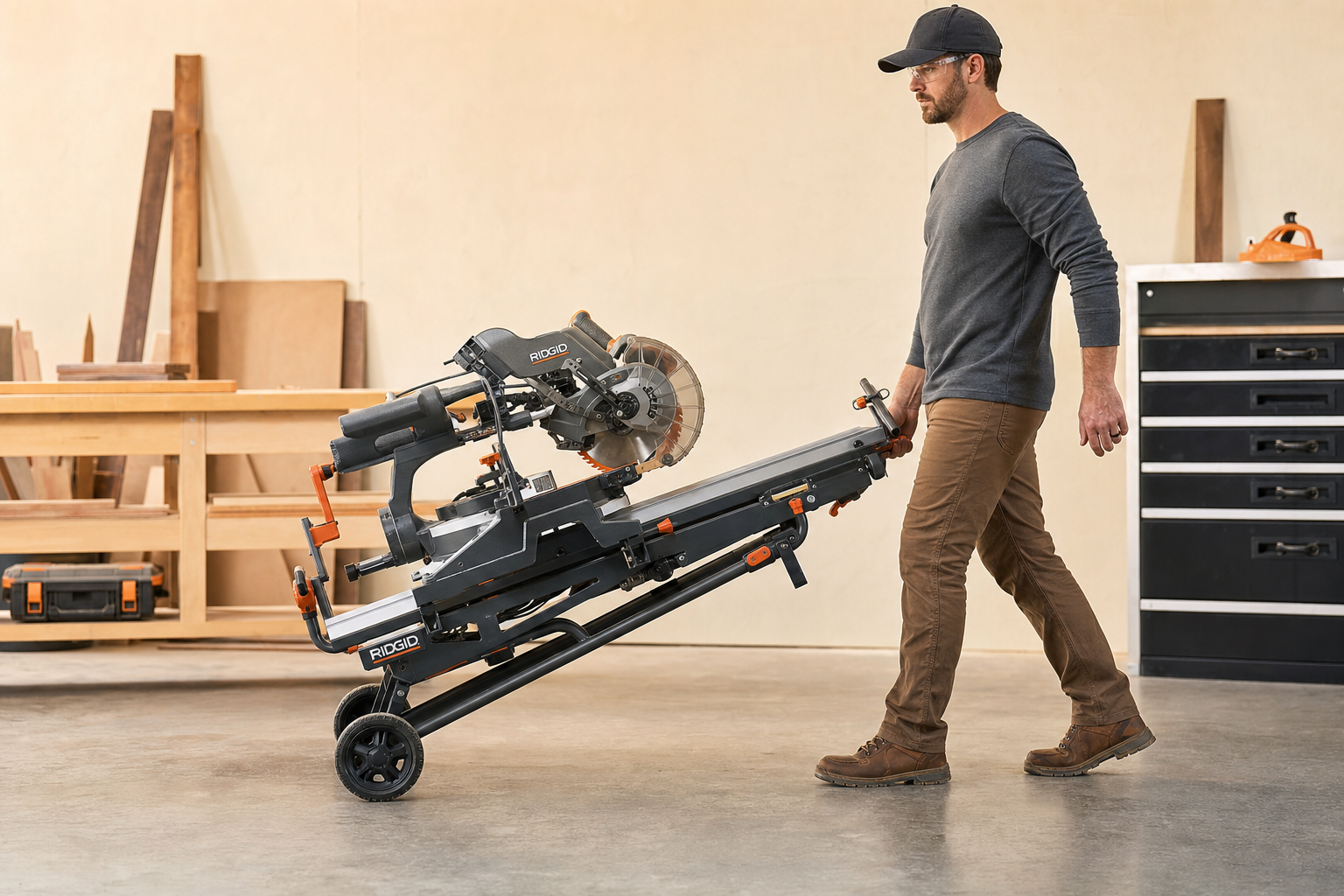
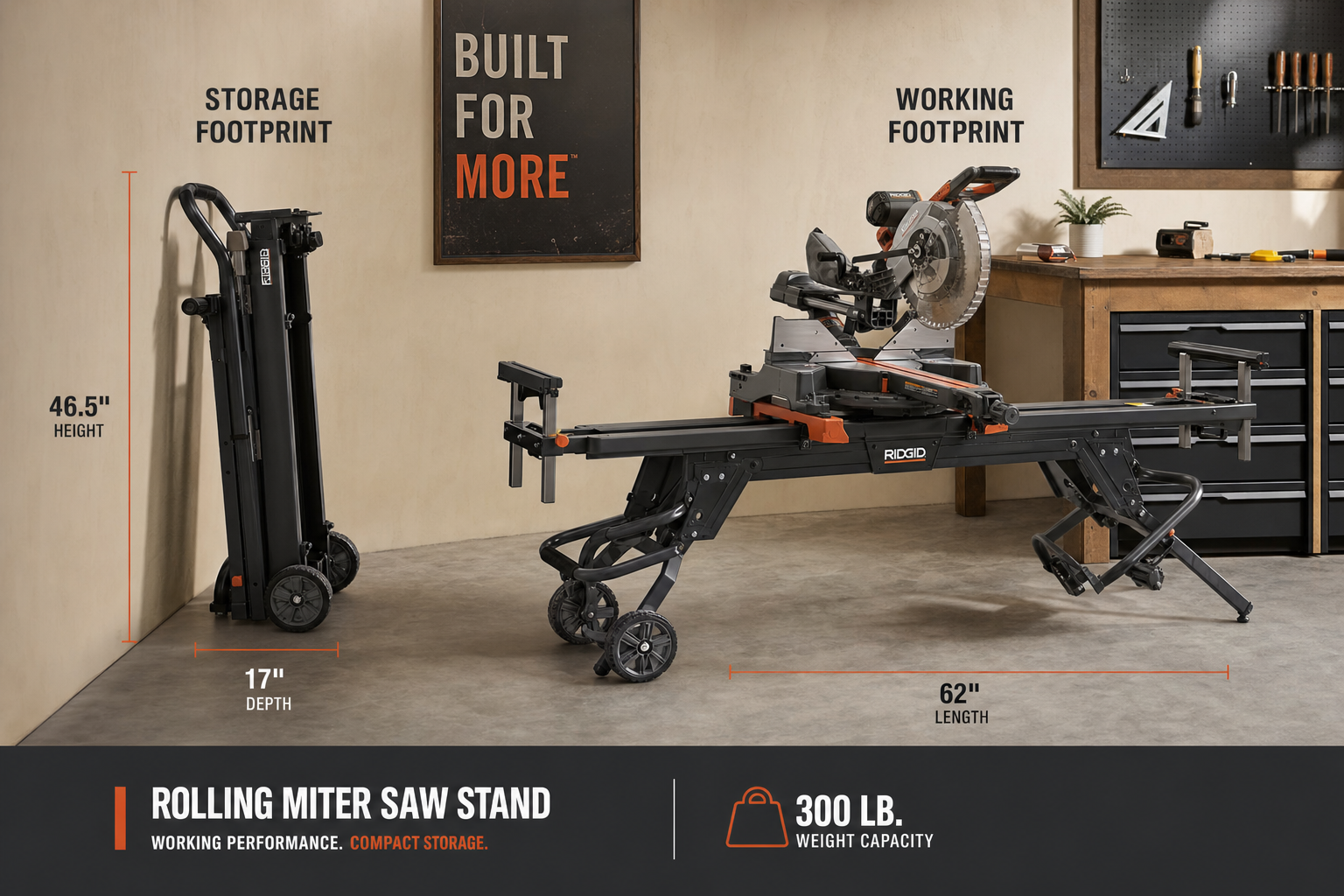
Just as important, though, is what this stand does not automatically solve. It does not remove the need to think about footprint, storage, and whether your shop actually has room for a fold-and-roll accessory. Buyers sometimes focus on mobility and forget that a rolling stand still has to live somewhere when it is not in use.
Who the DEWALT DWX726 makes the most sense for
- Mobile users: If you move your saw between work areas or jobsites, the rolling format is the main reason to consider it.
- Garage and multi-use space owners: If your saw is stored away and brought out when needed, rolling convenience may be more useful than a fixed bench setup.
- Buyers trying to reduce lifting and repositioning hassle: The best argument for this stand is workflow ease, not novelty.
It may also make sense if you are pairing a stand with a DEWALT saw and want a more mobile overall setup. If you are still deciding on the saw itself, our reviews of the DEWALT DWS780 and DEWALT DCS361B may help frame that part of the purchase.
Main tradeoffs to think through
The biggest downside is not complicated: a rolling miter saw stand adds cost, storage space, and transport bulk.
That tradeoff matters most if your saw already has a good permanent home. When a saw stays bench-mounted, a rolling stand can feel redundant. In that situation, mobility is no longer a daily advantage, but the footprint and added equipment remain.
There is also a practical mindset shift here. A bench setup is often about permanence and compact efficiency in one place. A rolling setup is about flexibility. Neither is automatically better. The right choice depends on how often the saw moves.
Pros and cons
| Pros | Cons |
|---|---|
| Rolling support can make a heavy saw easier to move and position | Adds cost compared with keeping a saw bench-mounted |
| Better fit for shop-to-jobsite or storage-to-workflow use | Takes up storage space when not in use |
| Makes the most sense for buyers with repeated movement needs | Adds transport bulk versus a fixed setup |
How to decide if it is worth it for your workflow
Ask yourself one question: How often do you actually move your miter saw?
- If the answer is often, the DEWALT DWX726 is easier to justify.
- If the answer is sometimes, it may still make sense if lifting, setup, or storage changeovers are a recurring annoyance.
- If the answer is rarely, a bench-mounted arrangement is probably the better value.
This is the buyer-fit framework many thin reviews skip. A rolling stand is not universally worth it. It is worth it when mobility is a real problem you are solving.
That is also why this should not be judged like a saw itself. You are not mainly buying cutting performance. You are buying easier movement, easier positioning, and a different workflow. If those changes are meaningful in your day-to-day use, the category makes more sense.
Compatibility checks to make before buying
Before buying, check official DEWALT product or manual documentation for:
- Compatibility with your specific saw model
- Included mounting hardware or brackets
- Any setup and mounting instructions
- Operating and safety guidance for stable use
We are intentionally not adding model-fit details beyond that because this article is based on limited verified evidence. Compatibility is too important to guess.
Bottom line
If your miter saw regularly moves between storage, work areas, or jobsites, the DEWALT DWX726 Rolling Miter Saw Stand has a clear reason to exist. Its value is in reducing the hassle of moving and positioning a heavy saw setup.
If your saw stays permanently bench-mounted, the main benefit shrinks fast, while the cost and footprint remain. For that buyer, this is harder to justify.
So, is DEWALT DWX726 Rolling Miter Saw Stand worth it? For mobile users, possibly yes. For fixed-shop users, often no. The right call depends less on the stand itself and more on whether rolling mobility improves your actual workflow enough to matter.
FAQ
Is the DEWALT DWX726 Rolling Miter Saw Stand worth it for DIY users?
It can be, but mainly for DIY users who move a miter saw in and out of storage or between work areas. If your saw stays in one place, the value case is much weaker.
Who is the DEWALT DWX726 best for?
It is best for users moving a miter saw between work areas or jobsites and for buyers who want rolling mobility to reduce lifting and repositioning hassle.
What is the main downside of the DEWALT DWX726 stand?
The main downside is the tradeoff for that mobility: extra cost, added storage space, and more transport bulk than a permanently bench-mounted setup.
Is the DEWALT DWX726 good for moving a heavy miter saw between work areas?
Based on the available evidence, that is the strongest reason to consider it. The stand’s core appeal is making a heavy saw easier to position and move as part of a mobile workflow.
Can the DEWALT DWX726 stay set up in a small shop?
Possibly, but the key concern is footprint. A rolling stand adds another large piece of equipment to store, so small-shop buyers should think carefully about available space before buying.
Is a rolling miter saw stand better than a fixed stand?
Not always. A rolling stand is better when mobility is important. A fixed or bench-mounted setup often makes more sense when the saw stays in one place and compact efficiency matters more than movement.
What should buyers check for saw compatibility before buying the DEWALT DWX726?
Check official DEWALT documentation for your saw model, mounting hardware details, bracket information, and setup instructions. Compatibility is not something buyers should assume.